The “fifty-five” programme outlines support for the construction of the international centre for science, technology and innovation in beijing (kyo jinyi), shanghai (long triangle) and hong kong bay to create a world-class source of science, technology and innovation. Beijing and hong kong are representative cities of two major international centres for science, technology and innovation, and there is broad scope for deepening cooperation in science and technology. Integrating hong kong's highly international system with the innovative ecology of research in beijing, focusing on the cross-border governance of intellectual property rights, the orderly flow of scientific data and the cross-border allocation of science and technology, was part of the deepening of scientific and technological cooperation in kyoto during the “155” period。
Science and technology cooperation in kyoto is an institutional synergy rooted in “complementarity of innovation chains”. The original supply of science and technology at research institutions in kyoto can be translated into globally competitive innovations through the unique international rule interface in hong kong. The integration of rules and systems between kyoto can reduce institutional transaction costs, the value of which is not only to optimize resource allocation efficiency but also to upgrade the performance of the entire innovation chain. In terms of cooperative positioning, scientific and technological cooperation in kyoto forms a unique pattern of “vertical complementarities”. Beijing brought together a large number of scientists, large scientific installations and high-level research universities, producing a series of high-level innovations. Hong kong, for its part, has a highly internationally integrated common law system, an intellectual property protection system, a free-port policy and a widely accepted standard certification system that can provide a “institutional interface” between laboratory and international markets for original innovations. Deepening science and technology cooperation in kyoto will require working back-to-back in the innovation chain to facilitate the integration of the different stages of the innovation chain。
Using the advantages of hong kong's intellectual property protection mechanisms, it is important to explore the development of mechanisms for cross-border intellectual property protection of original innovations. Hong kong's intellectual property protection system is highly harmonized with international law, and judicial protection of intellectual property rights under common law enjoys high global credibility. A large number of high-value patents and original technologies are produced each year at universities and research institutions in kyoto, which can be used for cross-border layout through the hong kong international accreditation window. In february 2026, the establishment of the hong kong special administrative region (hksar) intellectual property information desk in the international intellectual property services hall in beijing (china) marked a move from information-sharing to physical service. In the future, rapid registration of patents for high-value inventions at research institutions in kyoto could be explored, a “one-time review, two-dip recognition” mechanism for patent reviews could be established, the results of the review would be equivalent, the review cycle would be reduced, and high-value patents at research institutions in kyoto would be granted faster authorization and protection in hong kong. At the same time, the two sites could explore the establishment of a joint cross-border dispute settlement mechanism to provide cost-effective dispute resolution for the founders of the kyoto protocol, in collaboration with the hong kong international arbitration centre and the beijing intellectual property court. In addition, high-value patents from research institutions in hong kong are encouraged to organize their original patenting in hong kong, using the rules of jurisprudence under the common law system of hong kong to enhance the stability and enforceability of patents, and to transform hong kong's intellectual property system advantages from “optional” to “necessary options” for the internationalization of innovations at research institutions in kyoto。
The development of an efficient and secure cross-border data governance framework for scientific data needs to be explored using hong kong's globally integrated data governance standards. Front-line scientific activity is highly dependent on the cross-border sharing and joint analysis of big data, especially in the areas of biomedical and artificial intelligence training, where the efficiency of data flows across borders directly affects the progress of research and international competitiveness. The two sites could pilot the safe cross-border flow of scientific data in specific areas, replace rigid controls with precision regulation, compensate for institutional gaps by technical means, and gradually break down institutional bottlenecks that constrain joint research. For example, the establishment of a “white list of scientific data flows” around major scientific research projects in the fields of artificial intelligence, biomedicine and so forth, on specific platforms of cooperation, and the introduction of disaggregated regulations and easy flow of qualified scientific data. Data for basic medical research and ai model training are documented rather than approved on a case-by-case basis. For example, in the case of personal information or vital data covered by the study, the technical formula “data desensitization + credible calculations” is used to achieve “visibility”. For its part, hong kong may seek to become a safe trans-shipment point for scientific data from the mainland, using the apec system of rules for cross-border privacy and the eu sufficiency determination framework, and to provide a compliance channel for scientific institutions to participate in international scientific programmes。
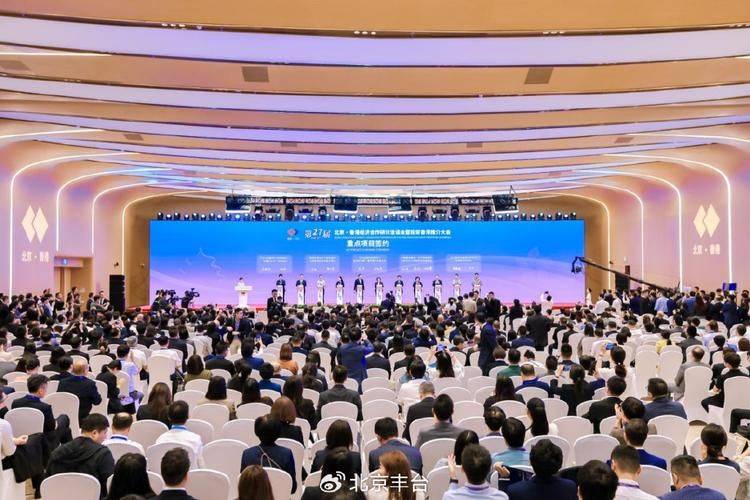
Using the capital pooling function of the hong kong international financial centre, it is important to explore the “industrialization corridors” of technology embedded in overseas scenarios. Hong kong, as the largest bio-technology finance centre in asia and the leading offshore wealth management centre in the world, has a highly developed capital market and diversified financing instruments that can provide full-cycle financing from angel investment, venture capital investment and exit from ipo for numerous specialized new and innovative enterprises and hard technology start-ups in kyoto. The future could be strengthened by exploring the establishment of a joint kip platform and a special fund for hard technology to provide “trip vehicles” for capital interfaces between the two locations, focusing on key areas such as integrated circuits, quantum information, biomedicine, and precisely supporting the financial needs of enterprises in kim. At the same time, it promotes the harmonization of rules, integrates the advantages of the beijing stock exchange and hong kong's capital markets, establishes a whole chain of “breeding-financing-marketing” services, directs start-ups in beijing to offshore finance using hong kong exchange listing rules, and explores mutual regulatory recognition in areas such as information disclosure, corporate governance, etc., to effectively reduce information asymmetries and trust costs of cross-border capital interfaces. The promotion of this “investment+scenario” model as a cooperative mechanism will bring about the perfect closure of the “beijing technology+hk capital+overseas” scenario。