The oscilloscope is an electronic instrument for measuring changes in the orbit of measured instantaneous values. Using narrow electronic beams made up of high-speed electronics on screens with fluorescent substances, light spots can be generated. The electron beams, acting from detected signals, present on the screen a curve of instantaneous values of detected signals that allows people to study the process of changing electrical phenomena. It can also be used to test different amounts of electricity, such as voltage, currents, peaks, frequencies, phase differentials, bands, etc。
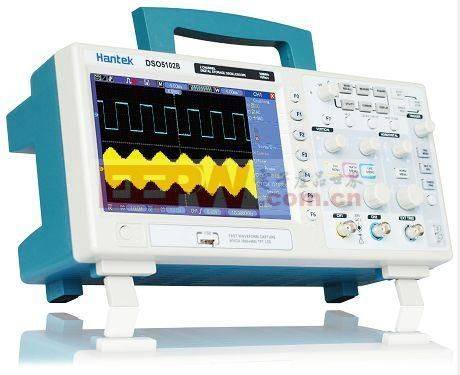
Oscilloscope principles - structural composition
The oscilloscope, which is used to measure the shape of electrical or pulse current waves, has five basic components: displaying circuits, vertically magnifying circuits, horizontally magnifying circuits, scanning and synchronized circuits, and power supply circuits。
The display of circuits - both oscillators and their control circuits - is a special electronic tube and an important component of oscillators。
Vertical amplification circuits - because oscillation sensitivity is very low in the oscillator tube, the general measured signal voltage is first magnified by vertical magnification circuits and then added to the vertical oscillation panel of the oscillator in order to obtain the appropriate shape in the vertical direction。
Horizontal amplification circuits - because the oscillation sensitivity in the direction of the oscillosis tube is low, the voltage for access to the oscillation panel must be scaled up horizontally and then added to the oscillation panel in order to obtain a shape of the appropriate horizontal direction。
Scanning and synchronous circuits - scanning circuits produce a sawn cortex voltage voltage, the function of which is to create a cyclical, pro-temporal horizontal shift in the electron beam from the oscillary cathode on the fluorescent screen, i. E. A time baseline。
Power supply circuits - the supply of power supply circuits to magnify circuits vertically and horizontally, scanning and synchronized circuits, as well as negative pressure for oscillator tubes and for controlling circuits, filament voltage, etc。
3. The principle of oscilloscopes - the principle of waveforms
The oscilloscope works by reflecting the relative size of the maximum voltage value added to the oscilloscope's y-diversion plate by using the relative size of the wavelength range shown on the oscilloscope, thus reflecting the size of the maximum voltage dynamic generated by electromagnetic sensors. When a direct current voltage is added to a pair of deflectors, a fixed shift of the light point on the fluorescent screen is generated, which is proportional in size to the added direct current voltage. If two direct current voltages are added to both vertical and horizontal steering boards, the position of the light point on the fluorescent screen is determined by the shift in both directions。
In order to stabilize the shape on the fluorescent screen, the frequency of the measured signal voltage should be associated with the frequency of the sawntooth wave voltage, i. E. Synchronized. In order to achieve this, the frequency of sawntooth waves is required to be continuously adjustable to observe periodic signals of different frequencies。
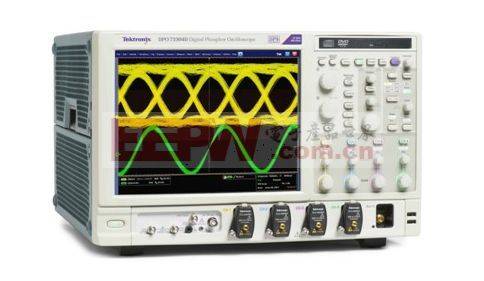
Oscilloscope principles - double-line oscilloscope principles
In the course of e-practice techniques, it is often necessary to observe both signals simultaneously over time. These different signals are tested and compared by electro-fertilization. In order to achieve this, two methods of displaying multiple waveforms have been used, based on the application of the normal oscillator principle: a two-line oscillation method and a double trace oscillation method。
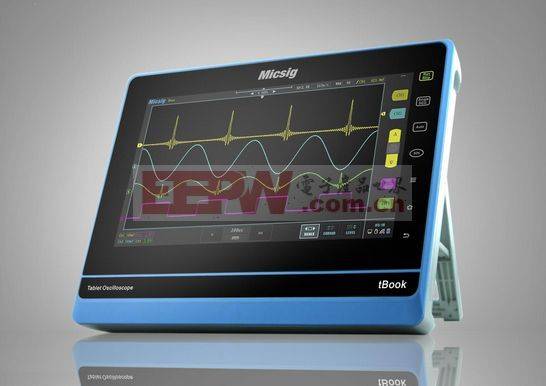
Double-lined oscillators are carried out using double-gun oscillators. Two separate electronic guns produce two electrons. There are also two separate deflection systems, each controlling the movement of a single electronic set up and down. The fluorescent screens are shared so that they can display two different telecommunications wave shapes at the same time, and the double-wire oscillation wavers can be achieved using single-gun double-wire oscillation tubes。
The principles of oscilloscopes - double-trace oscilloscopes
Double tracer waves are based on single-line oscillators, with the addition of a dedicated electronic switch to achieve a separate display of the two waves. Since it is simple to achieve double-trace oscillation waves, without the need to use complex and expensive “twice” or “multi-twice” oscillators, both oscillation waves are widely used。
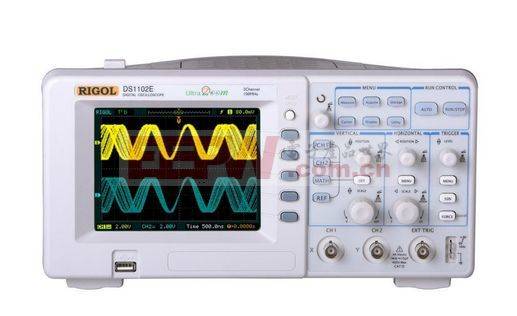
In order to maintain the stability of the two signal waveforms displayed by the fluorescent screen, a certain relationship between the measured frequency of the signal, the frequency of the scanning signal and the conversion frequency of the electronic switch is required. First, the ratio between the frequency of the two detected signals and the frequency of the scanning signals should be integer, i. E., the requirement of “synchronous”. In addition, the conversion frequency of the electronic switch must be reasonably selected so that the waveform numbers shown on the oscilloscope are appropriate for observation。
We're finished with the oscillator principle, and we're going to give you a couple of articles on oscillators
1. Rationale and basic composition of oscilloscopes (i)
2. Rationale and use of oscillators
3. Basic details of the principles of the oscillator