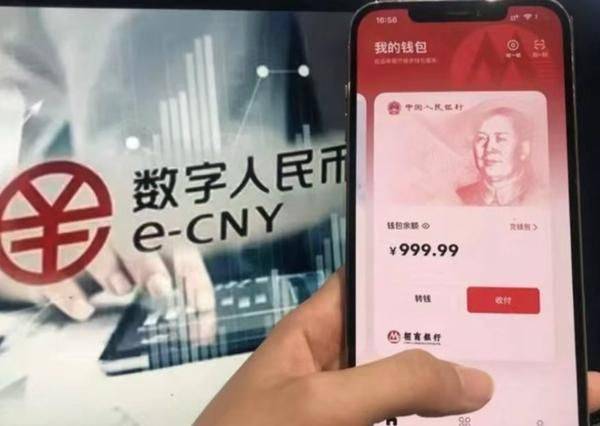
Has anyone recently noticed that more and more people are using the amount of renminbi
Whether it's supermarket shopping, vegetable shopping, water and electricity, or public transport, a number of cities have been fully piloted, and many are confused:
What the hell is a digital renminbi
Isn't it all cell phones? What difference does it make
Will we be replaced? Shouldn't an ordinary man start
Today, you will understand everything without having to go around complex professional terms and give you one-off words。
First of all, there is the central point: the digital renminbi is the national legal currency, and the micro-payment treasure is a means of payment。
Take the simplest example:
(b) digital renminbi = cash in hand, currency in hand, money per se
We believe, we pay for treasures = your wallet, your way of paying, it's just a means of loading money。
We usually pay with micro-trust, which binds the bank’s bank deposits to the third-party payment platform; but the digital renminbi, the legal digital currency issued by the central bank, has the same status as the $100 and $50 cash we have。
A lot of people are asking at this point: "why do countries push digital renminbi so hard?"
First, there is no fee, and no broker makes a difference。
Usually, we pay the cash, money transfers, credit card repayments, more or less of which will result in a fee, and a fee will be deducted by the platform。
In contrast, the digital renminbi, with no intermediate platform for direct trade between points, transfers of individuals, daily consumption, and almost zero charges, can save money, whether for ordinary people or small businesses。

Second, there's no network to pay。
It's too practical to go to underground malls, remote mountainous areas, subways with bad signals, and we can't afford to pay without a net。
Digital renminbi supports offline payments, and mobile phones are as easy to pay as paper cash, even without traffic or signal。
Thirdly, the funds are safer and do not fear the platform's collapse。
Micro-trust payments are operated by commercial companies and there is a theoretical risk of doing business; the digital renminbi is the national currency endorsed by the central bank, and security is brought to full levels without fear that the platform will fail to get the money。
Fourth, it is more private and not subject to excessive data。
Every consumption is recorded on the platform, usually paid for by third parties, and it is annoying to send advertisements and accurate images。
The dnc follows the principle of controlled anonymity, and daily consumption information is not collected at will by commercial platforms, allowing both normal payments and personal consumption privacy。
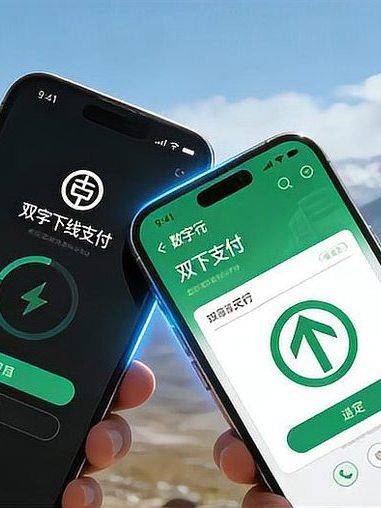
The most important concern of many is that, after the digital renminbi has become popular, we will be eliminated from our trust and payment
The answer is clear: it will not be replaced, it will be complementary。
After all these years of development, the value of micro-trust payments has become highly functional, with social red bags, living services, financial borrowing, out-sale shopping and a one-stop approach, the usage of which has long been deeply felt。
Digital renminbi owners are safe, free of charge, offline, state-endorsed, suitable for daily small consumption, subsistence contributions, government subsidies, and micro-credit payments for integrated living services, online shopping and social transfers. There will be three types of payment, which will be used as they please。
There is also a point of concern: do ordinary people need to open a digital renminbi now
At present, pilot projects have been fully implemented in various parts of the country and are being supported by large businesses, view areas, political halls and street shops。
It is suggested that you can start experience early and not use it too often, but it is not bad to have one more payment option, and there have been a lot of consumption cuts and red-collateral benefits, and the activities of the digital renminbi have been very generous。
In short, the digital renminbi is not a substitute for micro-trust payments, but rather a more secure, less expensive and easier payment option for our citizens。
There is also a trend towards more and more disciplined and secure spending of future figures。