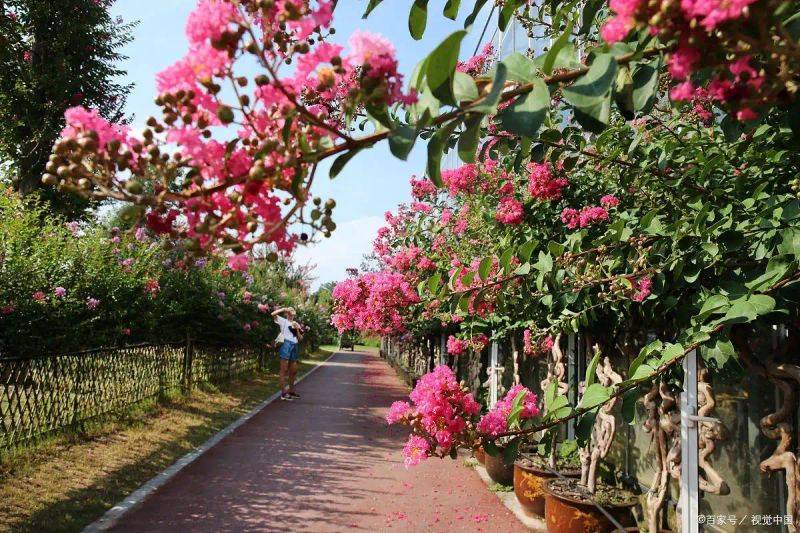
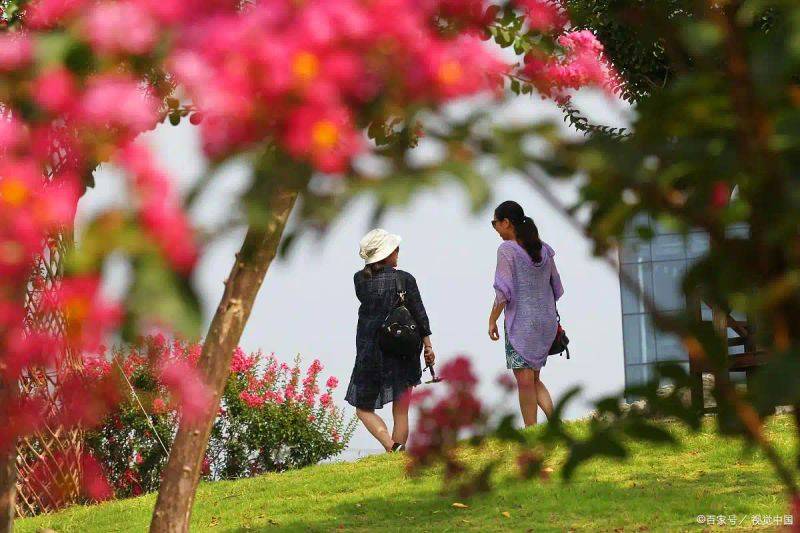
We are not strangers, and we see around us the shape of purple, which, in general, is planted on both sides of the balconies of the city, or on green belts in small areas. Every time it blooms, we see it in different forms, red, white, pink and purple. It's even more glorious in the light of the sun, and it's a sight to see。
As the lord of love flowers, i am here today to share with you how it's better to grow it。
I. Basic information on violet。
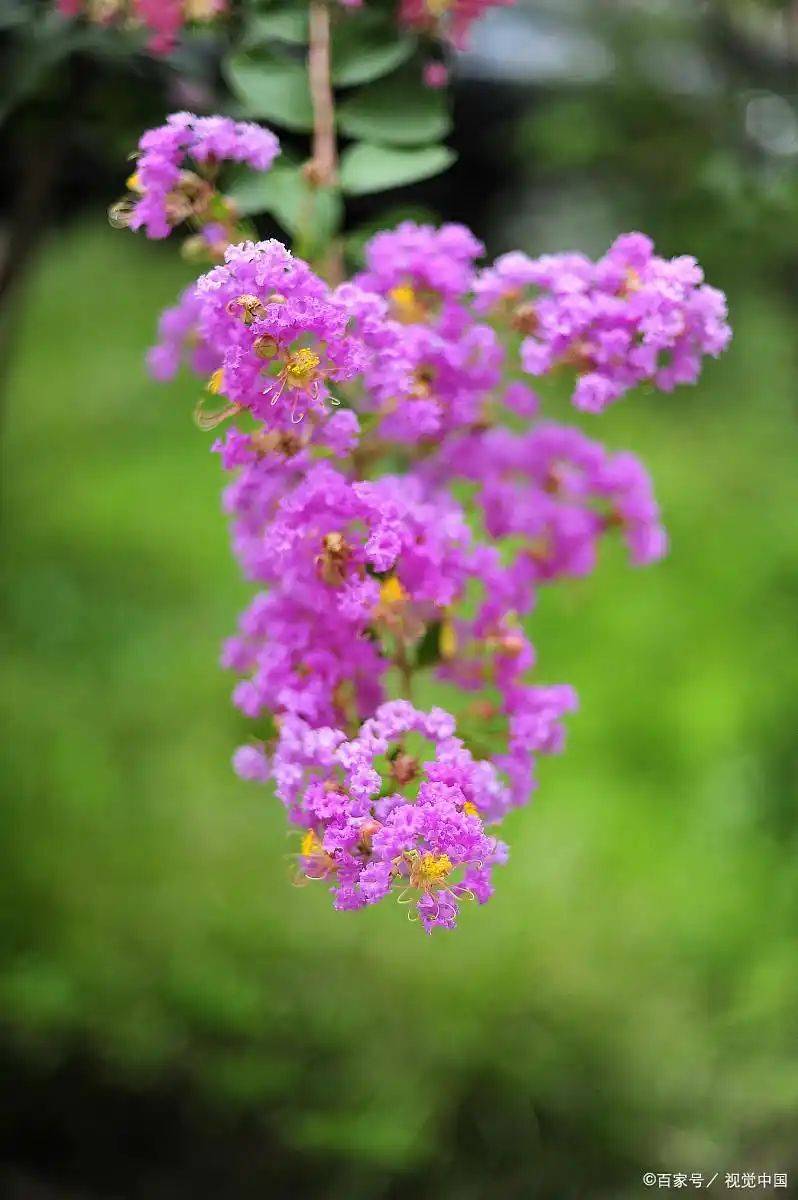
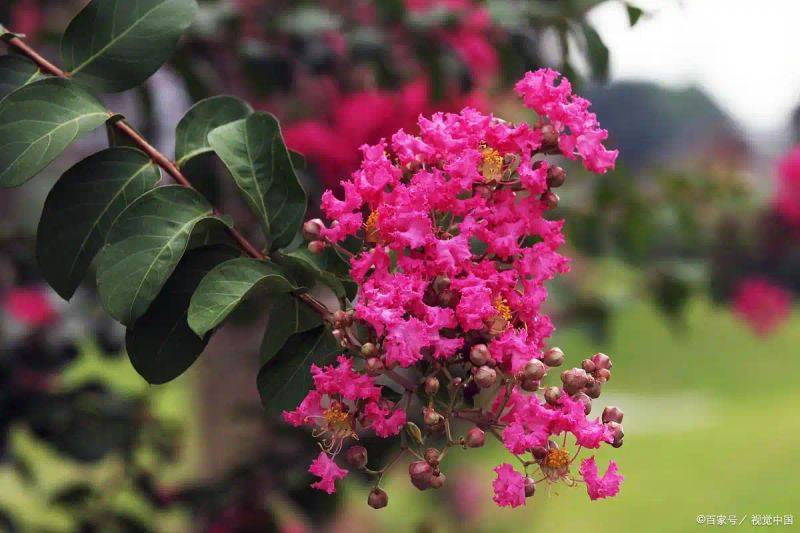
Violet belongs to the chrysanthemum. Violets also belong to the small leaves laid down, and trees are planted in the form of bushes up to a maximum of 7 metres, usually about 3 or 4 metres. It's called a twitching tree tree, which is called a twitch tree. The small branch is slightly twilight, slightly winged. The leaves are elliptical, 3-7cm long, 2. 5-4cm wide, all of which are bound to the edges of the leaves, the tip of the leaves, the broadness of the base, the smoothness of the leaves and the hair of the back. The six-september round cones were born on the top of the branch, with the flowers wrinkled, red, pink or white. The fruit is 10 to november, and the seeds have wings。
Violet growth conditions。
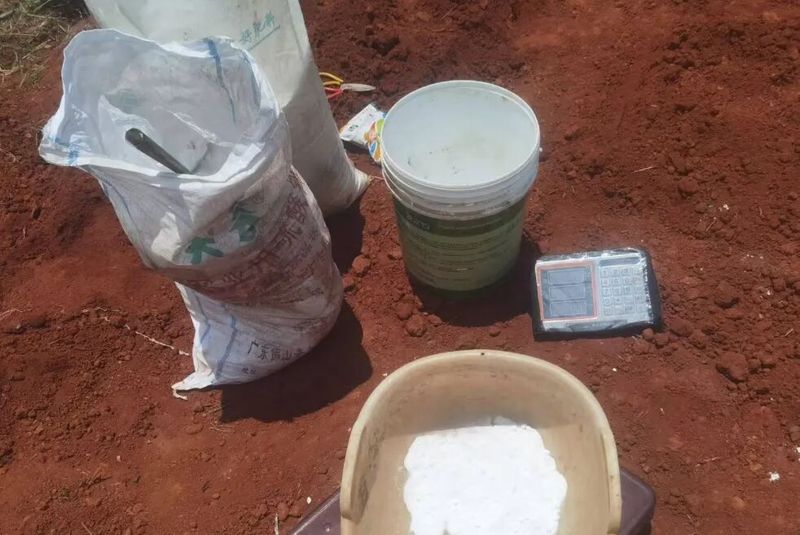
The violet yang, which is very fond of growing up in sunlight, also needs to be dry, and it is also drought-resistant and cold-resistant, has great capacity to adapt to the growing environment, and it has little to do with growing soil, but it should be given the choice of a fertile soil rich in corruption, soft and thick, well drained and acidic soil. Soil selection is important, and applied soil promotes purple vegetable trees can also prolong the flowering period of purple and increase their own value. Violet fertilizers, when growing, are sufficient to use well-curded farm fats, and can be applied a little bit of calcium phosphate, depending on the size of the plant, to give it the amount of fertilization, and then to level the ground and plant it。
Iii. The method of breeding purple。
1. Cultivation. In november-december, mature seeds were collected, decorated, dried, and placed in containers. In march of the following year, broad bands were broadcast or sowed on sandy earthbeds, covering 1 cm of fine clay and then weeding. Ten days later, soil was sprouted, grass was quenched in time, and two pairs of leaves were rained; the seedlings were fertilized, followed by two to three times in june and july, and water was poured into the summer to prevent drought and cut flowers in time。
2. Cultivation. The first is a hard stick. Before the sprout of the branch in mid-march to early april, a thick one-year branch was chosen, cutting into about 15 cm long slots, and the last one of the sprouts was revealed and then inserted into a loose, well-watered sandy bed. Plugged into the water and covered plastic sheeting to keep the temperature wet. At 15-20 cm long, the thin film is lifted and replaced with a sunnet, with water in due course. The second one is a little stick. In the month of july and august, half-wooded branches were selected, with 8-10 cm long slots, with 2-3 leafs on top and 3-4 cm deep. Plug in and pour water, and put up a shade to cover the sun, and then remove the film after its birth, keep the sunnet and water it in due course。
3. Cultivation. In the beginning of march-april or autumn, the seedlings of the seedlings growing from their roots were dug up, the roots and branches were properly trimmed and planted separately。
4. Cultivation. In march - april, a branch of 1-2 years was selected, the bark of the tree was carved with a sharp knife and stripped around 1. 5 cm, the wood was exposed, the root powder was painted about 3 cm above the wound, and the plastic bag was covered with a barrel over the wound, filled with pine fields, watered and tightened to two ends, examined after a month, the soil was wet with dry water, and the roots were cut off。
Marriage and reproduction. In late february and in early march, before the budding of the violet branch, a growing seedling was chosen as a gill tree, taking the required colored branch as an ear, cutting five to eight cm deep at the top of the log by the outer part, and adding five to eight cm long with more than two budded wedges to form a layer. Then the whole branch of the ear is wrapped in a plastic film, and its buds appear. The dysentery after 2-3 months of indoctrination and the cutting of branches in time。
Iv. Ultimate seedlings。
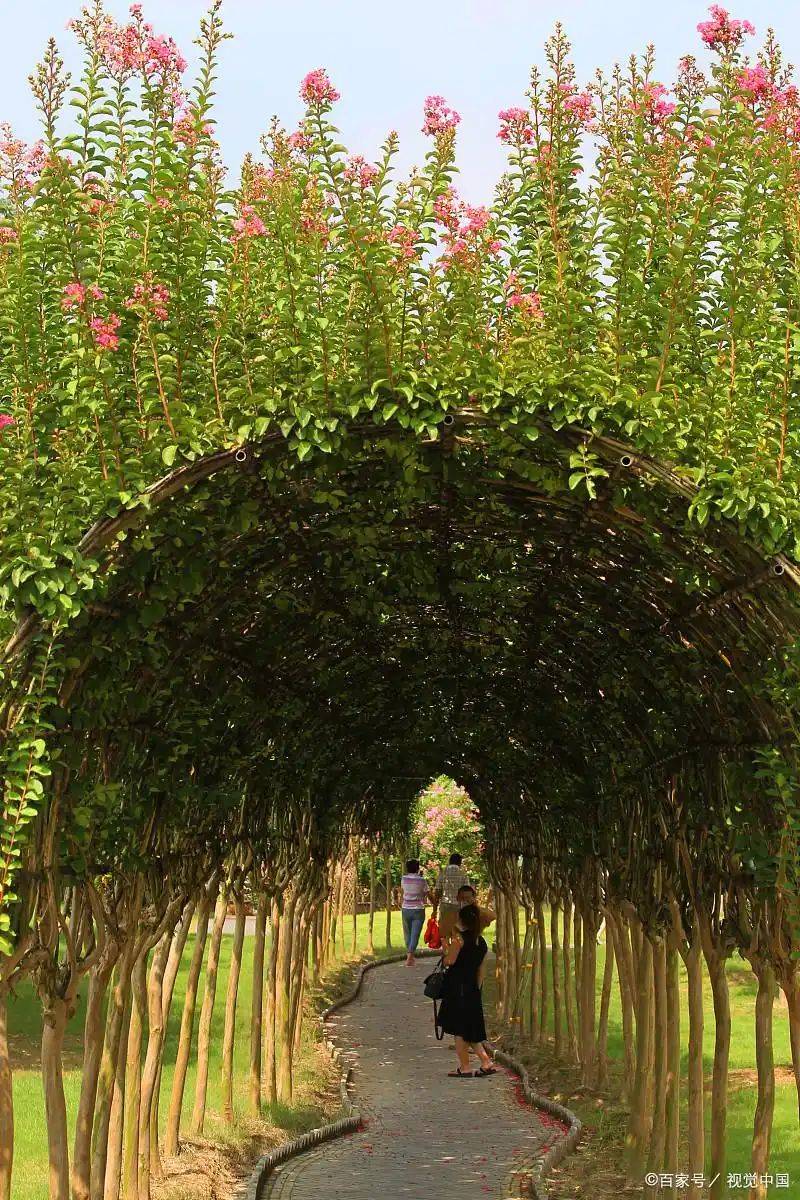
In the winter, the seedlings will be built into 30 cm-high, 160 cm wide beds, with a walkway wide of 40 cm, and foot fattening. In the second spring, the selected seedlings will be planted at a distance of 70 cm x 70 cm, each bed will be planted in three rows, then water will be poured over once, and the soil will be ploughed. Straight and fixed with bamboo poles, cutting off small branches close to the top of the main pillar, short and long branches, buds and fruits in time. In time for growth, the buds of the backbone and branches are removed, parts of the branches under the tree crown are cut off during the winter, and one to two under the tree crown are repaired. Pine weeding takes 4 to 5 times a year, and in mid-february and mid-june, respectively, complex fertilizers and urea were combined with 1:05. Care is also being taken to combat pests and diseases. Three to four years of high-quality and well-growing seedlings。
V. Ultimate tree cutters。
1 dry trim:
Naturally happy shapes: if there is a principal who is naturally happy, usually has a main stem, drying up at 80-100 cm from the ground, small and small, tall, and the branches under his/her cutting should be removed to facilitate concentration of nutrients. After the spring sprouts, three to four stubble stubbles are selected under the cut, and the first stubble under the cut is prolonged, with the main branch being suitable for the main branch, evenly distributed, with a certain distance from the top. All other embryos and plumes are removed at any time during their growth. The following year's hibernation is trimmed, with the short stem extending by one third the branch and the short first layer of the branch remaining 20-30 cm, forming the basic skeleton. Dismissal of the branches that affect the growth of the branches, such as long branches and overlapping branches。
2 shrub shapes: dry in the winter, select a reasonably distributed three to five branches as the backbone, dry from 50 to 60 cm off the ground, stimulate branches, sprout three to four branches per backbone into the first layer of branches in the spring, short cuts during hibernation, and form the basic skeleton。
2. Precipitation:
After drying up, each year, after a hibernation, after cutting the dead branches, the sick branches, the inside branches, the short branches of the branches are born in the same year, the branches of the branches of the branches of the branches of the branches of the branches of the branches of the branches of the branches of the branches of the branches of the branches of the branches of the branches of the branches of the branches of the branches of the branches of the branches of the branches of the branches of the branches of the branches of the branches of the branches of the branches of the branches of the branches of the branches of the branches of the branches of the branches of the branches of the branches of the branches of the branches of the branches of the branches of the branches of the branches of the branches of the branches of the branches of the branches of the branches of the branches of the branches of the branches of the branches of the branches of the branches of the branches of the branches of the branches of the branches of the branches of the branches of the branches of the branches of the branches of the branches of the branches of the branches of the branches of the branches of the branches of the branches of the branches of the branches of the branches of the branches of the branches the upper branches of the main branch shall be selected in such a way that they are medium-sized and suitable in such a way as to allow for a rational distribution of the branches and the branches at all levels, with faulty, elegant and orderly layers up and down, and the side branches shall be trimmed and dryed in such a way that they will normally be sprouts to facilitate the expansion of the tree crown. Following the spring sprouts, care is taken to erase it in a timely manner or to set it straight. Naturally happy, it increases branch heights and develops high-dry purple. Minimize flowering and results and foster nutrient accumulation. It is generally necessary to cut the foundations in a timely manner, so that the twigs can bind to each other, and this is often used in nursery cultivation to bind the twigs to the backbone, which in a few years will be able to heal with the backbone in such a way that they may even be made of a vase。
Vi. Pests and pests of violet trees
1. Pinky:
It is mainly against violet leaves, which are more susceptible to infection than old ones. They can also be infected. There are little white dust spots on the leaves, which are expanded to include round disease. The severer causes the whole leaf to be yellow, causes early fall of leaves, and the temperature is at 19-25°c, with a relative humidity of 100%, most prone to disease, mainly in the spring and autumn, especially in the autumn, where the fungus rises winter with myceloids or with closed cysts, spreads through the air and can be contaminated repeatedly during the growing season. In the wake of the pollen disease, light co-operation has been reduced by more than half, and the evaporation of the leaves has increased, accelerating foliage and death. Method of prevention: 25% of the filamentable powder 3000 times more liquid could be sprayed when the plant is sick, or 70% of the methyl tobuzin humid powder 1,000 times fluid, or 80% of the dyssey zinc humid powder 500 times fluid。
2. Coal pollution:
Coal-contaminated diseases affect purple, mainly after exposure to purple velvet and violet plasters, i. E., when they are nourished by their excreted slime, resulting in large-scale breeding of coal-contaminated bacteria. After the onset of the disease, the foliage is covered with black cortex, which not only affects the value of violet, but also the light co-operation of the leaves, leading to weak growth and early fall of the plants. Methods of prevention and treatment: aphids, shellfish, insects, etc., need to be treated in a timely manner, as the secretions of these insects are the basis for the presence of coal-contaminated pathogens. Phosphates are commonly used, and trithion is used in summer and autumn, as well as in mountain leaf juice. Or spray 50% more than 500-800 times more humid powder。
3. Brown spots:
Brown spots are a common occurrence during the violet growing season, with a different circle or approximation at the beginning of the disease, with a somewhat irregular shape. The symptoms ranged from purple black to black, with a lighter edge colour, which then deepened, presenting black or dark and clearly dividing the health segment. The centre of the post-mortem disease faded in colour and had a black, gray spot. When the disease is severe, the disease is linked to pieces, the entire leaf is quickly yellowed and taken off early, and when it is serious, it often results in large amounts of yellow, falling, affecting viewing and flowering. Method of prevention: at the beginning of the onset of the disease, 50 per cent more than 500 times more filamentable powder or 75 per cent more than 800 times less humid powder can be administered。
Aphids:
In the northern part of the country, five to eight generations per year pass through winter with eggs in the bud, near the sprouts, in may as early as the onset of the disease, and in june as spring leaves for violet leaves and adsorbing fluids, affecting growth and development. Method of prevention: when aphids are in large quantities, fish vines are sprayed with 1,000 to 2,000 times the fluid。
In conclusion, it takes a lot of effort to plant the vegetable trees, and we can normally buy the vegetable seedlings on the market and plant them at home。