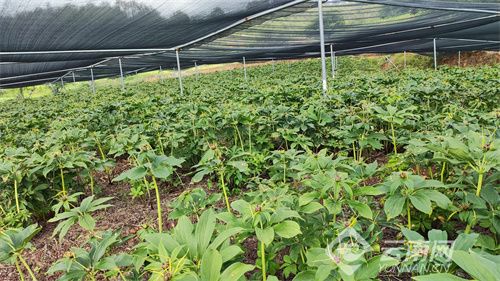
You know how mountain medicine is grown before and after the clear weather? Now let's let the growers show you how the mountain medicine is grown。
The method of planting mountain medicine
1. Choice of varieties
The main types of mountain medicine currently being grown are the fine-haired mountain medicine, the pharmacist medicine and the japanese pharmacist medicine. Both the pyrophagus and the pyropharmaceuticals belong to the common pharmacies. Japanese mountain medicine is a highly adaptable, high-quality, productive and promising species。
Soil selection and ditch digging
Mountain pharmacists should be selected for fertile, pine, easy-to-drink sandy or light-coated soil, salinous and adhesive land, and must be of uniform composition, with at least 1 to 1. 2 m of the earth layer free of clay, sand grains, etc. Otherwise, it affects the appearance of the tubers and the quality. The digging should take place during the winter season, at 100cm equal distance or at 60-80cm size. The depth of the ditch is between 1 000 and 120 cm, with the conditions for mechanical digging。
3. Preparation of seedlings
There are three methods of seed preparation: the first is the use of a mountain drughead, with a sprout section of a tuber, approximately 20 to 40 cm long; the second is the use of mountain medicine to cut the tubers in eight to one centimetres, and the third is the use of mountain medicine for spare parts. The choice of seedlings is better with zero residuals, followed by the planting of one to two years of mountain tablets, which are unusable for more than three years. The planting of seedlings with mountain plumes is a relatively advanced method of planting, addressing both the insufficient quantity and high yield of mountain plumes and the degradation of varieties. Quantities are cut, usually by cutting sides during planting, immersed for a period of one to two minutes with 300 times more liquid polypsychiatric fluid, which can be sowed after drying. Precious long-form and mammoth pharmacists can be cut 30 days in advance, with a collide of grasswood and lime adhesive at both ends to reduce infection。
Four, full
The earth that is excavated from the mountain plume is torn to pieces, and the bricks are to be removed from it, and then filled back into a ditch which is below the surface of the surface of the earth and is to be made of corroded soil only for planting. Once the gutter is ready, the water should be levelled and the water leaked before planting。
Cultivation methods
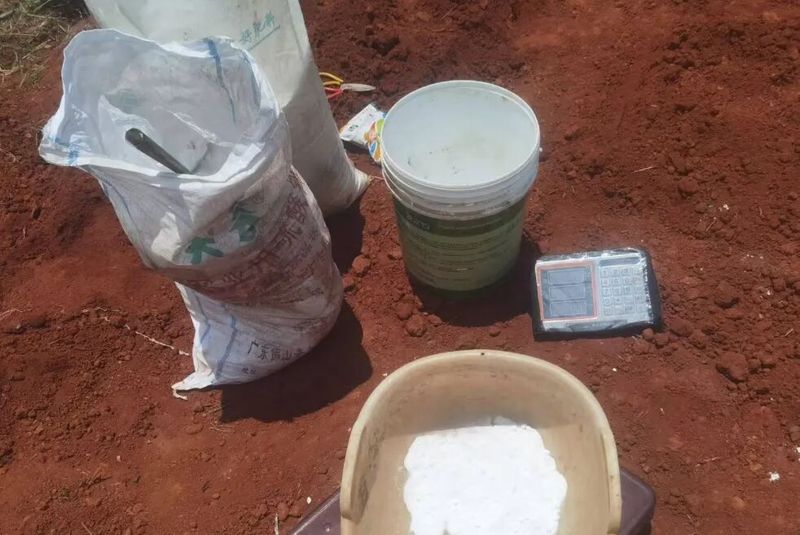
The cultivation of mountain medicine varies according to climatic conditions, generally requiring surface temperatures of 5 cm or more to be stabilized at 9-10°c. Land cover can also be used with the conditions. The general method is that, when the mountain pharmacological ditch is filled with water, the seedlings are laid vertically in the centre of the pre-prepared deep loft, at a distance of about 25 cm, at a density of 4,000 to 4,500 6,500 square metres, and then the soil is 5 cm, which is fertilized 20 cm on both sides of the mountain medicine. In general, more than 3,000 kg/kg/267 m2 of urea, 10 - 15 kg/267 m2 of urea, 40 - 50 kg/267 m2 of potassium sulphate, 60 - 75 kg/267 m2 of calcium perphosphate and 5 cm/cm of soil are fertilized, making it a small height。
6. Science management
1. High plant cultivation
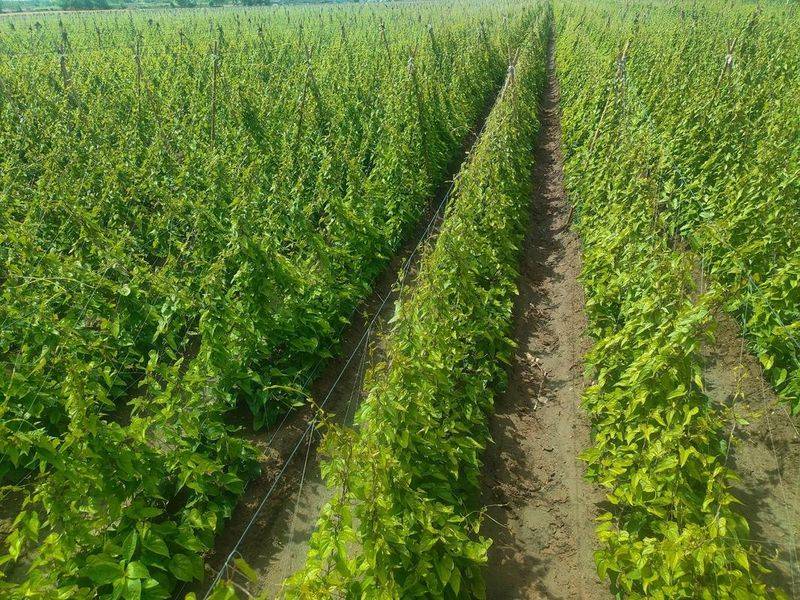
A few days after the pharmacist came out of the mountain, he fell out and could not stand up and grow, so he needed a support. It's usually better to use around 2m poles as a support frame。
Watering, drainage
High mountain weather, low air moisture and high soil temperatures require 5-7 waters per lifetime. In the case of pedestal water, water is usually poured on basic saplings in order to promote seedlings and rooting, and the second water tends sooner or later, not to wait until the head is dried, and every 15 days thereafter depending on the rainfall. During the rainy season, each heavy rainfall should be followed by the timely discharge of water accumulations in order to reduce the temperature of the earth, supplement soil air and combat disease and seedlings。
3. Fertilization
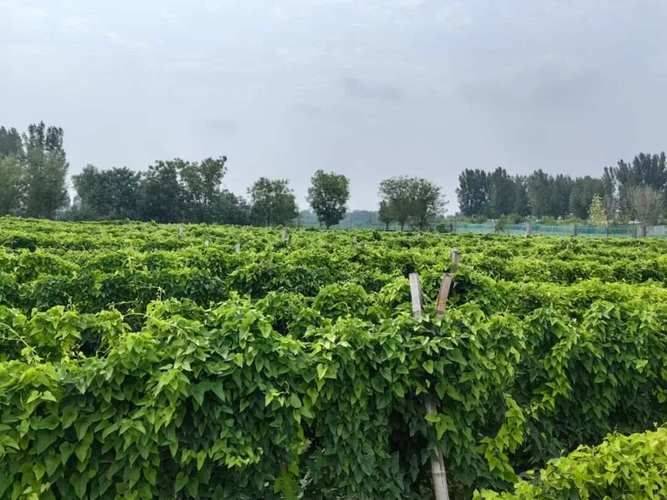
Mountain medicine needs to be heavily fertilized, with general mountain medicine production of 2000-2500 kg/667 square metres, pure nllkg, p2058kg, k209kg, with a ratio of 1. 5:1. O:1. 2. According to relevant research data, the ratio of potassium nitrogen phosphorus is very high at 1. 5:1. 0:3. 0 and can be followed up one time during the flowering period on the basis of the application of base fats, at which point the tubing period is about to enter, combining urea 15kg with potassium sulphate 15-20kg with the application of 0. 2% potassium phosphate and 1% urea to prevent early decay。
4. Chinese tillage
Mountain pharmacists sprout in the form of rain, which tends to cause soil crumbs and affect seedlings, and should be released immediately. After each water and precipitation, shallow farming should be carried out in order to maintain good soil permeability and promote tubing. Weeds should be removed in a timely manner during the harsh process of mountain medicine. Soil closed weeding can be performed with alachlor before seeding. Before seeding, weeds can be protected against weeds by weeding or bullying。
Prevention and treatment of pests
The main diseases are brown and anthrax. Brown disease is primarily harmful to leaves, mainly by avoiding high temperatures of inter-walk depression, with attention to drainage, with 70 per cent methyl tobuzin and 75 per cent bacterial wettable powder sprayed in the early stages of the disease, 1 in 10 days and 2 in a row. Anthrax is a major hazard to leaf blades and vines through rotation, timely elimination of the disease, 50 per cent of methyl tobuzin or 50 per cent of bi-humid powder spray at the beginning of the disease, 1 spraying in 10 days and 2-3 continuous spraying。
The pests are mainly pox bees, which eat mainly leaves and meat, and feed the leaves in a mesh, resulting in serious loss of production. The method of prevention is sprayed with low-toxic permethrin pesticides (e. G., enemy killing, 100 trees etc.)。
6. Harvest
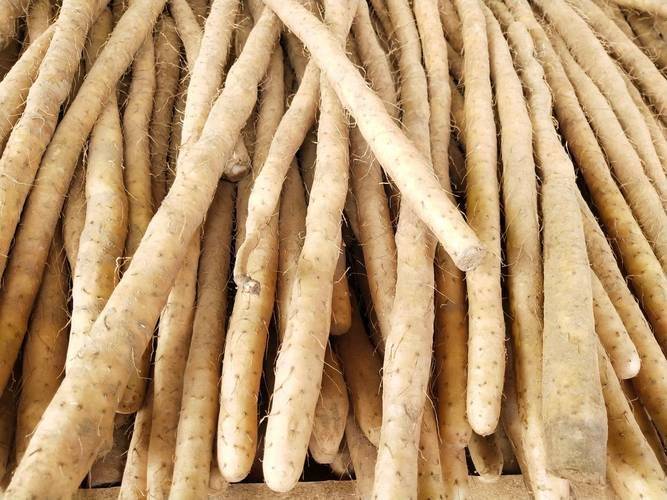
Monophagus leaves die of frost, usually during normal harvest periods before and after frostfall, and spare parts tend to be harvested 30 days earlier。
These are the methods of planting mountain medicine that the farming community has described for you, and it is hoped that their articles will help you to grow them better。
1. Land selection is based on the cultivation of mountain pharmacists on sandy plots deep in the earth, fertile and groundwater tables below 1 m。
2. Select appropriate varieties for long-column drug varieties with good prophylactic, shape and skin characteristics, with a length of more than one metre. The most common types of medicine are: pharmacological pharmacology, pharmacological medicine, and paisal medicine。
3- process plastics tube selects a rigid plastic tube with an inner diameter of 6-7 cm, grows a 1 m section with a hand saw, cuts the tube in half, then cuts it to half the end at a distance of 20 cm from the end of the plastic tube, and cuts the port into half a circle. Further to the other end of the plastic pipe to the middle, the hole is drilled or drilled by hand, with an aperture of 1 cm and a distance of 3 cm, with six holes per row, for a total of 4 rows. This can be used for six to eight years。
In april, when the soil was unfrozen, the tunnel was dug up, 30 to 40 centimetres wide, 50 to 60 centimetres deep and 60 centimetres apart. Digging is carried out in layers so that it can be filled back. Filling the bottom of a ditch, placing the plastic tube evenly at a distance of 30 centimetres, moving the side of the mouth up, refilling the earth layer 15 centimetres thick, stepping side by side, placing the plastic tube in a row at 60° angle, flattening the top end and 10 cm above the ground level. And then you fill the earth with 10 to 15 centimetres, and then you fill half of the ground? Don't step on it, and then you apply 4,000 kg of decomposed, high-quality organic fat for every 667 metres, and then you mix the applied organic fat and earth, and then you fill the mountain ditch with the ground。
5. The whole platinum is marked with a flat platinum of 1. 4 to 1. 5 metres in each row. Prior to doing this, 2,000 kg of decomposed, high-quality organic fertilizer per 667 m2 was applied to the surface, which was then rolled down. Mark both ends of the piping and lines of the plastic tube to find the plastic tube during seeding。