I. Rationale for relays
Relays are an automatic "electrically controlled" switch that generates a magnetic field by entering circuits (circles) and absorbs coding iron-led output circuits (touches) to achieve low voltage/small current control of high voltage/large currents。
It is popularly said that the wires are like “puzzling the gate”, that the cortex is sucked like “opening the gate”, and that the circuits of the output circuits are broken, like pulling the gate with small force to control the breakout of the large water flow。
Ii. Wiring methods (for example, commonly used electromagnetic relays)
Relays consist mainly of input loops (wire end) and output loops (touch end), which are connected separately to avoid mixing。
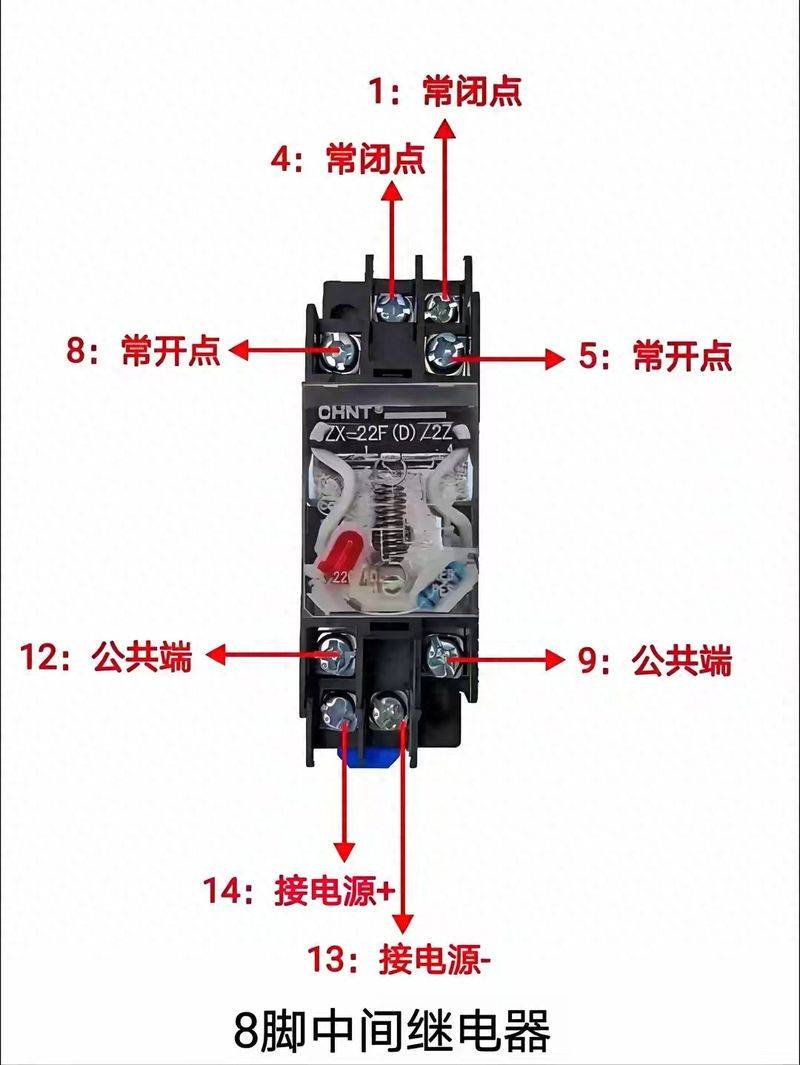
1. Enter a loop (circle) connection
Activation: powering the wire and suction the relay。
Connector points:
Two triggers were found for relays that indicated "ring", or "com+, com-" (direct flow), "l" and "n" (exchange)。
Access to controlled power sources (e. G., straight currents of 12v, 24v, which need to match the electrical voltage of relay wires) can be associated with a control switch (e. G., buttons, plc output end) to control loops。
2. Output circuit (touch end) connection
Effects: control the power supply of loads (e. G. Light bulbs, electric appliances) through contact breaking。
Critical contacts:
Public end (com): public connection foot of the point。
Constant contact point (nc): direct with com when the wire is out of power; when the wire is out, it is disconnected from com。
Frequent contact points (no): disconnect with com when the coil is not powered; when the coil is electrified, direct with com。
Connecting steps:
1) the one end of the load (e. G. A light bulb) with a positive power source (or a fuse)。
2) the no or nc contact point for the other end of the load relay (no is commonly used to “electricize” according to the choice of demand)。
3) the com-end power supply negative pole (or zero line) for relays。