People's visualization
Rural emptiness, growing population of large cities, net migration of the heilong river for many years ... In recent years, our population movement has taken on many new characteristics. What is the reason for this round of migration? How does the acceleration of population movements affect economic and social development? How should we lead to orderly and benign population movements? How can it be ensured that improvements in the lives of people are not compromised in this process
— editor
More and more people are leaving their homes to take root in their homes. Data from the sixth national census show that, compared to the results of the fifth census, 14 of the country's 31 provincial districts have net population inflows, 17 have net outflows and more than 10 provinces have lost more than 2 million people, with inter-provincial movements accelerating. The department of anhui, which has the largest population loss, has 9,623,000 people living or working in other provinces, accounting for 11. 2 per cent of the population moving across the country. The situation in the three north-eastern provinces is particularly striking: while under downward economic pressure, the three provinces have experienced net population outflows over many years and fertility rates are well below the national average — why do people choose to leave? Can these places stay
People moving up, economic imbalances being the root cause of population movements
The 78-year-old is a farmer in sasagawa county, henan province. On the day of the summer, his son and his daughter-in-law went to the field, and he and his companion gathered the garden. At the edge of the fence, heavy-granddaughters who had just learned to walk dug mud with plastic shovels。
This large family, which had more than 20 members, now has only five people to guard three compounds. "when my old ones are gone, my son and daughter-in-law will go into town with little nell." cheng said there were almost 100 families in the village, and now there are more than half of the houses. "all of them went to work, and they made too little land."
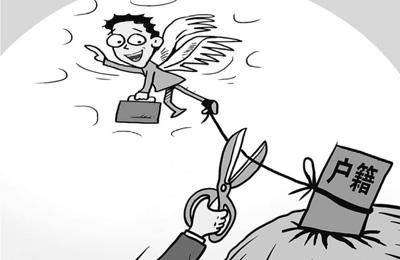
This is a microcosm of the accelerated population movement between urban and rural areas of the country today. In 2004, the national statistical office estimated, through a sample survey, that there were about 100 million migrant farmers in the country in the year, and in 2014, the national statistical office indicated that there were 168 million migrant farmers. As household registration reforms continue, more and more “hotbirds” have travelled between urban and rural areas, choosing to keep their nests and wishes in the city。
In addition to the movement of farmers into urban areas, there is another migration route that is slowly changing the pattern of inter-provincial population distribution - the movement of more educated people across provinces is increasing。
The data from the sixth census show that in 2010 the secondary school population in zhejiang province and the population below were 6. 1 per cent lower than in the fifth census in 2000, and that the secondary school level and the post-secondary level and above were 3. 3 per cent and 2. 7 per cent higher, respectively, than in the “five ps”. In the same decade, the net outflow of the heilong river increased 2. 6 times to 2,048,000 people, of whom the higher education levels are active。
Income disparities are an important factor in attracting young people with higher education. According to the data, in 2012, the social wage (average wage for active employees) in heilongjiang province was $2843, while guangdong province had reached $5313。
Liu zhongbo went to teach at a high school in guangzhou last year after graduating from harbin teacher university. “in recent years, there has been a decline in productivity and the teaching profession in the north-east has become saturated. Even without teaching, the north-east is less well served than the south's coastal areas, and the south is less open to entrepreneurial innovation.”
“earnings are only one side, and young people value opportunities for equitable development in the south.” fung guangheng graduated this year for eight years in the northeast, and since he graduated, he has headed for chengdu as a public good institution。
“in the course of seeking employment, i found that some jobs were filled before the examination. Most of my classmates went to beijing, shanghai, shenzhen, qingdao, and some of them actually worked with low incomes, but with fair opportunities, and felt that there was a way to go.” he said。
As income levels rise, some people migrate to improve their quality of life and become another feature of current population movements。
In recent years, the group of elderly people in the northeast, who survive the winter south, has been expanding. "the air is good, the view is good, the cars are good, the meals are good, the homes are good." mr. Xu, who retired from a business establishment in heilongjiang province last year, first visited sanya, giving rise to a desire to retire. According to data from the association of older adults of san asia, there are currently nearly 200,000 elderly people in harbin, who are elderly in san asia。
“the main driving force behind population movements in times of peace is the economic factor, to put it simply that `people move up' — regional imbalances in economic development lead to labour flows to areas with better employment opportunities and higher income levels.” according to the results of the multi-year follow-up survey, rodandan, an assistant researcher at the faculty of social sciences of heilongjiang province, indicated that the population exodus in the east three provinces has accelerated in recent years and has become a net outlet, mainly to the three main urban centres: the pearl triangle, the long triangle and kyinzu。
As soon as it's hard to get there, it's hard for the economy
Researcher zhang zhang xian, researcher of the population and labour economics institute of the chinese academy of social sciences, noted that the rapid pace of population movement is a sign of growing economic dynamism and that a positive attitude should be taken。
“in 2010, according to data on the “pu6” migration, our mobile population increased by 100 million compared to 2000. More people move and move from the centre-west to the developed east. This trend reflects a coherent pattern of population movements and economies. Migration has contributed both to economic development and to meeting the needs of the labour force in areas of inflow and to raising income levels in areas of emigration. From an economic point of view, the free movement of human resources is an important aspect of the market's allocation of resources, which enhances the efficiency of economic development; from a social development perspective, it is positive to liberate people from `household chains' and to promote equality and social integration among citizens.”。
“however, the acceleration of population movements is also a great challenge to the places of emigration and inflow.” zhang is of the view that there is a loss of labour advantage in places of emigration, while the places of inflow are under environmental stress。
As one of the seven major plants in zizihar, the first machine plant had a brilliant past. "now all the old and the young are gone." old employee wang chun fu (alias) said that the seven major factories were now in a serious development crisis. “students do not want to come, and some talented old employees are also dug up by businesses in the south, leaving with their families. There are fewer young people and more retirees, and future enterprise development and pension security will be difficult.”
According to data from the zizihar city bureau of statistics, there were 37,779 net city-wide migrations in 2014 and 25381 in 2013, with an accelerated trend。
The same is true of rural areas that have been “leaved” by the younger generation. Henan farmer cheng misses his sons and grandchildren, but he does not want the children to visit the village often. “the farm is stowing the village, and rivers and wells stink. Who cares about the stand
The experts note that, with further urbanization over the next decade and more, the phenomenon of rural emptiness will become more pronounced in the mid-west region, where the new rural construction objectives of “production development, well-being, rural culture, village cleanliness, managing democracy” lack high-quality village cadres as well as high-quality new “cultural, skilled and run” farmers。
Nor is it easy for those who go away to hope, and there are difficulties and problems。
Chen worked in beijing for almost 10 years, working as a cook at a five-star restaurant, and his child was almost two years old. His best wish was to save enough money and open a small restaurant in anhui county. “priority and unaffordable housing can be overcome, and one thing remains to be overcome — it is difficult for children to go to secondary school even if they can go to primary school for working children.”
Fong ya fei is from bury county, heilongjiang province, and five years ago he took his family to the shandong sun for business. “it's a barbecue shop, a fruit stand, and now it's bought a house, but no relatives or friends, it's a holiday, so they're all alone in tears.”
“homeland is a search. Looking for what? Economic security, psychological belonging.” according to rodandan, china is a traditional farming society, which is difficult to relocate. There have been several large-scale population movements throughout history, all of which were the result of war. Even in times of peace, for the first generation of “immigrants,” it will take a long time to overcome the economic, psychological, and multiple pressures of isolation and even insecurity. “in cities that coordinate regional economic development and achieve urban-rural integration, accelerated population mobility is inevitable, and the collective memory of a generation will become a reality. Rodandan said."
Industrial revitalization, optimizing the environment and rebalancing the human and economic environment
“the primary measure of the survival of a region's population is its economic carrying capacity, expressed in the formula: the economic pressure index of the population = population size x national per capita income/total regional national income. If the index is greater than 1, it is indicative of insufficient economic carrying.” according to rodandan, the economic stress index for the population in heilongjiang province was 0. 97 in 2000, and by 2010 it had reached 1. 1. In theory, the net outflow of the population from the eastern three provinces is a logical consequence of the slowdown in economic development。
Will population outflows have a further impact on economic development, leading to a vicious circle of “economic downturn — exodus — further slowdown”
“economic pressure can cause outflows, but it does not mean that outflows can lead to declines and continue.” zhang added that when the environmental carrying capacity of a region is limited, investment faces marginal gains. “down to a certain point, businesses have to find other places, and the corresponding movement of people will follow. The market value of human resources will be re-emerged as a result of population outflows to a certain extent.”
Jiahuntao worked from his home in the province of heilongjiang to the shandong pass in 1993 and subsequently poured food and fruit between the two locations. In 1995, his logistics business had been irradiated, for example, at the hainan sea mouth. When he returned to establish his own business in 2008, young-hyun village, a “shell village” with a debt of more than 200,000 yuan, with few manpower, led the villagers to establish cooperatives such as rice, smoke, guacamole and machinery. “the village is rich and everyone is back. The village's labour is not enough. We have more than 1,000 outsiders.”
"the rich have pull and the poor have push." china believes that, in order to move in an orderly and virtuous direction, it is essential to change the environment for economic development and to create its own niche industries. In some provinces, such as heilongjiang, there is a need to change the current situation of emigration or to rely on development. “there is a tax on industry, and there is a range of guarantees and benefits for education, health, employment, etc., which naturally attracts a highly qualified population.”
“there is considerable scope for policy to guide population movements.” according to wang mi-ian, a researcher at the institute of population and labour economics of the chinese academy of social sciences, there is currently an excessive concentration of the population in large cities, which could lead to environmental pollution and congestion. In order to achieve a more balanced population distribution, it is necessary to plan industrial layout and infrastructure based on ecological and environmental conditions, so that economic development and population growth in the regions can take place in a virtuous cycle。
“whether between rural and urban areas or between regions, until a new balance is struck between population size and economic development patterns, policy arrangements are adopted to ensure the well-being of the displaced.” zhang is of the view that the current fiscal transfers have not been accompanied by money, and that the fiscal balance between the central and local, out-migration and in-migration governments, and small and medium-sized cities should be addressed. “this is a prerequisite for the equalization of public services in the movement of people.”