Application of celery, cabbage floats to tailing treatment in ponds
Application of celery, cabbage floats to tailing treatment in ponds
Other organiser
Placing of water surfaces in tailwater treatment ponds and planting of vegetables and cash crops and reuse of nutrients in water bodies using plant absorption are effective means of improving the effects of tail water treatment. Tests of pond tail water treatment using celery and empty cabbage floats are summarized below。
I. Materials and methodologies
1. Pond conditions
The test pond is located at the five-seven eastern aquaculture llc farm base in wuhan, hubei province, where the treatment of the farm tailings consists of sedimentary areas, filtration areas, gas exposure areas and biopurification ponds of sedimentation plants at the bottom of the pond, with an emission of approximately 36 metres 3 hours。
2. Floating beds
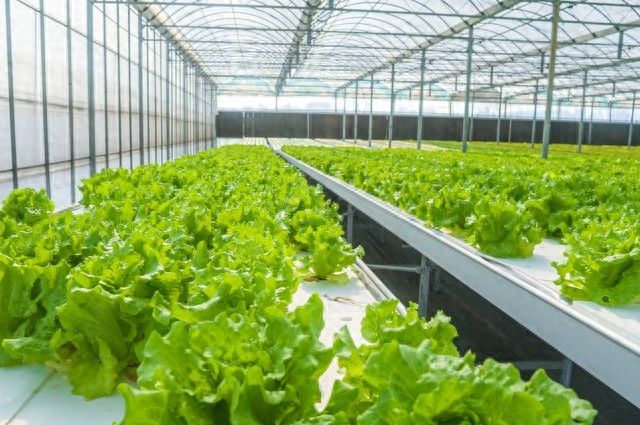
The total area of ponds is 8. 8 acres, with bioplasms placed on the surfaces of deposition and biopurification pools at fixed intervals. A 2 m x 2 m float bed is installed in biopurification ponds, which accounts for 8 per cent of pond waters, and a 2 m x 2 m float bed, which covers 6 per cent of pond waters. The plant selected for the flopbed consists of well-established, aquatic and empty cabbage and aqueous celery, which are combined for transplantation at the beginning of may and complete all of the floating beds by mid-may。
3. Water quality testing
In 2021, the water-quality indicators of the ponds were measured for aqueous nitrogen, nitrite, nitrate, soluble phosphate, total nitrogen and total phosphorus before and after transplantation in april and may, and the water quality indicators of the ponds were continuously measured for april-october. Water samples are filtered using a 0. 22 Μm micro-pore filter, and filtered water is used to determine nitrate, nitrite, ammonia nitrogen indicators, and unfiltered water samples are used to determine total phosphorus, total nitrogen indicators. Total nitrogen (tn) is determined by potassium alkaline persulphate, nitrate by ultraviolet spectrophotometry, nitrite by n-(1-gill)-ethylenediamine photometry, ammonia nitrogen by nadoxin photometry, and total phosphorus (tp) by ammonium spectrometry. Other hydro-specific measurements refer to the fourth edition of water and wastewater monitoring analysis。
The removal rate for each indicator is calculated in the following manner: the removal rate (%) = (co-ci)/co x 100, in which co is the concentration of contaminants in the water body that enters the tail water and c i is the concentration of the contaminant in the water bodies that discharge the water。
Analysis of results
1. Removal of nitrogen from the float bed to the water column
In april-october, the statistical analysis of the results of the monitoring of ammonia, nitrous nitrogen, nitrogen nitrate and total nitrogen in the water column of the plume treatment area showed a removal rate of around 8 per cent of the total nitrogen at the initial stage of the leachate frame, followed by a gradual increase and stabilization of the rate of nitrogen removal to 15 to 20 per cent as a result of the growth of the plume plant. In september, there was a significant increase in ammonia, nitrogen nitrous, nitrogen nitro and total nitrogen removal rates. After may, the removal rate of nitrogen in tailings increased from 30 to 50 per cent and could be stabilized at or below 50 per cent; the removal rate of nitrogen in nitrite increased from 40 to 90 per cent and remained stable at 60 per cent afterward (figure 1)。
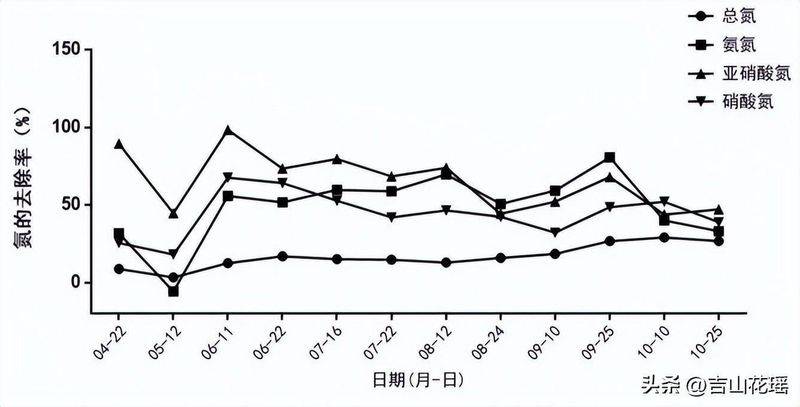
Figure 1 nitrogen removal rate in water
2. Removal of phosphorus from the plume to the water column
The statistical analysis of total phosphorus and soluble phosphorus in the water column of the 4-october plume treatment area shows that the removal of total phosphorus in the tailings was 20 per cent without a floating bed and the removal of soluble phosphorus was not significant. The removal efficiency of phosphorus has increased significantly, with a maximum removal rate of over 50 per cent and subsequent stabilization above 40 per cent (figure 2)。
Figure 2 removal rate of phosphorus in the water column from the plumes
3. Growth of floating-bed plants
The experiment began in mid-may with the construction of a corset of celery and a corset of carbines. Until the end of the sampling in october, the test period included a boom season for hollow cabbage and a boom season for celery, during which the plant grew well. A total of 30 kg of celery and hollow cabbage can be collected on a 4 m2 plant bed, with an average additional income of approximately $360 per bed。
Iii. Discussion and summary
The test found that the removal of nitrogen phosphorus in the tail water treatment pond had increased significantly after the placement of the float bed, and that the removal rate of nitrogen phosphorus had increased and stabilized as the growth of the float plant increased the demand for nitrogen phosphorus in the water column. Nitrogen and nitrite are the main factors affecting the quality of water bodies, and nitrogen levels directly affect the occurrence of algae in water bodies; high nitrite can have toxic effects on aquatic plants and animals. The concentration of phosphorus in water bodies is an important indicator for the assessment of the water environment, and the higher concentration of phosphorus is reflected in eutrophication of water bodies。
The removal rate of nitrogen increased from 30% to 50%, of nitrogen in nitrous form from 40% to 60% and of phosphorus from 20% to 40%. As a result, it is known that the installation of biofading beds significantly enhances the water purification effect of tailwater treatment ponds。
The co-planting of hollow cabbage and celery in biofacing beds can effectively increase the efficiency of their application. This is due to the boom in hollow cabbage in april-july, while the boom in celery continued after august until january of the following year, when mixed cultivation of the two plants took advantage of the different growing seasons of the two plants, prolonging the use of float beds while effectively increasing income. In the practical application of biofab beds, the use of more plants with different growth cycles could be considered for mixed cultivation, which would increase the efficiency of the clean-up on a sustainable basis, as well as eco-efficiency and economic efficiency。