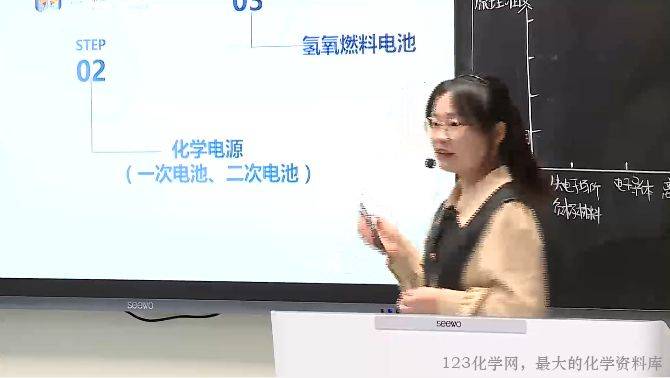
Tips: several videos play only the first file, and complete videos are downloaded and shown. The information package consists of three documents and is listed in chapter i, chemical conversion to electric energy - batteries, course 3, “hygen” in formation, “cpools” in quality ~1. Mp4 (254. 0 mb) 2. Chapter i, chemical conversion to electrical power - batteries, section 3, “hilgen” in assembly, design of teaching. DOCX (194. 17 kb) 3. [physical repairs in the ruko version. 1 chapter i, chemical conversion to electric power - batteries unit design]. DOCX (1. 28 mb)
The high-school chemistry module, "chemical conversion to electrical energy -- batteries" "helium" on the line, "could."
Lecture teacher: 1st secondary school, mon city
Introduction
1. Content criteria
Further understanding of the original battery doctrine allows for the writing of electrodes and battery response equations。
2. Learning requirements
Common chemical power sources can be listed, and relevant information can be used to analyse the workings of chemical power sources; examples can be given of chemical sources
The key role in addressing the energy crisis is to analyse the impact of energy use on the natural environment and social development。
Ii. Analysis of elements
1. Content analysis
This course is based on the working principles of the original battery and the knowledge application of the chemical power source. The core of this class is the extraction of green batteries from winter hydrogen cars, and then to design and experiment with hydrogen fuel cells, and eventually optimize the efficient design of conditions
The hydrogen fuel cell。
2. Literacy
It is possible to analyze strange chemical cells based on the cognitive model of the original battery system, to guide students to optimisation through experimental data, and finally to use the principles to explain the phenomenon in life, thus developing the students' “evidence reasoning and models”, “scientific exploration and research”
Innovative awareness, “scientific attitudes and social responsibility” and other key competencies of chemistry disciplines。
Iii. Analysis
1. Knowledge level: the working principles of the original battery have been mastered, and capture of the oxidation reaction is the essence of the original battery, but still exists
In the initial study of theory, no applied models have been learned。
2. Capacity level: questions can be raised initially to deal with simple issues, but the rigour of thinking is inadequate。
3. Psychological dimension: a search for a strong desire, a sense of learning self-confidence, but the ability to integrate information and analyse problems from multiple perspectives
Insufficiently。
Iv. Teaching objectives
Hydrogen oxide fuel cells can be designed in accordance with the original battery principles。
Hydrogen oxide fuel cells can be optimized according to experimental phenomena。
3. Capable of analysing negative and positive polar equations in different media。
V. Teaching methodology
Experimental law, discussion law, inquiry law, etc。
Vi. Experimental supplies
Lead core, pencil box, direct current power source, guide and current meter, 0. 1mol/l potassium sulfate solution, 0. 1mol/l hydroxide
Potassium solution, 0. 1mol/l sulphate solution, proton exchange membrane, platinum electrodes, digital sensors, etc。
Vii. Pedagogical focus, difficulties
Focus: optimizing hydrogen fuel cells and working principles。
Difficulty: writing of the electrode equation for hydrogen fuel cells。