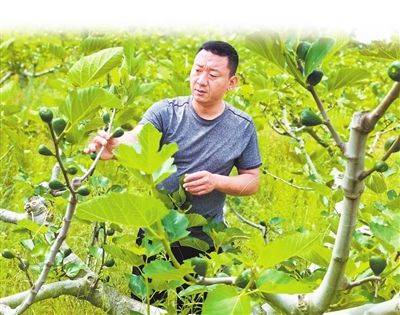
Li xiao peng is checking for figs
Henan daily news, a reporter at sanno media center, cao sang fei, a correspondent, du cangar, li jianxing, man/chart
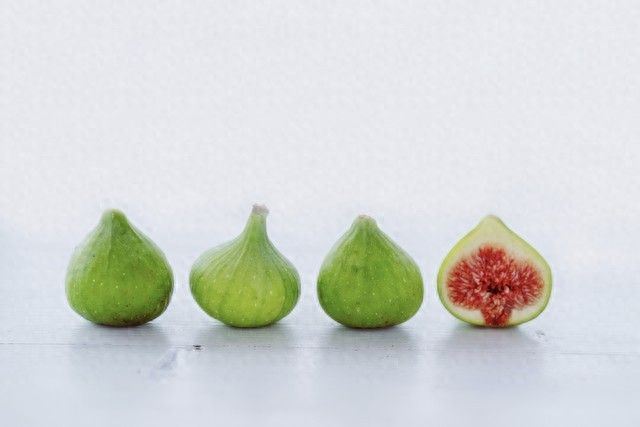
On 24 september, after a long autumn rain, the sun spilled towards the fig planting base of the “kinji valley fairy” village of lugu, longbridge town, in an atmosphere filled with fruit fragrances of the heart of the people. Four hundred and fifty acres of figs are in the harvest season, and a purple or green sugar bun is full of branches. In the planting grounds, the cooperative director, li xiao peng, is leading the workers through the fruit tree to carefully guide the harvesting process. Workers with small baskets are skilled and easily screwed, and figs fall into the basket。
Li xiao peng is 46 years old and is from liu village in east valley, changbashi county, the founder of the brand of the "seven valley fairy man". In 2000, he went to beijing to do business, sells, runs wedding theatres, invests in real estate and is an angel investor。
In 2019, lee peng, with his desire to lead his home country, returned to start his own business. With the support of the local government, he founded the specialized cooperative of the “kinji valley fairy man” for the cultivation of figs and took the road to the cultivation of figs。
"the family didn't understand at first, saying i was crazy." lee xiao peng recalled, “but i know that agriculture has much to offer and that the key is to use new thinking for agriculture.”
After several years of development, cooperative cultivation areas have been irradiated to three canyons, shuzhou and the front of the balcony, with a total area of over 600 acres, four cold sheds and 50 acres of nursery grounds. Through scientific planting and temperature management, the pick-up period for fresh fruit has been extended to four months, leading to a year-round mismarketing。
Entered the figs of the nine valley fairy man plant in ragoda village, where the trees were arranged. “we use all organic fertilizers, we use physical insects to ensure the safety of fruits, and the main `barone' species are thin and soft. Lee xiao peng picks up the next ripe fruit with his hand, and the purple and red meat sends a unique fragrance, “taste it, that's the taste of nature”
“we insist that `the day is picked, the day is sorted, the day is shipped in the cold chain' and that consumers are assured of the freshest fruits through the rapid flow of logistics to large cities such as beijing, shanghai and zhengzhou.” li xiao peng introduced the fruit with a sugar meter. At present, the base produces more than 4000 pounds of figre, with a total annual production estimated at 800,000-1 million pounds and sales of around $6 million, bringing more than 150 local villagers closer to employment。
"it makes hundreds of dollars a day. It's not less than a day's work. It's really good to take care of the family." the villagers li ming are pleased to say that this “sweet industrial chain” not only effectively boosts farmers' incomes but also generates economic gains of more than $100,000 a year for village groups。
In order to increase product value added and resource utilization, the base has established a parallel “fruit + processing” production pattern: first-class fruits are sold directly to the market, second-class fruits are used to make fruit dry and third-class fruits are used to make wine and produce zero loss and consumption processing. In addition, more than 20 derivative products, such as fruit and tea, oil and cleaning materials, have been developed and are well received by the market and in short supply。
“agriculture is an industry that needs patience, like figs, that seems to be flowerless but produces results, and that needs to wait for time.” lee xiao peng says. He has constantly asked experts, improved technology and developed the know-how to grow figs. Through the introduction of drip irrigation systems and the implementation of organic cultivation, the production and quality of fruitless fruit from orchards are increasing year by year. At present, the cooperative has worked with the horticultural institute of sichuan university of agriculture to develop functional figs; plans are under way to expand the variety to 60 by the end of 2025, to build a stock of figs and seeds and to develop new products such as frozen dry products in cooperation with jiangsu processing enterprises。
The secretary of the longbridge towns party, li tsai-bing, stated: “the shibuya sensor's fig planting base has become a model project for the revitalization of local villages. Not only did it succeed on its own, but more importantly, it led to an increase in farm incomes and explored a new path to special agricultural development.”