Wheeled walkers are a common mobile platform, which achieves movement through wheel-to-ground contact and rotation. Such institutions have been widely applied in a wide variety of areas, owing to their relatively simple structure, their motor efficiency and their ease of control. From domestic appliances in daily life to logistics in industrial production, to exploration operations in particular environments, wheeled walkers play an indispensable role. This paper will provide a systematic analysis of the classification, working principles and typical application scenarios of wheeled walkers。
I. Categorization of wheeled walkers
Wheeled walkers can be classified according to the number of wheels, layout, mode of driving and mode of diversion. The different combinations determine the different physical characteristics of the institution and its application。
1. Breakdown by number of wheels
This is the most basic classification, consisting mainly of two, three, four and multiple bodies。
(1) two-wheeling institutions: the typical representative is a balanced car or two-wheeled robot. Such an institution usually needs to maintain a dynamic balance with complex control systems (e. G. Gyroscopes), which have the advantage of being flexible and with a small turning radius, but with relatively low stability。
(2) three-round institutions: this is one of the most stable and static structures (i. E., it can also be balanced when not moving). Common layouts include a front wheel shift and drive, a second two-wheel differential drive, or a first two-wheel differential drive, and a second round of 10,000-wheel support. The three-wheel structure is simple, easy to control and is often used in indoor service robots, agvs, etc。

(3) four rounds of institutions: this is the most widely applied type with excellent stability and carrying capacity. Divisions:
* double-wheel differential drive: two drivers drive independently, with a shift achieved by controlling the speed differential of two wheels, and two side-to-side. The structure is compact and flexible。
:: four-wheel drive: all wheels are wheeled and provide a strong pull force suitable for travel on rugged or less frictional ground, such as field exploration robots and moon vehicles。
*akman turns: imitating the car shift, making the internal side wheel shift greater than the external side wheel through a chain, ensuring that all wheels rotate around the centre of the same moment, reducing tire wear and suitable for high speed。
(4) multi-wheeling bodies (five wheels and above): usually used in situations where heavy loads or pressure on the ground is strictly required, such as large logistics loaders, large space detectors. Multi-wheel designs can spread the pressure and increase vulnerability and stability。
2. Classification by type of wheel
The characteristics of the wheel itself also determine the performance of the institution。
(1) standard wheel: an ordinary rigid wheel, which applies to a flat and hard surface and is highly efficient。
(2) one million-way wheel: can rotate 360 degrees around the main axis, mainly to support and assist the shift, often in three or four-wheeled establishments。
(3) mcnam wheel: this is a special full-way wheel with many small rolls with a specific angle of the wheel installed on the edge. By controlling the speed and direction of multiple mcnam rotations, full movement of the platform, around, around, tilt and even in situ, can be achieved with great flexibility, but with complex structures, high costs and high ground levelness。
(4) track-based institutions: although not strictly purely wheeled, they are often subsumed within the broader circle of walking bodies. It spreads its weight to a larger area by a closed belt, which is smaller than the ground, and is extremely good on soft, rugged terrain (e. G. Mud, sand), but is slow and prone to damage to the ground。
3. Classification by driver and shift mode
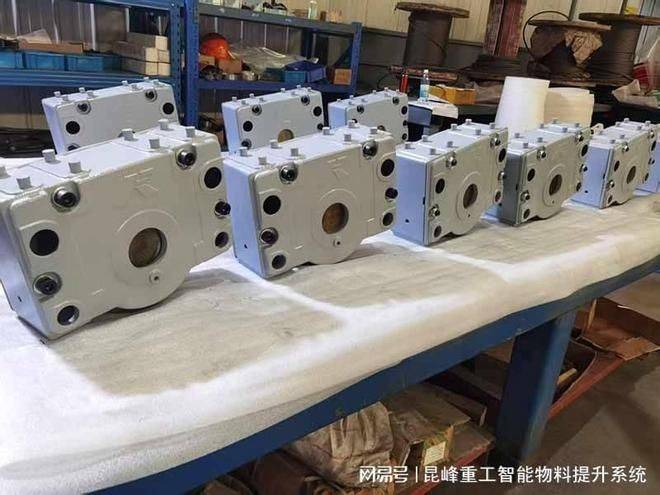
(1) driver approach: mainly divided into electric (direct current, step-by-step, server, etc.), hydraulic (for heavy loads) and gas-driven。
(2) mode of diversion: this includes a differential shift (achieved by a left- and right-wheel differential), an ackerman shift, a full shift (e. G., mcnam wheel) and a swirl shift (central reconnection of the car, which is applied to large vehicles by changing the angle of the front-and-forward part)。
Ii. Rationale for the work of the wheeled walkers
The core principle of a wheeled walker is friction and rolling in mechanics. Its movement depends on the static friction between the wheel and the ground. When a driving system (e. G. An electric power) exerts a twist on the wheel, the wheel produces a backward force on the ground, which, according to newton's third law, gives the wheel an equal reaction in size and direction, which is the pull that drives the institution forward。
1. Sports realization
:: straight motion: when the driving wheel on both sides of the right and the right rotates forward at the same speed, the institution moves along the same line; when the wheel rotates backwards at the same speed, the line retreats。
:: turning to motion: the essence of the shift is to cause a speed differential on both sides of the institution. For example, the most common two-wheel differential drive:
* when the speed of the revolver is greater than that of the right, the institution turns to the right。
* when the speed of the right wheel is greater than the speed of the revolver, the institution turns left。
* when the right and right wheel is equal in size but in the opposite direction, the institution can rotate in place。
*the rationale for ackerman's shift is to ensure that when vehicles turn through mechanical structures, all wheels turn to one point, i. E., to the centre in an instant, thus achieving a smooth turn。
2. Extremism and adaptability
For non-platform terrain, the pass-through capacity of a wheeled institution depends on several factors: the diameter of the wheel, the mass of the wheel, the suspension system and the driving capacity. Larger wheels can more easily roll through smaller ditches or barriers; pneumatic or elastic tyres can better absorb vibrations; stand-alone suspension systems can better bind wheels to the ground and maintain grips; and strong drivers ensure that there are enough twists to overcome resistance。
Iii. Typical application scenarios for wheeled walkers
By virtue of its diverse forms, wheeled institutions permeated almost all aspects of modern society。
1. Industry and logistics
This is one of the most mature areas of application for wheeled walkers。
(1) agv (autonomous guide transport vehicle): in storage, workshop, etc., agv automatically travels along predefined paths (magnetic conductors, lasers, etc.) and completes the removal of materials, parts and components, significantly increasing the level of logistics automation. They use more than three-wheel or four-wheel differential-driven structures。
(2) forklifts: both manual forklifts and automatic forklifts rely on a robust structure of four or more wheels to carry heavy loads。
(3) mobile platforms on production lines: used to transport products between assembly lines。
2. Services and areas of life
As technology develops, wheeled robots are increasingly entering daily life。
(1) domestic service robots: for example, ground sweep robots usually use a three-wheel structure (two drivers, one wheel) to plan sweep paths through collision sensors or more advanced visual navigation。
(2) guided and distributed robots: in hotels, restaurants, hospitals, etc., four-wheeled robots that conduct guides, deliver meals, deliver medicines, etc., can be seen, and they need good protection and navigation。
(3) accompanying and entertaining robots: some interactive robots also use a wheeled chassis for autonomous movement and human interaction。
3. Special and extreme environmental areas
On these occasions, the design of the rotating institutions faces serious challenges。
(1) space exploration: mars and moon vehicles are distinguished representatives of wheeled walking agencies. They require an extremely high level of reliability, autonomous navigation and the ability to adapt to unknown rugged terrain. Six rounds of self-contained arm-strangling structures are usually used to enhance the impairment performance。
(2) disaster rescue: in disaster sites such as earthquakes, explosions, rescue robots with wheeled, tracked or wheeled combinations have access to dangerous areas for search and rescue and detection missions。
(3) agriculture and field operations: auto-piloted agricultural machinery, field environment monitoring robots, etc., require long periods of work in unstructured agricultural land, wilderness, and high levels of institutional durability and passivity。
4. Military and security areas
(1) unmanned ground vehicles: for reconnaissance, detonating, transport, etc., require a high degree of mobility and covertity。
(2) security patrol robots: automatic patrol surveillance in areas such as parks, airports, and autonomous navigation and alarm functions。
In conclusion, wheeled walking institutions, in their diverse forms and reliable performances, are the cornerstone of mobile robotic technology. From simple tricycles to complex mars detectors, the underlying mechanics are compatible, but the specific design and realization vary greatly according to the different applications. With advances in related areas such as material science, control technology and artificial intelligence, future wheeled walking institutions will continue to play an important role in more intelligent, flexible and adaptable environments。