The method of professional cultivation of sashimi
1. Land selection
(1) the choice of backwind, well-drived, flat terrain, easy to transport, deep and humid soil and fertile soil of sandy or longy soil for nursery land with soil ph values of 5. 5-8。
(2) caution: where the number of underground pests is too high, it is not appropriate to make nursery grounds。
2. Entire seeding
(1) removal and burning of weeds, shrubs and surplus from fields。
(2) land can be fully reclaimed at a level of 15-20 cm。
(3) cultivation density shall be determined in accordance with the purpose for which the tree is grown, and the forest land, which shall be grown primarily on the budding leaf, shall be sown with a range of 2 m x 2 m and a density of 60 cm x 60 cm x 30 cm。
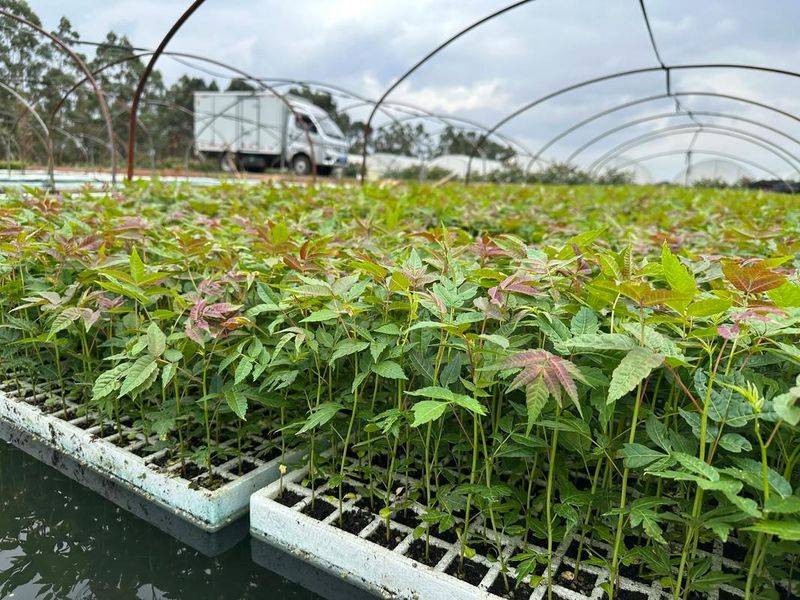
(4) the application of base fertilizers in the caves, mainly based on phosphorus, organic fertilizers and composite fertilizers, shall be preceded by the filling of parts of the surface and the heart soil。
(5) in march-april of each year, seedlings in the field shall be made up of high beds with a surface of 1 - 1. 5 m, 15 - 30 cm high and a walkway of 40 - 60 cm wide。
(vi) after the rise of the bellow, the mattress shall be yellow-heart or fire-burned, approximately 3 cm thick。
3. Plantation
(1) a seedling occurs during the hibernation period prior to the onset of the early spring, and the first two to three days before the seedling takes place require water to keep the soil wet。
(2) in case of seedlings, use seedling tools and be careful to maintain the integrity of the root system. The trees are then graded so that they are seeded。
(3) naked seedlings shall be replanted after application of slurry root, and when planted, the trees shall be set straight and the soil shall be carefully pressed with their hands。
4. Fertilisation
(1) the trees are long-term, utilised and thinly applied, mainly by organic fertilizer。
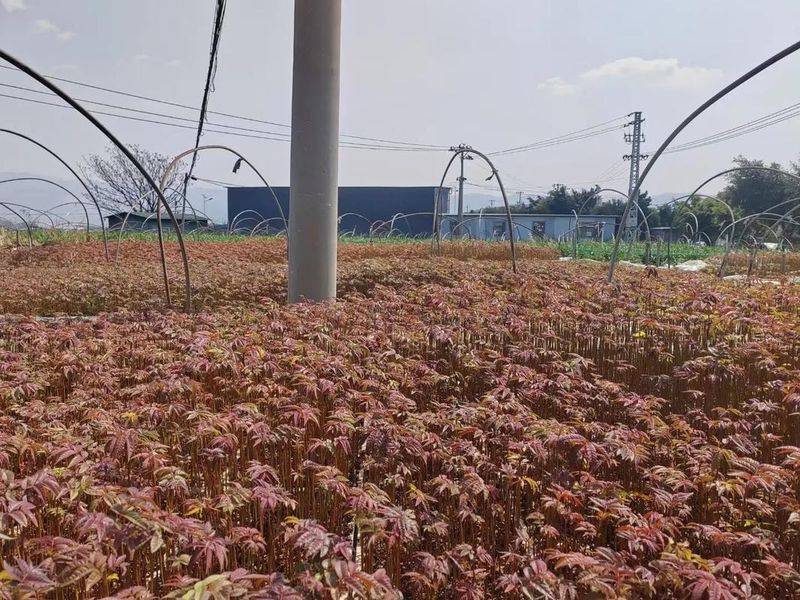
(2) during the velocity period, appropriate increases in the application of fertilizers, such as urea, ammonium sulphate, etc。
(3) in early july, a new application of urea with an acreage followed by urea 15-20kg or ammonium phosphate 25-30kg。
(4) one more fat chase in early august, with an acre for urea 15kg or ammonium sulphate 20kg。
(5) in september, the pursuit of nitrogen fertilizers was stopped and 300 times liquid potassium phosphate was sprayed every 7-10 days in order to prevent the growth of the tree “coloured”。
(6) one square metre of urea 25g after the growth of the 2nd fragrance sprouts, and once with light water。
(7) if properly managed, up to 70 cm in size and 0. 8 cm in diameter in one year。
5. Late conservation
(1) when the fragrance seedling grows up to 50 cm, multi-activated acupunctures are required to prevent the plant from growing insanely, usually once every half month and 2-3 times。
(2) in order to control the height of the plant, care shall be taken to facilitate the growth of other branches。
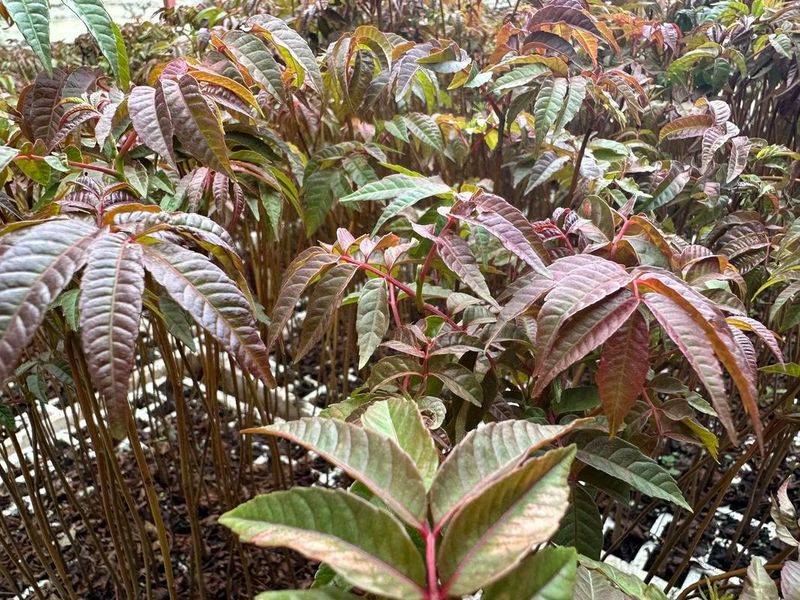
(3) the fragrance during its growth is mainly caused by diseases such as dust and folic rust, during which the whole leaf is flogged and ventilation is improved, while a 1000-fold spray of 15% rusting is administered to improve resistance. In the case of folic rust, 15 per cent of the humid powdered nin is treated with 600 times the fluid spray。
(4) sand and yellow leaf blades are the main disease of the fragrance, which is prevented by biopticide bt2000, plant-sourced pesticide 0. 63% alkaline 500 times, or by hitting the trunk of a tree in the early morning, setting the insect on the ground and then killing it quickly。
6. Picking
(1) the fragrance is so delicate that it is not hand-drived at harvest and requires scissors or knives。
(2) the harvest criterion is sprouts of chrysanthemum, 10-12 cm in length, and the first fragrance is fertilized early and collected when the sprouts are longer than 10 cm and do not exceed 15 cm, when the sprouts are fertilized, fibrous and of good quality are the best in the sprouts。
(3) at the time of the first harvest, two leafs were retained in the sprout base and at the second harvest, two or three leafs were required for the sprouts to continue to separate the sprouts。
(4) the harvest will take place early and late, and after the pick-up, the 4-6 sides of the upper side will rapidly develop, with the second round after 15-20 days and the next round every 15 days or so。
(5) in most areas, the first sprouts are about clear and pre- and post-sprout harvesting to be appropriate before they are harvested。