


The performance of stop valves as “one-way guards” of pipeline systems directly affects the safety and efficiency of industrial production. In the future, with the development of material science and intelligent technology, the stop valves will evolve in the direction of high reliability, low energy consumption and intellectualization. The role of the stop valve is described below, and it is hoped that it will help you。
I. Definition of core functions
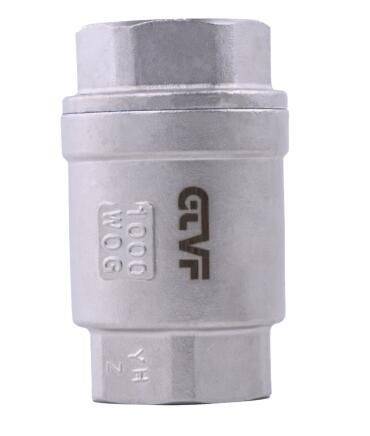
Check valve, also known as a reversible valve or a one-way valve, is an indispensable safety device in industrial pipeline systems. Its core function is to automatically stop the media reverse flow and ensure that the fluid flows only in a single direction. This feature is particularly critical in the following scenarios:
Preventing damage to equipment: when the pumps are shut down, the valves avoid high-pressure water reverse-shocking wheeling and protect the electric power and bearings from the impact of the hammer. For example, the pressure of the hammer dropped from 3. 2 mpa to 0. 8 mpa and the equipment failure rate decreased by 60 per cent following the installation of h76h pairs of binary valves for the recycle pump at a thermal power plant。
Maintaining system stability: in petroleum refining units, the stop valves prevent the pouring of high temperature and high pressure media into feed pipelines within the response pads and avoid chain accidents caused by stress imbalances。
Secured operation: resuscitation valves in gas pipelines prevent backfire and prevent explosion risk. A lng receiving station with a triocular hard-sealed valve can still achieve zero leakage at -162 °c and provide security in extreme environments。
Ii. Methodology and type
The work of the valves is dependent on the fluid's own kinetic energy or pressure and does not require an external power drive. Its core structure consists of valves, valves and drive bodies, and there are significant differences in the design of different types of stop valves:
Rotation stop valves
Structural characteristics: valves are connected to valves through aluminum axis, similar to the opening of “doors”。
Advantages: low mobility resistance, applicable to large calibre pipelines (dn200200mm), such as municipal drainage systems。
Limitations: the low-pressure sealing capacity is weaker, and the valve can have a hammer impact when it closes。
Innovative design: the slow-closure gyro-start valves, through hydraulic resistance devices, have been extended from 0. 3 seconds to 3 seconds to effectively reduce water hammer pressure。
Elevated stop valves
Structural characteristics: valves slide along the vertical axis of the valve, similar to piston movement。
Advantages: capable of sealing, applicable to high-pressure small-calibre pipes (dn≤50mm), e. G., feed tubes for chemical reaction。
Limitation: fluid resistance is high and can only be installed horizontally。
Special forms: vertically installed stand-up and drop-off valves can be used for the bottom-up movement of media, such as water pipes in high-rise buildings。
Butterflies
Structural characteristics: valves are in the form of disks, rotated around the centre axis, similar to the butterfly valve structure。
Advantages: small size, light weight, space savings of more than 50 per cent for installation, applicable to narrow environments such as ship cabins。
Limitations: seal dependence on french compression, and long-term use of post-sealed seals may be ageing。
Technical upgrading: double-false valves reduce the impact by 40 per cent through two symmetrical valves, which are suitable for frequent start-up pump export pipes。
Iii. Typical application scenarios
The type of stop valve needs to be combined with the medium characteristics, pressure level and installation conditions, with the following examples of applications in different industries:
Water treatment industry
Scene: centrifugal pump exit prevents water hammers。
Option: micro-suspension closed valves (e. G. H44x) with spring buffers extending the closure period to 2-5 seconds to avoid piping vibrations。
Case: a sewage treatment plant in qingdao uses a dn1200 micro-retardation shut-down valve, which reduces annual maintenance costs by $300,000。
Petrochemical industry
Scenario: one-way movement control of high temperature high pressure media (e. G., cracking gas, catalyst plasma)。
Selective type: metal hard-sealed irradiation valves (e. G. H44y type), with chromium steel for 540°c high temperature and 42 mpa pressure。
Case: a refinery-catalyzed cracking device uses a h44y-420c stop valve, operating without leakage for five years。
Construction heating industry
Site: air-conditioning refrigerated water systems prevent water recharge。
Option: for double-cheal valves (e. G. H76w), the weight is only one quarter of the traditional french valves, with an increase of 60 per cent in installation efficiency。
Case: the shanghai central building uses the dn800 double-veal valve, which saves approximately 1. 2 million degrees of electricity per year。
Iv. Selected and maintenance elements
Selective principle
Media type: corrosive media (e. G., sulphuric acid) need to select stainless steel or fluorine; particle-containing media (e. G., sewage) should avoid the use of lift-down valves in order to prevent carding。
Pressure level: the high pressure system (pn-16) gives preference to spin-starter or metal-sealed hard-sealed butterfly valves; the medium low pressure system (pn-10) can use soft-sealed butterfly-type valves。
Installation space: a narrow area (e. G. A gallery) recommends a clamp or concussion valve; frequent piping can select a french-style stop valve。
Recommendation for maintenance
Periodic inspection: quarterly cleaning of seals to prevent impurities from causing leakage. The failure of a pharmaceutical plant to clean up the corset of the valves in a timely manner resulted in the failure of the stop valves and resulted in economic losses of $2 million。
Seal replacement: the rubber sealing of the soft sealing valve is recommended for replacement every two years; if the metal sealing of the hard sealing valve is worn, welding repairs are required。
Fault screening: the back flow of the medium may be caused by damage to the seal surface or spring failure, requiring targeted overhaul, and the revealing of valves may be due to over-complencies of materials and the choice of resilient material (e. G. 316 l stainless steel)。
V. Industry standards and technological development
International standards
Api 594: the design, manufacture and testing requirements for adhesive and concussion valves are specified and apply to the oil and gas industries。
Asme b16. 34: the pressure-temperature level of the french respirator is defined, e. G. The maximum permissible pressure of the class 600 at 425°c is 10. 5 mpa。
Domestic standards
Gb/t 12235: provides for the length of the structure and the size of the connection of the general valve to ensure the interchangeability of different brand products。
Jb/t 8937: seal test and strength test methods are specified for the adhesive valves。
Technical front
Smart stop valves: integrated sensors and material networking modules that allow real-time monitoring of valve status (e. G. Openness, leakage) and predict malfunctions through data analysis. When a water company introduced the smart stop valve, the network failure rate fell by 45 per cent。
New material applications: valves made from ceramic-based composite materials (e. G., nitrogen silicate), 10 times more resistant to grinding, suitable for harsh environments with particulate media。



