This crop, which is so good in terms of seeds, is known to all those who have grown it, and the worst fear is that the vines are long, the leaves are thick, but there are no beans on it. It's a panic to see the bean horns of others while their homes are full of ivy. In fact, the problem lies in growing plants that are “over-nutriently growing” — soybeans are using all the nutrients they eat to grow leaves. Today we're going to talk to you about how to do it, and we're going to follow these three steps, and we're going to have soybeans。
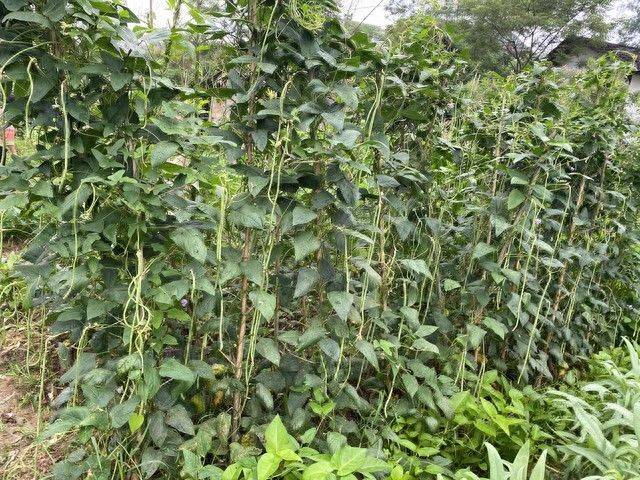
Step one: crunch the chicken and draw the nutrients to the beans
Many growers feel that the longer the bean bean is better, the worse it is. The top edge of the bean bean is particularly strong, and if you don't care about it, it'll go up, the nutrients will be sucked out of the top, and the buds below will not follow。
A lot of people don't know about chicken. When the bean is grown up to about 15 cm, choose a clear day, which will lighten the main chicken to an angle of about 45 degrees, and bury it with soil. This will allow the base to emerge in three or four days, with a significant increase in the ability to absorb water for fertilizer and a subsequent drought and disease resistance. It's an old-fashioned medium. It works。
Scrambling is the key operation to keep up. When the chicken climbs to the top of the shelf, he chokes the top. When the side branch sees the bouquet, it leaves two leaves on top, so that it does not last forever. It's also important that the old leaves, sick leaves and left leaves below 50 centimetres of the plant's base bean bean bean bean bean beaks be given a haircut, and the conditions for ventilating light, naturally less ill. Some people are worried about the soybeans. Rational graft is like cutting a hair, cutting off a hair so that it can grow more spiritually and so that nutrients can be concentrated in the supply of flowers and beans。
Step two: controlling water fattening, precise timing
Bean horns control. Fertilizer management is the key. When many growers look hot and dry, the water pours into the water, and the vines grow crazy and the flowers fall. This is a problem of “water without timing”。
You have to remember one thing: flowers don't water, squirts water. The first flower is not finished yet, so don't rush water. At this point in time, the bean horns will continue to sow the leaves, and the buds will be suffocated. So how do we figure it out? Grab a piece of dirt and hold it tight, and then you touch it loose, which means that the soil moisture is perfect。
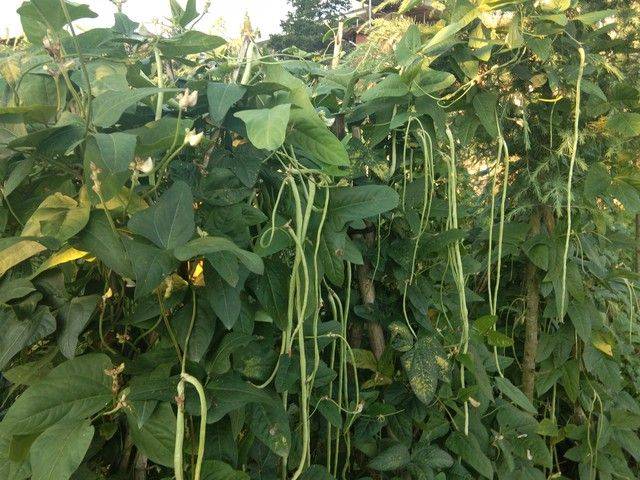
When the bean is so long (about 3 to 4 centimeters) it's time to refill it. The water is chosen in the morning or evening, slowly permeating along the ditch, and it is forbidden to overflow with water. Every time a bean is removed, a little water is added, so that the flowers will come out and they will never be taken out。
Fertilizer: nitrogen fertilizer is controlled and potassium phosphate is increased. Bean bean itself is a soybean crop, and root roots are able to fix their own nitrogen, and if you apply more nitrogen fertilizers, it will only grow crazy. Bottom fertilizer is dominated by decomposed farmers and combined with potassium phosphate. After the initial flowering period, 15 kg of potassium sulphate per acre, approximately 5 kg of urea, and less nitrogen fat and enough. Many growers have increased their production by chasing nitrogen fertilizers, resulting in vines growing more than two metres high and few beans, which are typical “fat”. In the gust, high potassium-type water solubles can be applied, promoting the expansion of the soybeans and growing and full。
And don't leave any leaves behind. Sprays of leaf paste — with 0. 2% potassium phosphate plus 0. 1% boron fertilizers — once every 10 days and twice or three times in each of the periods — are carried out in the current rheumatism, initial flowering and flowering seasons. The combination of boron fertilizer, which fosters thawing, and potassium phosphate, which increases weight, can be seen。
Step three: scientific regulation, co-opt physical medicine
The first two steps are ready, and most of the control problems can be solved. But if the bean horns are so big, they are too long, the leaves are too thick and thick, and they can't be pressed by physical means alone, they have to be assisted by some support。
For physical regulation, the temperature can be adjusted appropriately, in addition to the above-mentioned crumbs. Bean-fruit seasons are best controlled at 25-30°c during the day and not more than 15°c at night. When the temperature is too high at night, the soybeans breathe so much at night that the nutrients are wasted, the plant is easily grown. A friend who grows a large shed should be careful to cool the air in a timely manner and open the air before and after noon。
Pharmacological regulation should be careful. If the master is not able to control it, he may choose to use a controlled substance such as condensed feminin, pronulant and chlorophyll. But remember that chemical control is not good enough to affect the length and quality of bean bean bean. When the medicine is selected for the pre-cranium with the bean horn and the plant is grown to about 1 metre, it is only possible to spray it once, and the concentration is strictly in accordance with the instructions, rather than overdose. The spray time is selected after 4 p. M. On the sunny day, evenly sprayed on the upper mid-leaf, with an interval of 7 to 10 days before considering the next one. Excessive control will inhibit the flowering and will not pay。
It is also important that the chickens be fed in time. It would be enough to keep three to five strong branches in each bean horn, and spares the weak branches and overlapping leaves to be cut off. There are too many chickens, they hide each other, there is insufficient light, and the fracturing of flowers is naturally affected。
At the heart of bean horns is the word “balanced” — balancing nutritional and reproductive growth, water fertilizer supply and plant demand. The chicken's heart lets it not just move up, the water-controlled fat makes it stop looking at long leaves, the science pulls it back on track. Now that the three steps are going well, there are more bean horns。
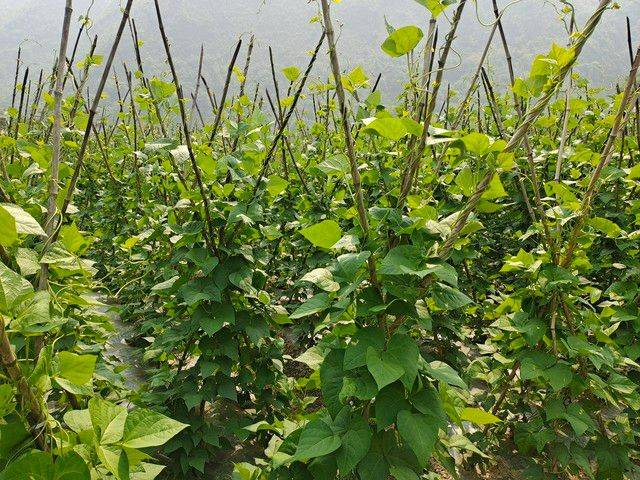
This is the critical period of bean bean growing, so check your home's bean bean field before you wait for the leftovers and the ground to be lost. The harvest is safe before you do it