Heiscop
Started in 1962, it was the first pre-school education programme in the united states “start plan” to help disadvantaged pre-school children out of poverty。
(i) theoretical basis
Curriculum designers claim that the curriculum is based on the theory of child development in piajje。
The development of the curriculum has gone through three stages: the first stage, where the curriculum designer focused on the knowledge and skills to prepare children for primary school; the second stage, where the curriculum designer accepted the view of the child at different stages of development and tried to teach the child those skills that represented the level of development of the child; and the third stage, where the idea of the child of piaj as a knowledge builder was reflected in the curriculum, where the curriculum designer saw the child as an active learner and found that the child could gain better learning in his/her own planned nuclear response activities。
(ii) objectives, content and methodology
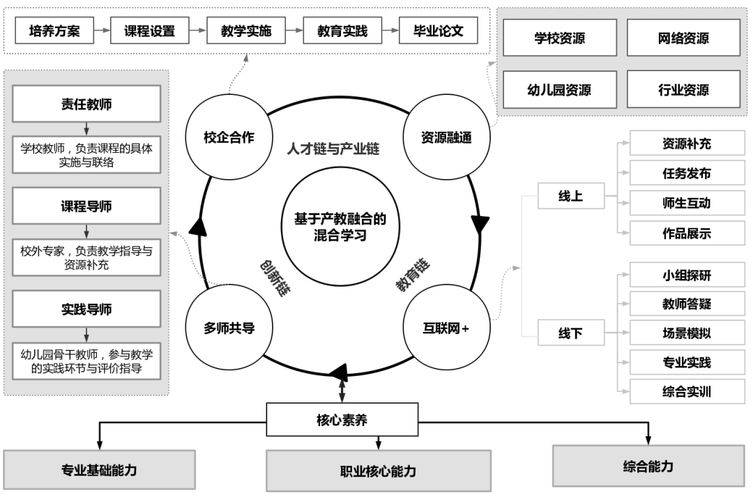
In the second phase of course development, course designers emphasize the operational elements and develop the overall objective of teaching “piajian skills”, which is based on the topics of the geneva study — classification, sequencing, timing and spatial relations。
In the third phase, the overall objective remains cognitive, but changes have taken place in several ways: preserving the key experience of cognitive development, but adding an active learning component, and the designers have emphasized their intention to imply structured objectives in the context of children's activities; specific target areas have changed; and social emotional goals for children have been considered。
Active learning is at the heart of the child development process. Course designers identified 49 key lessons as indicators for curriculum development and evaluation. Key experiences include creativity, language and text, active social relations, sports, music, classification, ranking, numbers, space and time. Key lessons can be used by teachers as an organizational tool for the organization and interpretation of curricula, as a framework for teachers to guide children's activities and evaluate their development. (specific key lessons can be found on pages 207 to 209 of the educational material)
The implementation of the course consists of three components: “plan-do-remember” and a number of other activities. These are the most important components of the curriculum implementation, through which children are given the opportunity to fully express their intentions about the activities in which they are involved and to engage teachers closely throughout the process。
(iii) the role of teachers
This is mainly an active incentive for child problem-solving activities. Teachers can encourage children to be proactive in solving problems by providing a wealth of materials and activities that enable them to choose between them; by explicitly requiring children to use some way to decide on plans and set goals and to find ways to judge different problems in the accomplishment of the goals; and by creating, through questions, recommendations and environmental design, scenarios of activities involving key experiences related to their intellectual, linguistic and social development. However, teachers are demanding, and teachers must strike a balance between the activities organized by teachers and those of children。