A book that understands the water turbine model: rationale, type and complete analysis
Water turbines play a central role in hydroelectric power generation as key equipment for converting hydro energy into mechanical energy. They are of a variety of types, with different types of water turbines having different working principles, structural characteristics and applicable scenarios. In order to better understand and demonstrate the working mechanisms of water turbines, models for their demonstration have emerged. Next, from the perspective of professional technicians, we will explore in depth the workings of the various types of water turbines, detailing their classification, purpose of production and production materials。
I. Rationale for various types of water turbines
(i) the working principles of counter-attack tankers
Responder water turbines work in a pressurized flow of water, which changes in the size and direction of the flow, is counterproductive to the wheel and drives the wheel. In the course of their work, the pressure and kinetic energy of currents vary, but are mainly converted. The flowways of the repulsive tankers consist of water intakes, rotors and tailings. The water intake of large and medium-axis repulsive water turbines typically consists of snail shells, fixed and active leaves. The function of a snail shell is to distribute the flow of water evenly around the rotor, with a certain number of fixed guide leaves set along the circle, and the motion guide on the inside of the ring rotates around its own axis, and to control the rotation of the flow and power of the wheel by operation of the agility。
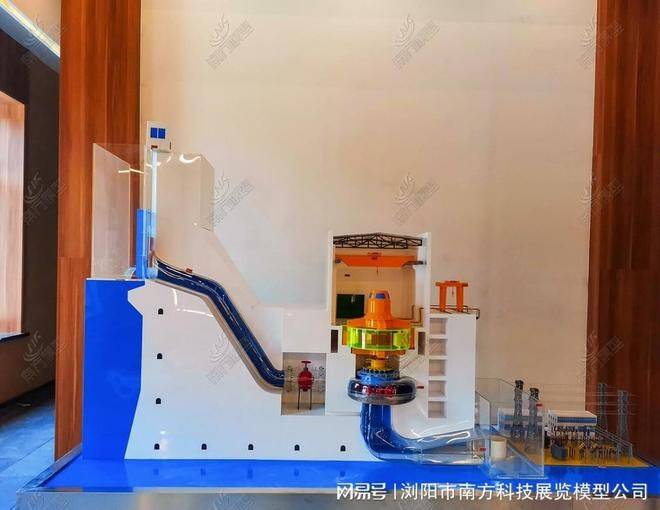
Mixed water tanker generator set model
(ii) the working principles of shock turbines
The impacting water turbines generate a dynamic free-flowing flow through a special water conductor, rushing towards the wheeling, which functions as a rotation. During the course of the work, the pressure of the current remains constant, and the jet agency converts the current's potential to kinetic energy. Water intake components are water distribution pipes and jets connected to long-duper pipes, which are used to regulate flow. The impact wheel is directly exposed to the atmosphere, and the blades on the working wheel interact cyclically with the current to gain energy. The water flow is discharged directly from the rotor blades and there is no tailpipe structure in the countervailing tanker。
(iii) reversible pumps
Reversible pumps are a special type of water turbine that can both convert hydro energy to mechanically powered generators as water turbines and transform mechanical energy to hydro energy as pumps that can pump water from low to high. At the time of the power generation, its working methods were similar to those of the usual repulsive water turbines; at the time of the pumping, it rotated from downstream to upstream as an electric motor. Reversible pumps typically use mixed, tilted or streaming structures to adapt to different water head and flow requirements, mainly for pumping power plants, which regulate the peaks of power systems。
Ii. Classification of water turbine demonstration models
(i) responder water turbine model
Mixed (francis) model
The flow of water from the hybrid water turbine model is from a path into the rotor and flows largely along the axis. Its rotor consists of the top crown, the lower ring and many twilight blades fixed between them. The hybrid water turbine is one of the most widely applied, with a compact, efficient and able to adapt to a wide surface range. Its application is typically 30 - 700m. In modelling, the structure and shape of its components, such as snails, water conductors, rotors and tailings, are usually accurately simulated to demonstrate the flow path and energy conversion process of its water flow。
Axle current water turbine model
The flow axle of the axle water turbine model moves in and out, divided into fixed oars (fixed blades) and rotary oars (twisted leaves, such as kaplan). The rotors consist of rotors, blades, discharge cones, with fewer leaves than intermingled, and the blade axis is vertically linked to the water turbine axis. Axle-stream water turbines are used for low- and medium-flow hydropower stations, which typically have a surface range of 3 - 80 m. The axle-flowing water turbine model is relatively simple and less expensive, but is subject to a sharp reduction in efficiency when deviating from the design process; the axle-streamer model has a double-regulated function, i. E., the conductive leaves and rotor blades can be adjusted to maintain the operational stability and efficiency of the water turbines within the greater changes in the water head and load。
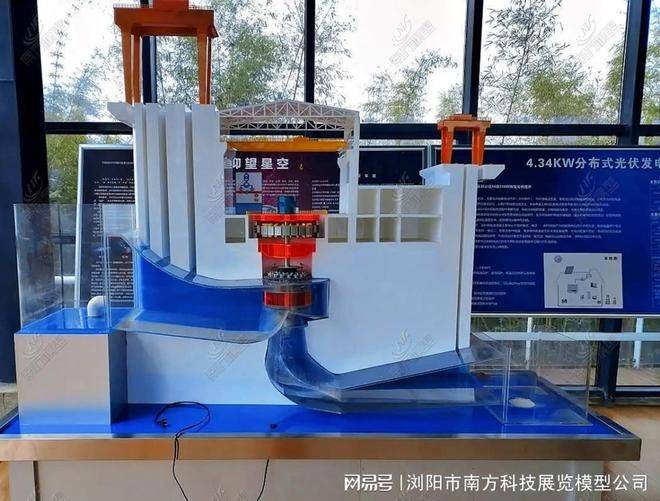
Axle current water tanker generator group model
Slash-streamer model
The water flow of the tilt-streamer model flows in an oblique way, combining the characteristics of the mixed stream with those of the axis. It applies 40 - 200 m of water, which is used more for pumping power plants. The rotor blades of the tilt-streamer model can be rotated and can be adjusted for changes in the water head and load to maintain good operational performance. In modelling, it is necessary to present accurately its unique slope flow and adjustable foliage structure and to demonstrate its working principles under different conditions。
Transcontinental water turbine model
The flow route of the flower model is linear and applies to low-water head (1-25 m) and is divided into full- and semi-stream (e. G. Light bulb), suitable for low-water hydropower sites such as tidal power stations. The light bulb-streaming water turbine model is known for its unique light bulb-shaped structure, with generators placed in the light bulb, and the water flow is discharged directly from the entry mouth along the axis and through the wheel. Whole-stream water turbine models are more structured and the flow of water in the stream is less lost. In the demonstration of the model, the direction of the straight-line stream to the current and the characteristics of the efficient operation of the low-water surface can be visualized。
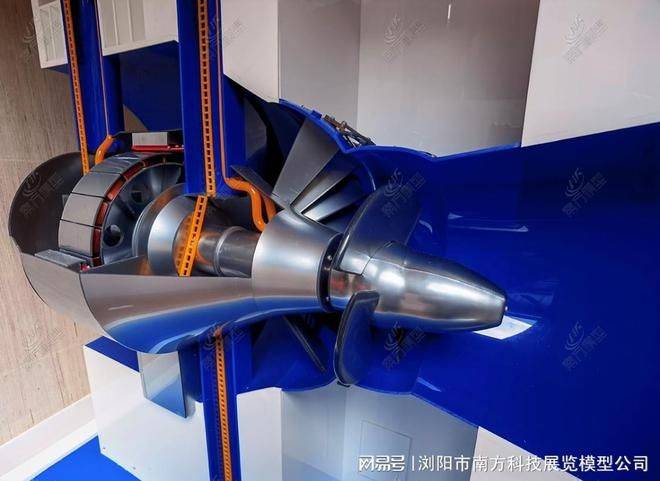
Transcontinental water tanker generator set model
(ii) other classifications
Set by main axis
(c) stand-by model: usually used in large aircraft groups, with vertical distribution of the main axis. A stand-alone water turbine model is better adapted to high-water, high-capacity power generation needs and can reflect its high structural characteristics and stable modes of operation in model demonstrations. For example, large-scale hybrid water turbines often use a stand-by structure, with models that demonstrate the complete process from snails to rotation, to tailpipe drainage, and the layout of components in vertical direction。
(b) pipe model: most used for small aircraft, main axle horizontally. The pv model is relatively simple and easier to install and maintain. In modelling, it is possible to highlight the small size of the land and its operational features, which are suitable for displays at small hydropower stations or in science, where space requirements are high。
Special function - reversible pump wheel model
The reversible pump wheel model is used for pumping energy power plants with both power generation and pumping functions. In the case of power generation, it converts hydro energy to electricity, as in the case of normal water turbines, and in the case of pumping, it converts electricity to hydro energy, pumping water from a low to a high. Reversible pump turbine models typically use mixed, tilted or flow-type structures, and modelling requires accurate simulations of changes in their working state and water flow paths under two conditions, demonstrating their important role in regulating peak valley differences in power systems。
Iii. Resources for resources production
(i) presentation of enterprise products
For water turbines, the tanker generator set model is an important tool for demonstrating the technological strength and product characteristics of enterprises. By producing fine models, customers can be visualized about the structure, working principles and performance advantages of different types of water turbines. At business fairs or industry fairs, the tanker generator set model can attract the attention of clients and help them to better understand products, thereby facilitating their marketing and marketing. For example, models can demonstrate efficient energy conversion processes for water turbines, as well as their optimal design for different waters, flow conditions, and inform customers about the adaptability and reliability of the enterprise's products。
(ii) energy science presentation
In science and technology libraries, museums, etc., water tanker generator group models are important exhibits for education in energy sciences. Hydropower, as a clean, renewable form of energy, is important for public understanding of the energy structure and sustainable development. The tanker generator group model can visualize the entire process of hydropower generation by means of dynamic demonstrations, light effects, etc., from the introduction of currents to the conversion of mechanical energy, to the generation and output of electricity. Intuitive understanding of the working principles and the advantages of hydroelectric power generation, stimulating public interest and interest in clean energy and raising public awareness of energy and environmental issues。
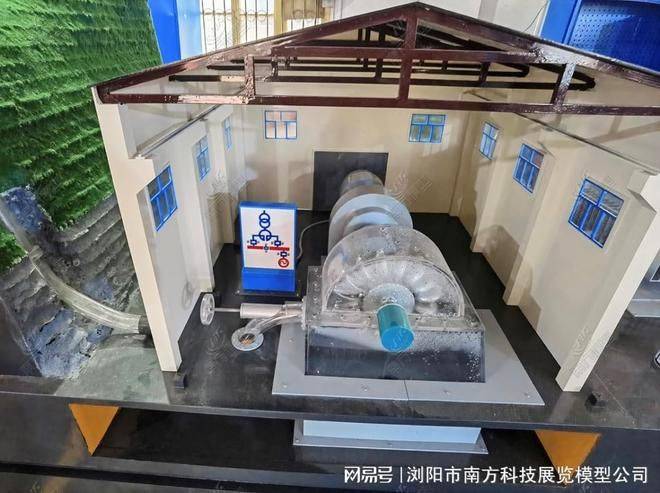
Impacting water turbine model
Iv. Machine resources resources mobilization
(i) main structural material
Metal materials
Aluminium alloys: key components, such as rotors, main axes, snail shells, which have advantages of light mass, high intensity and resistant to corrosion, and are often used to model water turbines. Aluminium alloying materials may be made from casting, processing, etc. In complex shapes that meet the requirements of the model for accuracy and strength. For example, rotor blades can be refined after aluminium alloy casting to ensure the shape and surface mass of the blades and thus accurately simulate the performance of the actual tanker。
Steel: steel is often used for some components that are subject to greater pressure and loads, e. G., ring, leaf, etc. The steel is of high strength and hardness, which ensures the stability and reliability of the model during its presentation. Through welding, mechanical processing, etc., steel can be made into components that meet the design requirements and surface treatment, e. G. Paint spray, zinc plating, etc., to improve its beauty and corrosivity。
Engineering plastics
Engineering plastics, such as abs plastics and nylons, have good formation, insulation and corrosive resistance and are relatively low-cost. Engineering plastics can be used to make non-critical components or casings, etc., in the modelling of water turbine generator sets. For example, the shell of the model can be made using abs plastics in a plating process, allowing for smooth surfaces and precise shapes while protecting the internal structure from the external environment. In addition, engineering plastics can be used to reduce the overall weight of the model for small components such as connectors, decorations, etc。
(ii) supporting materials
Transparency
In order to demonstrate the structure and flow of currents within the tankers, transparent materials are often used to make part of the model components, such as organic glass (pmma). Organic glass has good transparency and processing performance, and can be made into snails, transparent masks for water conductors, etc. Through cutting, grinding, hot bends, etc. Through transparent components, viewers can clearly observe the structure and flow trajectories of the water turbines and enhance their performance。
Electronic shape
In a number of dynamic demonstration models of water turbine generator sets, electronic components are needed to simulate current flows, rotation of wheel and light effects. For example, electric-driven wheel rotations are used to demonstrate the full flow of water from entry to exit, using lights and current simulations. The use of electronic components allows models to become more vivid and attractive to viewers, while at the same time showing more accurately the working principles of water turbines。
Connectors such as glue, screws, etc
The glue is used to connect components of different materials, such as plastics and metals, to ensure the robustness of the model structure. Common glues include 502 glues, ab glues, etc., and are suitable for different materials. Connections such as screws, nuts, etc. Are used for the connection of disassembly components to facilitate the assembly and maintenance of models. When selecting a connection, care is taken to ensure the reliability and stability of the connection by taking into account its material and specifications。
This smart water turbine demonstration model, which is used primarily to view and showcase science, does not have practical functions such as power generation in physical equipment, although it is produced to simulate, to the extent possible, the structure and working principles of a real water turbine. It serves more as a teaching and presentation tool to help people better understand the relevant knowledge of water turbines。
Through an in-depth understanding of the principles, types, production purposes and materials of the water turbine demonstration model, we can see that it plays an important role in the dissemination of hydropower technology and science education. Whether it is an in-depth study of the working mechanisms of water turbines by specialized technicians or an understanding by the general public of the production process of clean energy, the water turbine display model provides an intuitive and effective way of doing so. It is hoped that through the introduction of this paper, more attention will be paid to the important hydro-electricity equipment of water turbines and related demonstration of the value of models in the field of energy。
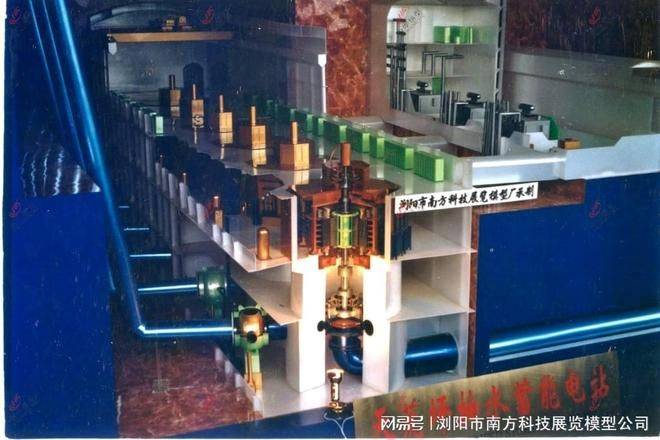
Model of the pumping power plant unit
The southern model provides clients with an integrated service for the design and manufacturing of hands-on training for teaching simulations and displays of business products, from design, manufacture, installation and commissioning to product delivery. The products that have been developed include teaching demonstration models and hands-on simulation devices, general displays of science and technology institutes, and models for the display of business products, providing quality products and services to thousands of institutions and enterprises throughout the country。
If you want to know more about water turbine models and hands-on simulators, sakayung city south technology exhibition models can help you。