Water turbines are one of the machines that transform hydro energy into rotational mechanical energy, thus generating electricity from generators, and are one of the power plants for hydropower plants。
Basic type of tanker
By main axis device
Stand-by water turbines: the main axle is vertically installed; both large and medium-sized water turbines use this method. (b) portable water turbines: the main axle level of the water turbine is installed; this method is used for small or mini-water turbines。
Convert feature by energy
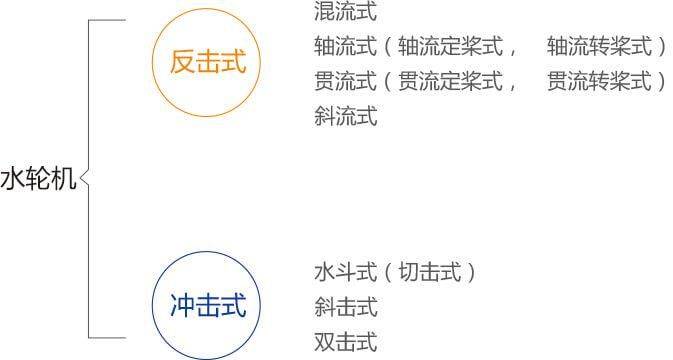
Water turbines are one of the main power units for hydroelectric plants. Depending on the characteristics of the energy conversion, water turbines can be divided into two categories: countervailing and shock. The different types of water turbines take different forms depending on their current direction and working characteristics, as follows。
Characteristics of tankers and conditions for their application
Characteristics of repulsive tankers and conditions applicable
Characteristics: water flows through the wheel, which are filled with the entire channel of the rotor's blades, which are rotated using the reactionary force of the current to the blades, i. E. The positive and negative pressure differential of the blades; responsive water turbines are divided into four types of hybrid, axle-stream, tilt-stream, flow-stream, depending on the current flow mode. Mixed (francis): water flow towards the wheel and axle out. Scope of application: h=30~7000 m, single machine capacity: tens of thousands of kw ~ hundreds of thousands of kw advantages: wide application, simple structure, stable operation, efficient application of high-water small flow power stations。
Axle flow (kaplan pattern): the current flows along the rotor axis, the axis flows out, and the flow remains parallel to the main axis. Axle flow slurries: the blades cannot be rotated as work conditions change. The change in the corner of the blade requires a stop. The structure is simple and inefficient. Small changes in the application of h, q (stable work), h:3 ~50 m. Axle flow slurries: the blades are able to move as the work conditions change, and double-regulated (directional, foliage angle). Changes in water flow are applied, efficient areas are wide and large and medium power stations are used more frequently. H:3-80m。
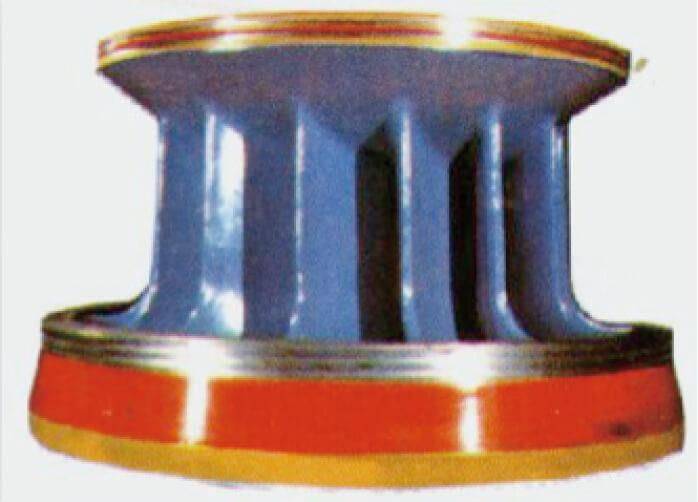
Mixed turner
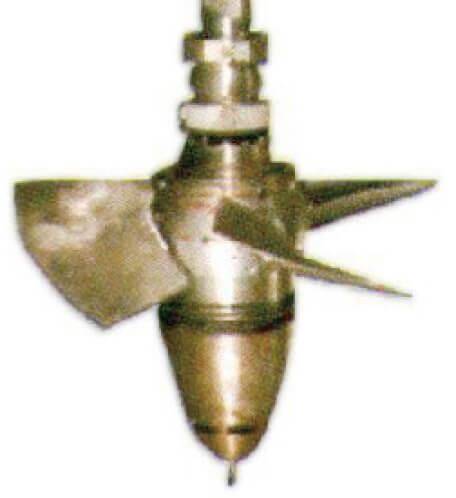
Axle flow oar rotation
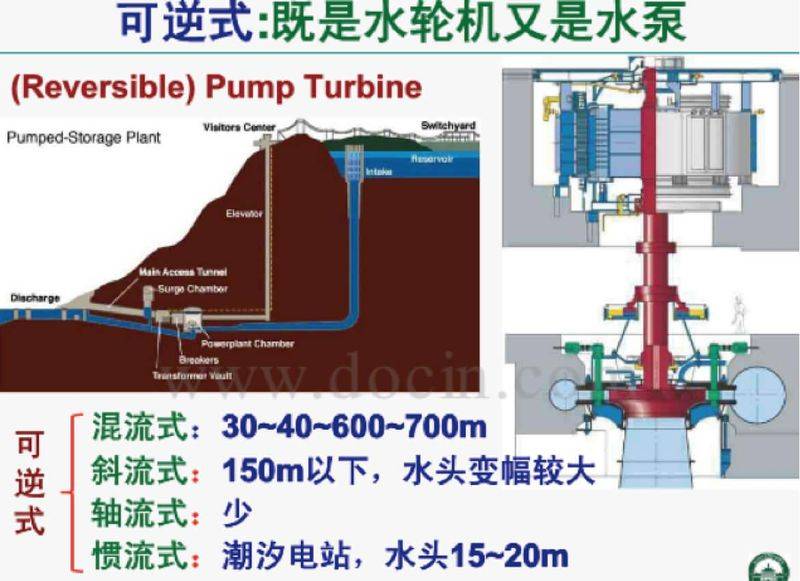
Slash (driazi, france): water flow tilts in and out of the wheel. Vegetable blades rotated as work conditions changed, with wide efficiency. A combination of axle flow slurries is operating efficiently, and mixed water turbines have the advantage of having a high degree of corrosive capacity and intensity. Surface range h=40~200m applies. It is a reversible pump - a water turbine, which is widely used for pumping energy power plants because of its complex structure, which is rarely used for small hydropower plants。
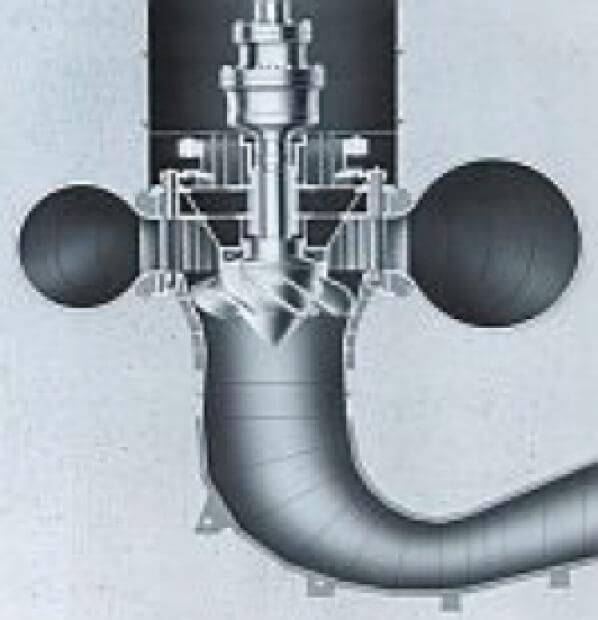
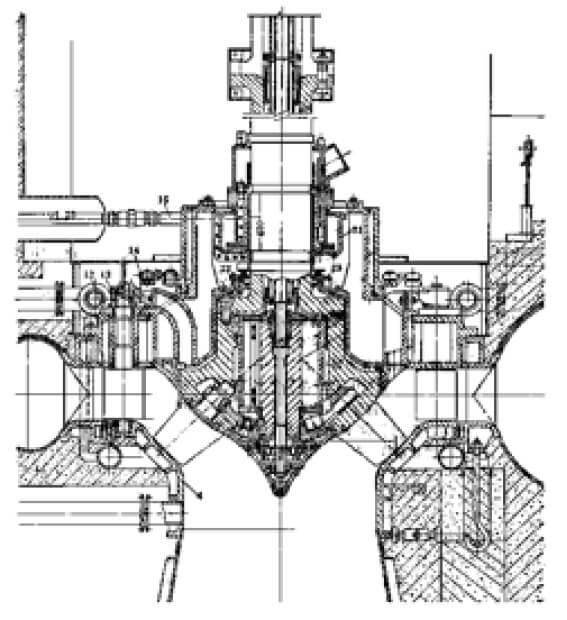
Slash stream
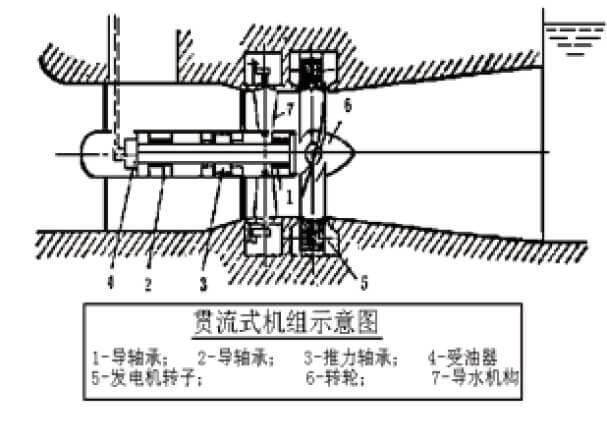
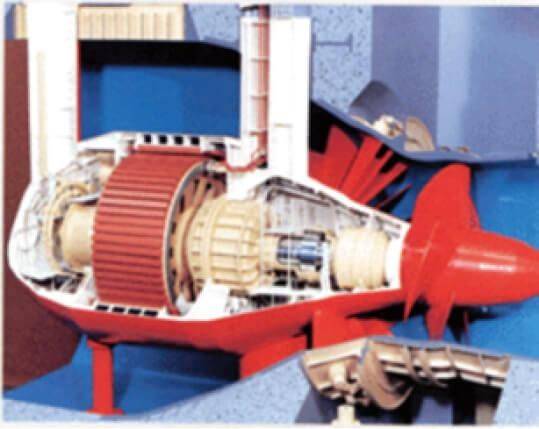
The flow of water flows from pipeline to tailpipe exports flows in axle, without snails, and the flow of water flows along the axis into the flow-out engine, which is thus referred to as a flow-on-stream water turbine, which is divided into full-stream and semi-stream, depending on the mode of the generator's installation; depending on whether the rotor leaves can be changed and can be divided into a flow-and-flow slurgon。
Transient
Characteristics and applicable conditions of impact tankers
(b) working under atmospheric pressure。
The impact water turbines consist mainly of nozzles, circuits, rotors and casings, which convert all hydro energy into kinetic energy into a free-flow, shock rotations and water energy into mechanical energy。
An impact water turbine can be divided into three types of water fight (cut), tilt and double-click, depending on the mode of the current shock wheel。
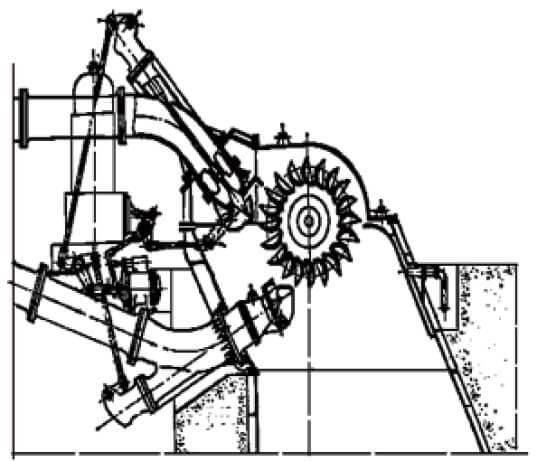
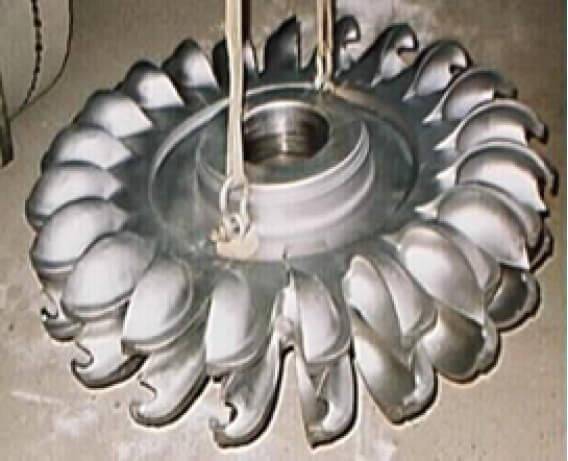
Watercracker (clasher, undercover) (pertonian)
The current is inside the rotor's rotor plane and strikes the leaf in the direction of the wheel's round cutter, which is also known as the cutter. In 1998, switzerland built the cleuson hydroelectric power plant, which was equipped with three k400,000 each. China's highest water tanker is the tianhu hydroelectric power station, with a faucet of up to 1022. 4 m. Application of the surface range: 40~2000m, common surface range 40~800m。
Tilt-butting water turbines (1912 invention, zingo) (on-line)
The nozzle stream is tilted in the direction of the rotary wheel, which is referred to as the tilt wheel. Slashed water turbines are suitable for a surface range of 50-400 m, with a maximum single capacity of not more than 400 kw, and are therefore applicable only to small hydropower plants。
Double-click water turbine (in 1917, hungarian invention, bank) (bed-by)
The current is fired from the nozzle to the rotor's side's leaves, from the outer edge of the lobe to the rotor's centre, while the subsequent flow flows again through the inner space of the wheel to the wheel's leaves, then to the outer edge along the locomotive, and then leaves the wheel at a very small flow speed, with the water flowing twice, thus double-clicking. For double-click water turbines, the surface range is 6 ~ 150 m and the maximum single capacity is generally not greater than 300 kw, so it applies only to small hydropower plants。