The reason the wetter doesn't fog
It's about summer, and air conditioning is in the house or in the office, and although it's nice to be in the air-conditioning room in the summer, there's still a lot of bad things, first of all, we're feeling dry, we're having a serious shortage, some have throat pains, others have nosebleeds, so the wetter is necessary, but sometimes the humidifier doesn't fog。
The most important work of the wetter is to create fog, so that the heavy water molecules of the air can be more dry, so that if the wetter doesn't get mist, the wetting will disappear, which is a problem for many people who use the wetter, and we know why。
1: fragmentation tablet failure。
Solutions:
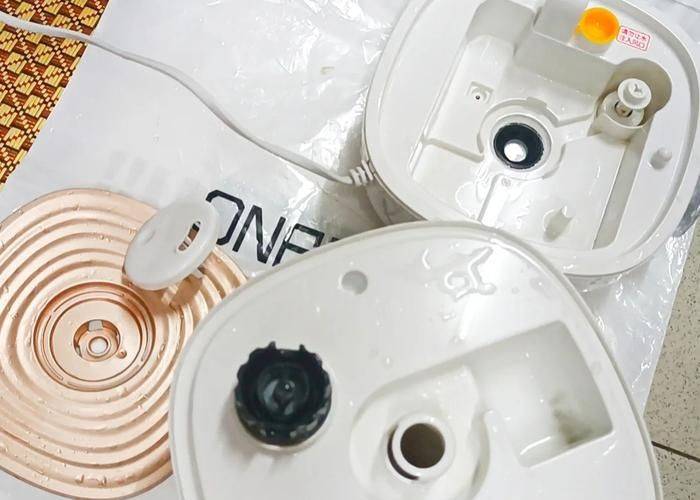
The bottom is opened to check if the fuse is burned, and if the insurance is good, try to adjust the slots on the circuit board, turn the clockwise around a quarter, and, if the humidifier is wet or the spray is not sprayed, consider replacing the mist tablet, which is typically a 20-30 mm diameter “metal” piece right below the vent and cannot be scraped with hard matter, and once the metal plating has fallen off, the reductor will not work properly, resulting in the mistless。
If there is no spray, no air, the most important reason is that the wetner is not regularly cleaned。
Generally, it is better to clean the wetter around a week。

If the humidifier is wind-free and fog-free, it is likely that running water will be used for long periods of time and that the tarmac will be saturated on the concussion tablet, which will not function properly, and the fog will naturally be less or not sprayed。
There are two conditions for general wetting:
A. Ceramic oscillators vibrating to produce water fog。
B. Turning fans and sending water fog。
If the humidifier is able to function but there is no water spray, it is possible that the fan is malfunctioning。
Solutions: too long it didn't work to get the fan stuck, hit twice with a little lubricant, let the fan turn again。
2. No spray solution for wetners
The humidifier has wind-free fog, with the long use of running water, and the tarmac that has been in place has resulted in the alkalinity of the concussion tablet, which is not functioning properly, and the fog is naturally missing or cannot be sprayed。
Treatment:
Use of domestic vinegar with salt can effectively soluble aqueous alkalis, and the fog slowly sprays out。
Note that no acid use is detrimental to maintenance and there are safety risks。
3. There is a problem with humidifiers。
Treatment:
The bottom is opened to check if the smelting device (insurance) is broken, and if it is safe, try to adjust the bits on the circuit board, turn the clockwise around a quarter, and replace the mist, if it is not sprayed, with a “metal” circle approximately 20-30 mm in diameter that is directly opposite the vent. This is an energy exchanger, which cannot be scraped with hard matter, if the metal plating is removed, if the energy exchanger is not working properly, the fog cannot come out and needs to be replaced。
Know the wrong zone。
Now the mainstream humidifiers have ultrasound humidifiers and decontaminators。

The ultrasound-wettifier, by means of ultrasound high-frequency vibrations, mistifies the water to 1-5 micrometres of hyperparticles, and is sprayed through wind-activation devices, spreading evenly into the air, thus achieving humid effects。
This type of humidifier is sprayed with water fog。
The humidifier doesn't spray, it doesn't spray, it doesn't air. You probably didn't clean up regularly。
Usually, the cleaning and maintenance cycle of the wetter is about a week。
Method of treatment: water tanks, power exchangers (shocks) and tanks are cleaned with a special washing agent distributed at random, and water is available。
Note that for the first time after cleaning, it would be better to cool the water, otherwise the calcium in the water would collide on the ultrasound generator。
The wetter is now well received, and there are many brands for the wetter, and you have to be careful when choosing it, to choose the quality, and to find the most common reason for the timely presence of fog in the wetter during the normal course of use, which is important for its regular cleaning and maintenance。