Okay, let's explain in detail how the sensor syncer works and how it works。
The working principles of the sensor synchronizer
The core working principles of the sensor synchronizer are based on electromagnetic sensors, specifically the combination of transformer principles and around-group spatial distribution. It usually consists of two parts:
Ruler: fixed on the base of the equipment. Slider: installed in the moving part of the device, parallel to the ruler and maintaining a small flat air gap (usually less than 0. 25 mm), which allows for straight movement (line) or rotation (discretion) relative to the ruler。
Work process:
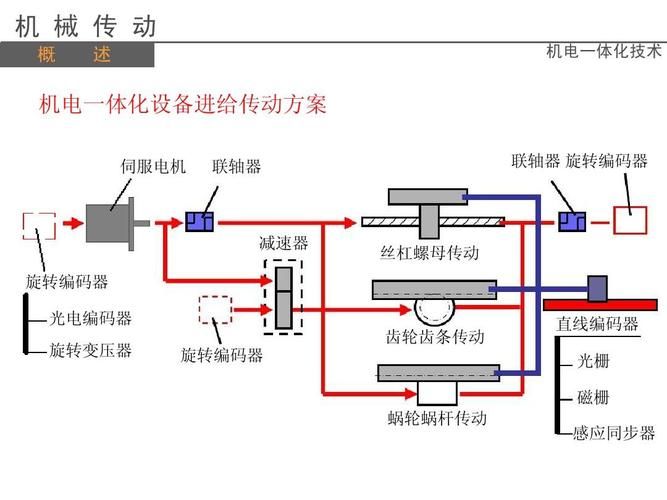
Magnetic: in two circuits of slide (or ruler, depending on the type) (known as the sine s and cosine c) respectively, the chord exchange incentive us and uc is applied with the same frequency and range with a time phase difference of 90° (i. E. A positive)。
Sensitivity coupling: magnetic currents create a meta-magnetic field around the slider roundabout. This magnetic field passes through the air gap and is coupled with a continuous printed plane around a ruler (the electromagnetic properties of the periodic spatial distribution of its conductors)。
Space phaser: the amount of voltage generated by the sensor of the ruler bypass group depends on the relative position of the slider and the ruler. This is because:
Output signal: the total output voltage e, which is felt on the ruler, is the supercharge of the electric motion that is felt on the ruler by the two transient magnetic circuits of the slide. The synthesizing output voltage e has the same frequency as the magnetic frequency, but its range is a constant associated with the relative shift x, while its time phase is strictly equal to the shift x. Namely:
Location detection: an exact change in the position of the slider relative to the ruler x can be calculated by measuring the difference in the phase between the output signal e and a reference signal (e. G. A magnetic signal) by means of a precision circuit (known as a forensic or counting circuit):
Summarizing key points:
Scope of the sensor syncor
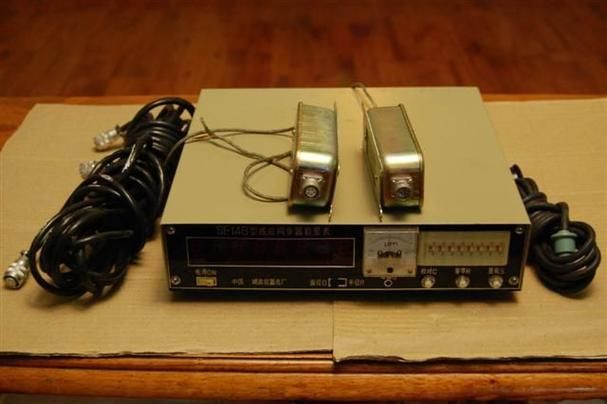
The sensor synchronizers, by virtue of their high accuracy, reliability and environmental adaptability, are widely used in areas requiring precision location detection and control:
This is the most important application scenario。
Industrial robots:
Precision instruments:
Aerospace and military equipment:
Automated production lines:
Summary of application characteristics:
Sensor synchronizers are particularly applicable to precision position measurement and closed-ring control systems that require super-precision, high reliability, long-term stability and work in poor industrial environments such as oil pollution and dust. While its share in some applications has decreased with the development of rasters, magnets and new absolute encoders, sensor synchronizers remain an irreplaceable key sensor in many cases of extreme harshness (e. G. Space, military) or ultra-precision requirements。
It is hoped that this explanation in chinese will give you a clear understanding of how sensors work and what important areas they use