


Hazard source classification and its control
1) the hazardous source classification for construction production is defined as the cause, state or behaviour, or combination thereof, of the hazard at the site and during the construction process. Hazard sources can be classified into categories i and ii。
(1) category i source of risk (decision on severity of consequences)
Sources of accidental release of energy (mechanical, electrical, dynamic, chemical, thermal, etc.) may occur, including various types of energy or hazardous substances at the construction site or during construction production。
1 energy source: power transformers, boilers, pressure containers, explosives, vehicles in transit, machinery in operation。
2 hazardous substances: carbon monoxide, nitrogen gas; explosives, chlorine gas, benzene, sulphur dioxide, etc。
(2) category ii source of risk (determination of probability of an accident)
The second category of dangerous sources refers to factors that lead to the destruction or failure of measures to restrain or restrict energy or hazardous substances, as well as the absence or failure of protective measures. Including:
Insecurity (dangerous state), unsafe behaviour of two persons, poor environment (environmental insecurity) and management deficiencies。
2) hazard source control
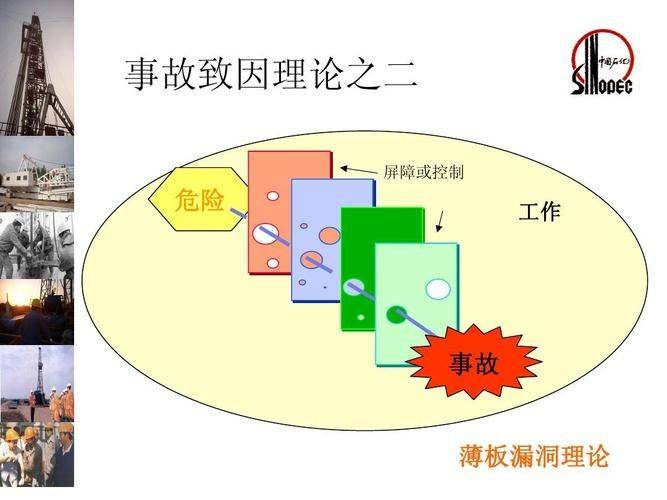
The existence of the first category of sources of risk is a prerequisite for the emergence of the second category of sources of risk, and the emergence of the second category of sources of risk is a necessary condition for accidents caused by the first category of sources of risk. The first category of hazardous sources is inherently energy or hazardous substances that are controlled mainly by technical means, including the removal of energy sources, restraint or restriction of energy (see para. Technical means such as energy sources that cannot be completely eliminated from the production process) and shielding, protection, etc., to implement safeguards for emergency preparedness。
The second category of sources of risk is controlled mainly through management tools to combat human and material insecurity and to avoid environmental ill-health (unsafe conditions), including the establishment of sound regulatory frameworks for the management of hazardous sources, the development of a basis for the management of hazardous sources, clear control responsibilities, enhanced safety education, regular security inspections and risk management, evaluation and sanctions。
2. Common hazardous sources for construction production (corresponding to section 7. 3. 2)
1) the source of the risk of a high-risk crash is the source of the risk of a high-risk crash when operating at a height of 2 m and above (relatively high)。
2) objects against accident hazards source
The injuries caused to the personnel at the construction site as a result of physical attacks were caused by the fall of objects at high altitudes and the splattering of objects. An object strike does not include an object attack caused by the main mechanical equipment, vehicles, cranes, collapses, etc. Flying objects are objects; flying people fall high
3) collapse hazard source
The main hazard areas and construction processes that are prone to collapse are: base pit operations, ramp operations, manual pillar construction, scaffolding/protector removal, template work dismantling, demolition works, earthwall construction, material lifting, tower cranes, slides, relay platforms, mobile operating tables, etc。
4) sources of risk of mechanical accidents
Mechanical damage is caused by mechanical motion (or static state), mechanical parts, tools, processors, pressure caused by direct contact with the human body, collisions, shocks, cuttings, involvement, wrenching, throwing out, cutting, cutting, stabbing, etc. Excluding: injuries caused by vehicles, cranes。
5) the risk of electrocution and fires source
The main sources of risk from electrical accidents are: electrical appliances at the construction site, distribution and switchboxes, ground-to-place zero protection systems, distribution lines, external electrical protection, distribution rooms and distribution units, on-site lighting, utility poles and support racks, electrical protection facilities, personal use of safety protection items, technical proficiency of operators and operational behaviour。
3. Hazard source identification and risk evaluation methodology
The “source of risk” consists of three elements, namely, potential risk, conditions of existence and trigger factors, which are indispensable. Potential hazardous source risk is the degree of hazard or loss that may occur once an accident has been triggered, or the energy intensity or amount of hazardous substance that may be released by the hazardous source。
Potential danger of methanol and sulfate
Existence is defined as the physical, chemical and binding state of the source of the hazard. The trigger factor is not intrinsic to the source of the hazard, but it is the external cause of the transformation of the source of the hazard into an accident, and each category of hazard has a corresponding sensitive trigger。
For example, flammable gas cylinders are a dangerous source, with safety valves as a constraint, and open fire may be its trigger。
1) the security checklist method
The security checklist is used to analyse the list of a series of inspection items by means of a checklist in order to determine whether the installations, equipment and site are in compliance with safety requirements, and to suggest a way of improving the system by checking to detect security risks。
2) pre-hazard analysis
The regulations for the safe production management of construction works provide that: the design unit shall take into account the need for safe operation and protection of construction, indicate priority areas and links relating to construction safety in the design documents and provide guidance on the prevention of production safety incidents; and that construction works and special construction works using new structures, new materials, new processes and design units shall propose measures to safeguard the safety of construction operators and prevent production safety incidents。
3) hazard and interoperability analysis
The methodology, which is primarily used for the analysis of production processes, can be drawn from the identification and evaluation of hazardous sources for construction production, and is guided by keywords, pre-identify, analyse and evaluate the potential hazards of engineering projects, installations, equipment or, through monitoring, identify variations (i. E. Deviations) in the course or state of operation of the project, installation, equipment, and then continue to analyse the causes, consequences and methods of response to the deviation。
4) accident tree analysis
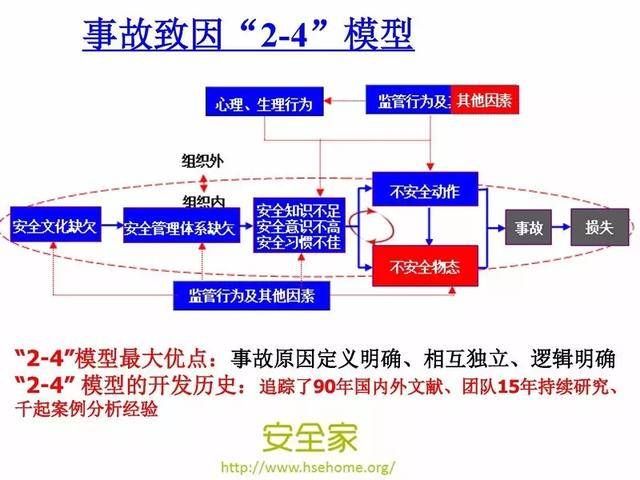
The [results-based] accident tree analysis begins with a potential accident, from the bottom-up to the bottom-up level of the direct-cause and indirect-cause events leading up to the underlying-cause events, and uses a logical map to express the analytical approach of the logical relationship between those events. The direct, indirect and underlying causes of the accident, as summarized in the construction safety analysis report, also contribute to the identification and evaluation of the source of the hazard after the actual occurrence of a safety accident。
5) lc evaluation method (operational conditions hazard evaluation method)
The lc evaluation approach focuses on risk evaluation and uses the multiplier of the values of the three risk-related factors to evaluate the magnitude of the operational casualty risk. The three factors are l (likelihood, probability of an accident), e (exposure, frequency of exposure of persons in a hazardous environment) and c (consequance, possible consequences in the event of an accident). Different fractions are determined for different levels for each of the three factors, and the magnitude of the operating conditions hazard is evaluated at the product d of the three fractions (danger, hazard)。



