


The security engineer exam in 2019 was 16-17 november, and the preparation time was tight. 233 cyberschools specially prepare their gift packs, including regular points + subject collection + free courses, click on >
2019 safe work management point: theory of accident cause
(i) the theory of proneness of accidents
The doctrine of frequent tendency is the early theory of cause of accidents and is not in line with modern theory of cause of accidents。
People are considered to be the main cause of accidents. A small number of people with a tendency to have accidents are prone to accidents。
(ii) the causal chain theory
1. The causal chain of the heinrich accident
1. Genetic and social environment
Human shortcomings
3. Insecurity of human behaviour or objects
Accidents
5) casualties
2. Modern causal chain theory of accidents
Frank bird introduced the modern causal chain theory based on the causal chain of the heinrich accident。
(1) inadequate control - management
(2) basic causes - origin theory
(3) direct cause - omens
(4) accident - contact
(5) injuries-damages-losses
(iii) energy accidental release theory
Accidents are an abnormal or undesirable energy release, and the accidental release of various forms of energy is the direct cause of harm. Damages should therefore be prevented by controlling energy, or by controlling the energy vehicle as an energy medium reaching the human body。
The classification of energy reverses the harm caused to the human body divides it into two categories:
(a) the first type of injury is caused by energy that has applied a threshold of partial or systemic impairment
The second type of injury is caused by local or systemic energy exchange affecting, inter alia, poisoning asphyxia and freezing。
Accident preparedness response
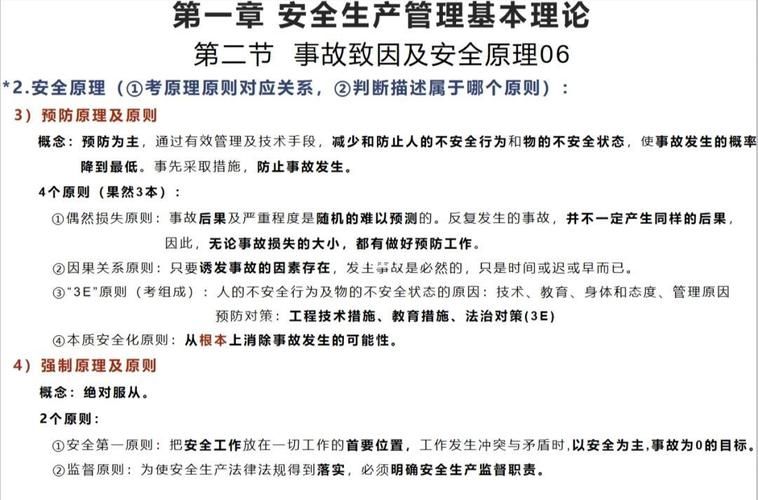
From the theory of accidental energy release, the prevention of injury is the prevention of accidental release of energy or hazardous substances and the prevention of human exposure to excess energy or hazardous substances。
(1) substitute unsafe energy with safe energy. For example, the replacement of electricity with compressed aerodynamic power in operations that are prone to electrocution can prevent electrocution, and the use of water for coal-mining in lieu of gunpowder explosions。
(2) limiting energy. For example, the use of low voltage equipment to prevent electroshock, to limit the speed of operation of the equipment to prevent mechanical damage, and to limit the amount of open-air explosives to prevent individual injuries by flying stones。
(3) prevent energy accumulation. For example, low altitude energy is used to control the concentration of explosive gases, to eliminate static accumulation by grounding, and to protect critical facilities using lightning rods。
(4) control energy releases. For example, the construction of a dam wall to prevent the sudden flow of high-power groundwater。
(5) delay in the release of energy. For example, the use of safety valves, escape valves to control high-pressure gases, the use of full-scale fall-down methods to manage the top of coal alleys and control the pressure on the ground, and the absorption of shock energy by various deviation devices to prevent injury to persons。
(6) open channels for the release of energy. For example, safe landings can prevent electrocution; water can be used in mines to prevent water penetration; gas can be used in coal to prevent gas accumulation explosions。
(7) installation of shielding facilities. For example, shields installed outside the mechanical rotation section; they can also be placed between people and energy, such as the security fence. Personal protective gear worn by personnel may be regarded as a shielding facility for persons。
(8) placing a barrier between people, objects and energy, separating energy from people in time or space。
(9) increase standards of protection. For example, the use of dual insulation tools to prevent high voltage electrocution; continuous monitoring of gas and remote sensing; and the enhancement of resilience to harm, such as individual protective devices made of high temperature, cold and high intensity materials。
(10) change process processes. Such as changing unsafe processes to safe ones and replacing highly toxic and harmful substances with non-toxic and less toxic substances。
(11) repair or first aid. Treatment, correction to mitigate harm or restore original functions; emergency care, self-help education; limitation of the scope of disasters, prevention of escalation, etc。
(iv) cross-track theory
Main points of view: in the process of accident development, the intersection of human and physical factors is the time and space at which an accident occurs, i. E. When human unsafe behaviour and physical insecurity occur at the same time, in the same space, or when human unsafe behaviour and physical insecurity are the same. ♪ together ♪
The intersection theory emphasizes that human and physical factors occupy an equally important place among the causes of accidents. According to the theory, accidents can be prevented by avoiding the intersection of human and physical factors, i. E. The simultaneous and simultaneous occurrence of human and physical insecurity。
The development of the accident is described in the cross-track theory as:
The underlying causes are indirect and direct
(v) system security doctrine
Main points:
(1) in terms of the theory of cause of accidents, the traditional perception that people focus only on unsafe behaviour of operators while ignoring the role of hardware failure in the cause of accidents has been changed, and consideration has begun to be given to how to improve the safety of complex systems by improving the reliability of their systems, thereby avoiding accidents。
(2) nothing is absolutely safe, and the risk factor is present in everything. The security or danger commonly referred to is merely a subjective judgement。
(3) it is not possible to eradicate all sources of risk, reduce the risk from existing sources, reduce the overall risk rather than eliminate only a few selected hazards。
(4) due to limited human awareness capacity, it is sometimes not possible to fully understand the sources of hazards and hazards, even if existing sources of hazards are recognized, and new sources of hazards arise as new technologies, processes, materials and new energy sources develop. The perceived sources of danger cannot be completely eradicated due to technical, financial, labour and other constraints. Since the sources of risk cannot be completely eradicated, the risk can only be reduced to an acceptable level, that is, an acceptable level of risk. The goal of safety work is to control the sources of risk and to try to minimize the probability of accidents and, in the event of an accident, to limit harm and loss to a lesser extent。



