


Role of the clutch
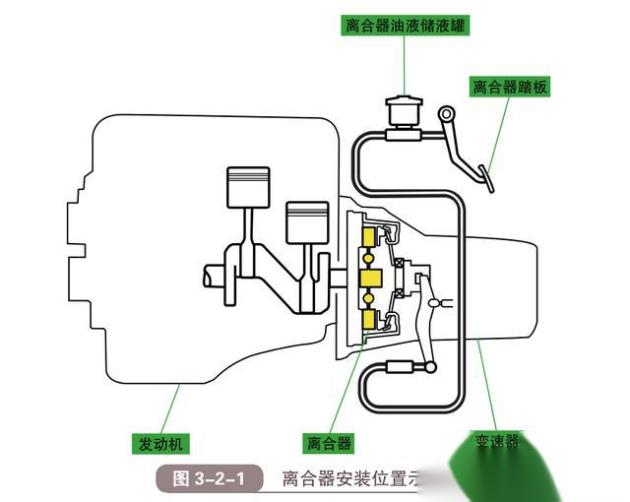
The clutch is installed between the engine and the transformer and is part of the transmission system that is directly connected to the engine and is responsible for connecting and cutting the power between the engine and the transformer, as shown in figure 3-2-1. The basic requirements for the clutch are that the active and the accelerator parts may be temporarily separated and may be gradually integrated, and that there may be relative slippage during the conductivity, with the following specific functions。
1 to ensure a smooth start for cars. At the start of the car, the driver slowly lifts the clutch pedal, so that the master of the clutch is gradually connected from the beginning. When the driving power is sufficient to overcome the initial resistance of the vehicle, the vehicle starts to accelerate gradually from static to a smooth start。
2 guarantee smooth transmission. In the course of a vehicle's travel, the transmission system needs to be constantly changed to adapt to changing conditions. In the case of a common gear transformer, the gearing gears at different stages of the shift are to exit or enter a rodging, which requires that the switch be preceded by a step-down of the clutch pedal, which interrupts the motor flow of the engine, so that the gearing gears exit the rodents, while the speeds of the new gears are gradually equal, thus reducing the impact on entry and smoothing the shift。
3 prevention of overloading of transmission systems. In the absence of a compressor, all motors will produce a high inertial rectangular effect, resulting in overloading of the moving system and damage to its parts, due to a sharp drop in the speed of the engine due to its rigidity connected to the moving system. With a clutch, when the moving system is carrying a load that exceeds the maximum rectangular that can be passed by the clutch, it eliminates the hazard through the relative motion (sliding) between the main and the moving parts, thus achieving the purpose of overload protection。
Classification of the clutch
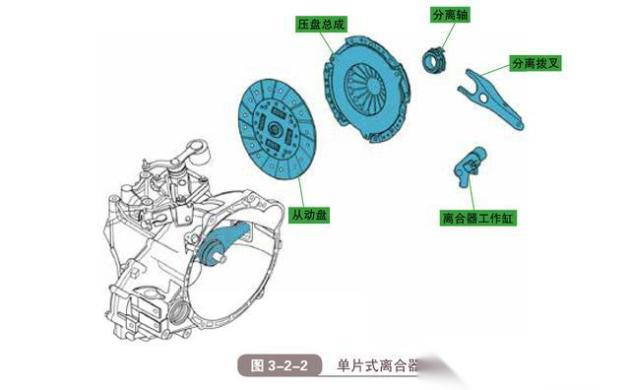
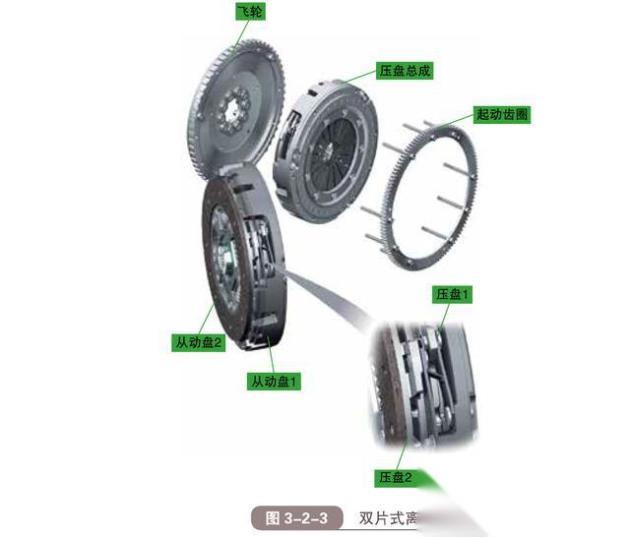
Depending on the number of drives, the clutch can be divided into single-formulators (figures 3-2-2) and double-formulators (figures 3-2-3), which are often used in sedans and light vans, and double-formulators, which are used mostly in heavy vehicles, because they are capable of transmitting larger rectangles。
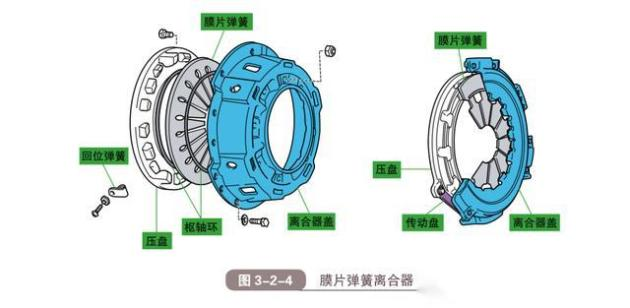
In the form of a compact spring structure, the clutch can be divided into a spiral spring mixer and a film spring mixer. The spiral spring mixer uses a number of springs as pressure springs, which can be placed along the circle or centre of the disc, and are therefore called the chorus spring mixer and central spring mixer, respectively. The membrane spring mixer uses a membrane spring to pressurize, and the membrane spring mix is shown in figure 3-2-4. The membrane spring mixer is currently used more widely, mainly in sedans and cargo vehicles。
Composition of the clutch
The membrane spring compressor consists of active components, moving parts, pressurizing and manipulating bodies, as shown in figure 3-2-5。
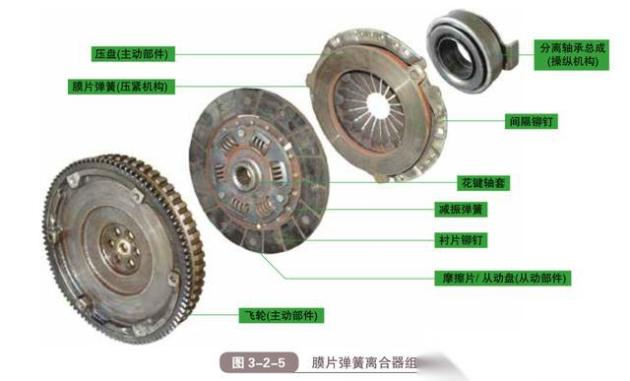
The composition of the clutch includes:
1. Active, aerodynamic components
Active components include the sum of the fly-wheel voltage plate (including the clutch cover), etc. The clutch cap is bolted to the wheel. The one end of the moving film is pinned on the cover of the clutch, and the other end is bolted to the plate. In this way, when the engine turns, the power is passed through the wheel, the clutch cover, the moving film to the disk, and the rear wheel, the clutch cap, the moving film, and the discs operate together。
Inputs of axes from moving parts include, for example, drives and transformers. From the drive, as shown in graph 3-2-6, the clutch is in contact with the wheel and the disk, respectively, when it is normal; and from the drive, via the clutch, is installed on the input axis (from the axle) of the manual transformer. From the pallet, a deviation plate is typically attached to prevent the reverse vibrations of the moving system from being exposed to a transversal impact load, resulting in damage to the vehicle。
2. Tightening institutions
The pressure structure includes pressure springs and support devices. The pressurized apparatus uses the pressure of the film spring, which binds the disc and the wheel from the wheel to the wheel, and from the wheel to the wheel. The engine turns the rectangular by friction between the wheel and the contact side of the drive to be transmitted from the wheel to the drive, which is connected from the drive to the axle through the key axle, so that the power can be transferred to the axle and then to the transformer from the axe。
3. Manipulation of institutions
The rigging apparatus includes the clutch pedals, the separation bearings, the separation forklifts, etc., as shown in figure 3-2-7. When stepping down the brake pedal, a hydraulic pressure is built in the brake main tank, which is delivered through a hydraulic hose to the work tank of the clutch, which is used to move the separation forklift, which promotes the movement of the separation bearings in order to manipulate the clutch. The main, detached parts and pressurized units are the basic devices for ensuring that the clutch is in a state of convergence and capable of transmitting power, while the manipulator is primarily a device for separating the clutch。
The rationale for the clutch
When the clutch pedal is not stepped down, the outer circle of the film spring creates pressure on the plate to bind the clutch. When the clutch pedals are stepped down, the separation bearings drive the film spring so that the film spring is recoiled behind the outer circle of the spring, and the plate exits the surface of the ship and separates the clutch. When the clutch is in a state of convergence, the membrane spring presses the compressor and the compressor from the wheel to each other, and the engine turns through the wheel and the compressor, which is transmitted in the form of a friction rectangle, to the transformer for input axes, and to the re-engineer for input axle transfer system output, as shown in figure 3-2-8。
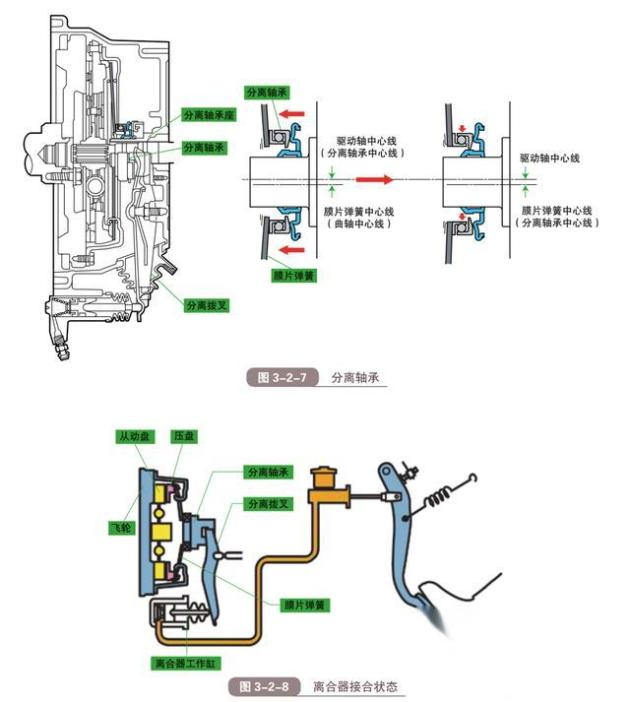
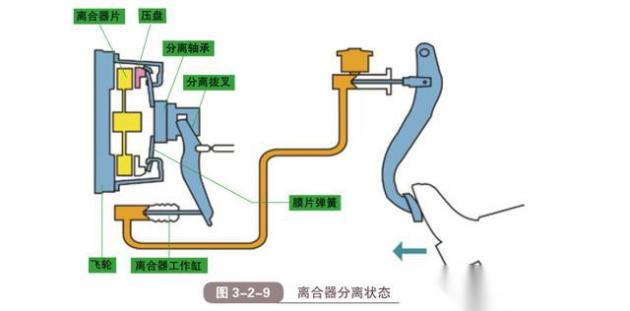
When stepping down the clutch pedal, the separation fork is moved by manipulating the agency, moving the separation bearings, moving the internal end of the film spring to the left, pulling the disc to the right around the outer side of the film spring around the support device on the cover of the clutch, removing the pressure of the disk to the clutch from the wheel, separating the main, moving parts from the unit and disrupting the power transmission, as shown in figure 3-2-9。
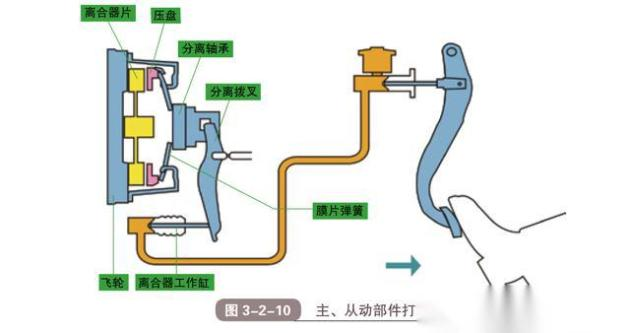
When the vehicle needs to recover the power transfer, the driver slowly lifts the clutch pedal, reduces the pressure on the inner end of the film spring on the separation axis, and the disc presses the clutch gradually from the wheel with the effect of the film spring. When the transient is less than the initial resistance of the vehicle, the clutch does not rotate from the drive, the car does not move, and the main, the friction surface of the moving component is completely slipped, as shown in figure 3-2-10. As the pressure on the disk and the rectangular increase, the rate differentials of the main, friction surface from the moving parts will gradually decrease until the speed of rotation is equal, the smoothing friction disappears and the clutch is fully integrated。
***
"the principles of auto construction go from prime to mastery (colour + video) "



