


Solid alcohol
It's easy to use, transport, carry
And it's less polluting when it burns
Used frequently
Catering and household use
Solid alcohol is not explosive
But it's a flammable product
And when it burns
It can reach 600 degrees celsius. Degrees
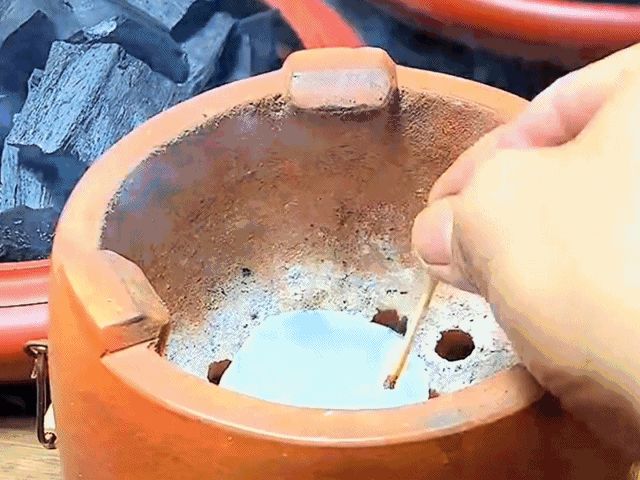
Solid alcohol is low because of the burning point
North and north arrange the following sets of experiments
Let's get real
Experiment 1: simulation of solid alcohol imprudently flipping, running immediately after a fire
The experiment began with firefighters pouring into iron bowls of solid alcohol used in everyday life。
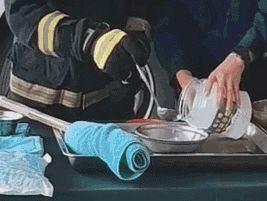
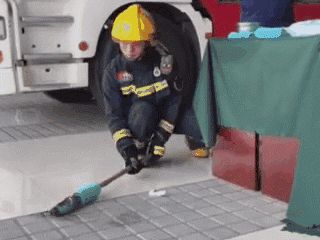
Firefighters used a stick wrapped in dry towels to simulate the unwitting smashing of the iron bowl。
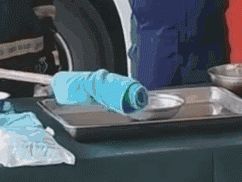
When the iron bowls were knocked over, the spilling of alcohol quickly dipped the towels and the fire began burning upwards. Subsequently, the firefighter, with a stick in his hand, began to simulate the way people ran after the clothes were on fire。
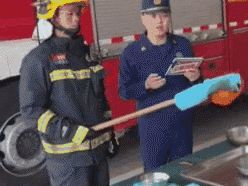
The firefighters use fire towels to simulate an on-the-spot roll-over to extinguish the fire, as the open fire rises on the towels as they swing around。
Focus
When your clothes are on fire, you must not run. When clothing is on fire, running increases exposure to air oxygen. Not only can it not be extinguished, but it will also increase the fire, which, if it does, shall be rolled up immediately until it is extinguished。
Experiment ii: simulation of fire suppression using water, wet towels
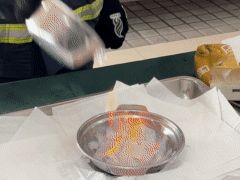
In order to fully reflect the effects of the experiment, firefighters tried to extinguish the fire with water, put paper towels around the iron bowl, lit solid alcohol in the iron bowl and burned for seconds。
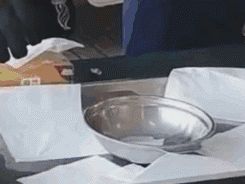
Firefighters quickly pour a bowl of water from the heights into burning solid alcohol, which, with the splattering of the water, was temporarily reduced by the alcohol fire, which was stabilizing, but quickly returned to its original state。
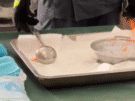
Firefighters put a spoon in their hands that passed through the alcohol on a paper towel, and when the remaining alcohol on the spoon started to burn, the splashing water came to the tissue, and the fire started to spread。
Firefighters pick up a wet towel prepared to cover the surface of an iron bowl where alcohol is still burning, and remove the wet towels after covering about two seconds, when the open fire in the bowl is completely extinguished。
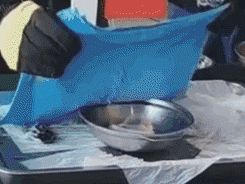
Focus
Solid alcohol fires, which are strictly prohibited from using water to extinguish the fires, are splattered with the beads and fall on the surrounding flammable material, which quickly ignites the inflammable material, causing the fire to spread rapidly. Once the amount of liquid spilled is large, it also creates a fire, making it more difficult to save the fire. The most convenient way to extinguish the fire is to cover it。
Experiment iii: simulation of life-saving fire extinguishers
Firefighters began a simulation experiment of different fire extinguishers to save people. First, the solid alcohol was poured on the pre-prepared pig with a base fire extinguisher and a dry powder extinguisher。
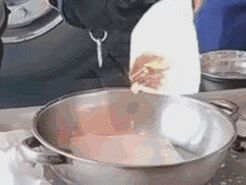
The firefighter first lit the alcohol on the skin of the pig, and in a few seconds, the water-based fire extinguisher extinguished the bowl。
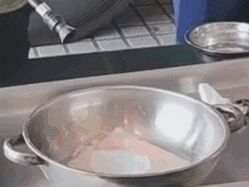
After the open fire in the bowl was soon extinguished, the pig's surface, apart from a small amount of foam left, was not too much of an item。
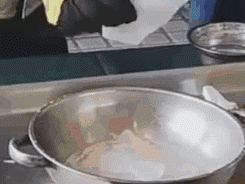
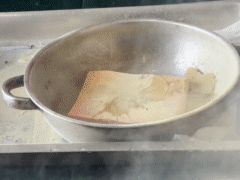
After cleaning up the pork surface, the fireman re-inflates solid alcohol and ignites it, then extinguishes the iron bowl with a dry powder extinguisher。
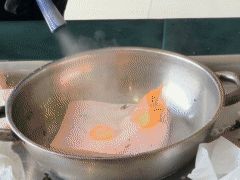
With the white dry dust from the surface of the iron bowl, the open fire in the iron bowl was extinguished, and when the dust was scattered, it was discovered that the surface of the pork had been coated with a thick white powder。
Focus
The powder can make it difficult for the injured to seek medical treatment later and can easily cause secondary injuries such as infection. These adhesive dry powder powders will make it more difficult for the injured to deal with them urgently in the first instance, when they are burned, especially when the skin is heavily blistered as a result of the burns。
Alcohol is lighter than water, water is used and alcohol floats on water, increasing the area of burning。
The fire is the easiest when it starts, so that the clothes, tablecloths, sheets or cotton can be soaked with water, covered in the fire, and the water can be used to keep the fire alive until it is extinguished。
Do not put out fire in the direction of people or flammable explosive substances。
When alcohol is added to an alcohol furnace, it must be added after it has been completely extinguished and cooled. When alcohol stoves are still burning, alcohol fuels are strictly prohibited。
The use of mouths to extinguish the furnaces is strictly forbidden, and the use of a lid or asbestos mattress is prohibited。



