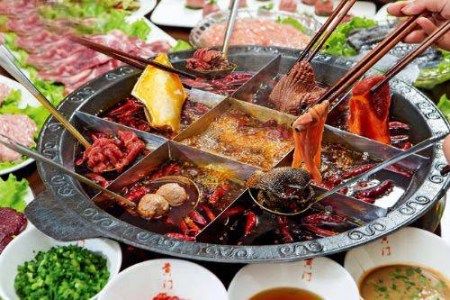
Every year at this time, you start eating hot pots. However, the news has been coming to light in the previous period: some merchants use the base of the fire pots for recycling, and even some firepot stores are fragrances because bad traders add additives. So, how can you relax when you're out eating a hot pot? How do you know it's fake when you eat a hot pot? I'll give you two "flaming eyes."
I. Distinction from appearance
The base of a fire pot that contains material such as tungsten, cashew nuts, almonds, sesame, if it's real, it should look very sticky and tasteful, but with chemical additives, it looks lightly, bright and unsymptomatic。
Ii. Second, the smell
The smell is not very good when the real pan is just boiled in the pot, but the more it's boiled over time, the taste should be spicy if it's spicy. If it comes up with a fragrance and a hot, irritating fire pot, it is likely to be a “chemical pot” with chili or kettle red。
Iii. Identification of whether the base material is new or “back to the boiler”
1. When the bottom is burned, see if there are many foams in the pot. Under normal circumstances, the bottom burn is free of foam, which may be problematic。
2. When the business takes the bottom of the pot, then do not eat it when it burns, and you can use a spoon to get the bottom to see if there are any unknown residues. If so, it is likely that the bottom pot was left in the previous pot. In order to prevent businesses from relying on their accounts, they are to be carried out in the presence of the restaurant staff while searching for a bottom pot。
Iv. Identification of the true or false content of the pan
1. Truth: cream is one of the main ingredients of the base of the fire pot, which is generally rectangular, with a certain degree of hardness, with a visible layer of grease on the surface, with a visual appearance of natural pepper oil, with a comfortable taste, symmetrical and salty taste, without any colored and food additives. Qualified impurities vary with temperature, resulting in hardness, usually in winter and summer。
2. Hypothesis: the raw materials used to produce the base of the fire pot are mainly: butter, peppers, bean petals, spices, etc., some of which are used by manufacturers to reduce costs, or even to replace natural spices with artificial perfume, and to replace cow oil with paraffins, which are rigid at all times and do not change depending on temperature, and bottoms containing, for example, butter, which feel dreary, while those containing paraffins are very dry。
V. How do you choose soup when you're done eating hotpots? So, what do you need to know when you buy hotpots at the mall
The identification should be selected to indicate the full detail of the product, which should be examined carefully to see if it is clearly marked as non-preservative, and it would be preferable to purchase the base of the fire pot produced by the brand of the famous fire pot. Discrepancies of real and fake pans, and a sense of hand testing, usually with paraffins if it's particularly hard, and it's always gushing. In addition, butter melts at 20°c in the pot during consumption, while paraffins usually melt at 50 - 70°c。
Some people, when they choose to eat a hot pot, know only the taste of spicy and fresh soup, but, you know, each one of them has a different taste
1. Symptoms of anthropomorphosis: spicy and warm, tired limbs, light tongues, teeth marks on tongues. For the bottom of the pan: patron, raspberry, raspberry, red-treed soup. Meat: chicken or lamb. Vegetables: alpine, nectar and onions. If you eat cold cabbage, you can add ginger to the chill。
2. Symptoms of pessimism: individuals are thin, faceless, often thirsty, dry throats, prone to insomnia, dizzying. For the bottom of the pot: weishan, the bamboo, the salsin, and the tungsten. Meat: fish or turtle, delicious. Vegetables: mustard, radish, lichen, radish, celery, bitter vegetables can be used to cool fires。
3. Symptoms of aromatic deformity: poor environmental resilience, prone to cold weather changes and pale-looking. It is suitable for the bottom of the pot: the bottom of the soup can also be made from yellow tungsten, party ginseng, washan, and tung-tao, with the condition of fresh gin. Meat: chicken. Vegetable: temperate lettuce, barley。
4. Symptoms of hypothalamus: white lips, dry eyes, swelling eyes, fatigue, dizziness. Bottom pot: right, white, with a little worm. Meat: lamb. Vegetables: lettuce, cabbage, etc。
5. Symptoms of depression: depression, discomfort and often lack of sighs. Suitable for bottom: kawasa, tianma, fragrance, decompression. Meat: fish head. Green bean sprouts。
6. Wet thermal symptoms: stronger, red, heavy, temperamental. Fits the bottom of the pan: rice, lentils, red beans, good wetting. Meat: duck or duck. Vegetables: tacos, soybeans, soybean sprouts。
7. Symptoms of dampness: fatter, taller, lazy. Fits the bottom of the pot: huang, party, yayama, lentils, spleen wet. Meat: duck. Vegetables: weishan, lotus, artemisinin, soybean sprouts, lettuce。
Symptoms of blood silt: rough skin, heavy black eyelids, easily coloured or long purple. Fits the bottom of the pot: zeji, hydra or seahorse, active silt. Meat: chicken or snake. Vegetables: mussels, onions, garlic and others。