Do you wash your head day after day? Do you wash your hair every day? How often do you wash your hair
There are people who have dedicated themselves to this issue, and their theme is "the effect of the frequency of hair washing on the scalp and hair."。
The area was selected by the researchers for a two-week epidemiological study in sian. And then, very carefully, 1,500 people, both male and female, have different hair lengths, dry and oily, age spans 18 to 75 years and have healthy scalps。
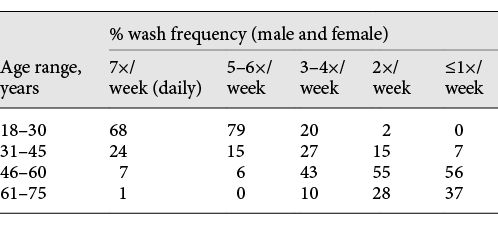
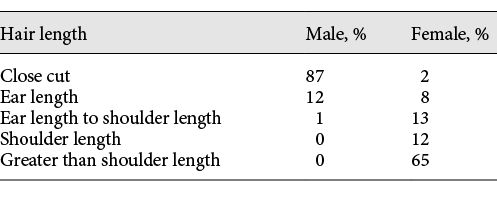
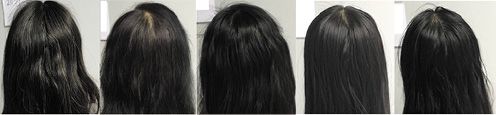
Status of sampling groups in the study
The researchers waved and divided them into five shampoo groups, each with 200 to 300 heads, according to the frequency of the shampoo:
I want to see what the effect of different shampoos is on the scalp and hair。
After an operation, they got three answers..
Answer one: the more you wash, the less the scalp
Adjudication of a person's scalp is a key indicator。
According to the frequency of washing in epidemiological studies, the study graded the decorating of the head and found that the severity of the detachment decreased significantly as the frequency of washing increased。
That is, the more they wash, the less the skin。
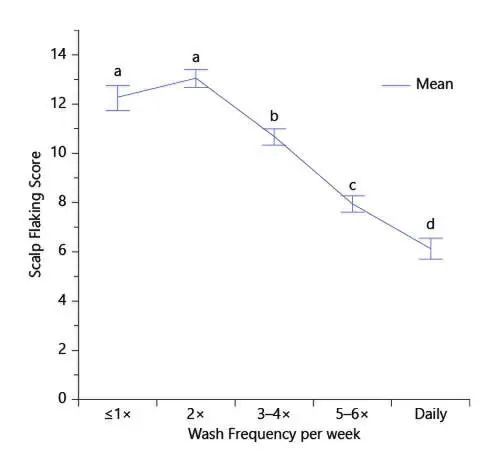
The severity of the detachment has decreased significantly as the frequency of washing increases
It's similar to what we feel in our bodies, and it's a little less skin for people who wash their heads more。
Answer two: the more you wash, the better it feels
What kind of shampoo is best for the hair, and beyond the skin skin, the self-perception of the tested is an important assessment criterion. This self-perception evaluation includes the severity of itching, drying and headbrushing。
Following a scoring analysis of the 1,500 testees' self-awareness questionnaire, researchers found that, with the increased frequency of hair washing, the severity of self-perception of head skin, itching and drying decreased significantly statistically. The reduction in the perception of scalps is consistent with the improvement of actual severity。
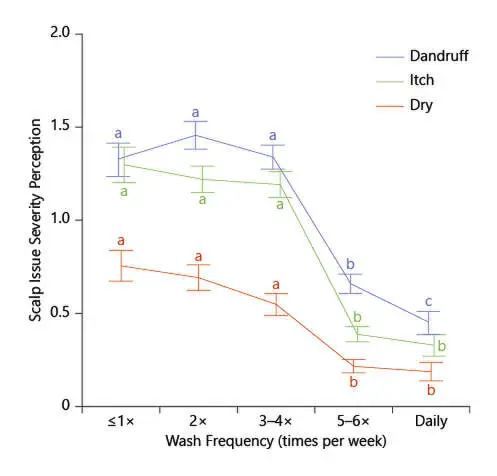
As the frequency of hair washing increases, the severity of self-perception skin, itching and drying decreases significantly
Another parallel set of experiments in the same paper also paid particular attention to the effects of shampoo: the researchers chose 60 18-50 years of age, who in the past four weeks had not washed their hair (two times a week) nor treated their subjects with their products, sending them an enhanced shampoo and allowing them to wash their hair as required:
60 18-50-year-olds were selected, and their common denominator was that the last four weeks were not much of a wash (2 times a week) and did not have to wash the product。
The first phase of the study, which lasted one week, was followed by the first use of shampoo, which began with the distribution of hair, followed by the discontinuation of shampoo for seven days
The second phase of the study, which lasted four weeks, was washed with a shampoo that was distributed daily。
Researchers have found that, compared to those who don't use shampoo for seven days, daily headwashing results in a significant decrease in the overall fatty and fatty acid levels of the skin's overall surfaces and in the levels of hode, the healthy biomarker of the skin. Even if the testee were not a person with a higher level of defoliation, daily cleaning would reduce the level of decrum on the scalp, and the testee's assessment of the smell of the scalp had improved。
That is to say, compared to people who don't use shampoo for seven days, the daily shampoo changes significantly in all dimensions of the skin, regardless of the fat, the drum, the health and the smell。
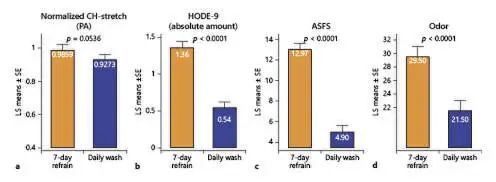
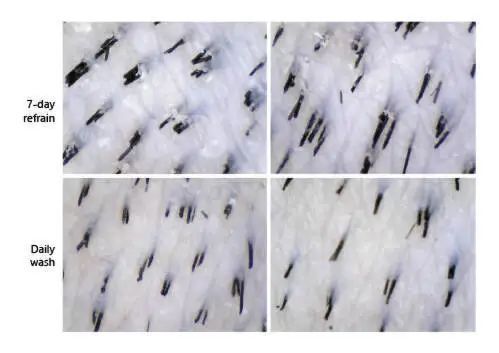
Seven days compared to the day-to-day shampoo
Answer three: the frequency of shampoo increases and no significant damage to hair
The increase in the frequency of hair washing, in addition to the state of the scalp, is also analysed by researchers as to whether the hair will become dry and dry and will become balder。
After increasing the frequency of hair washing, self-perception of hair did not produce significant negative results。
The survey showed that there was no significant change in self-perception, whether it was hair taken off, hair fragile or hair smooth. Although there has been a downward trend in de-hairing (red line), the decrease has been small and there are no statistical differences。
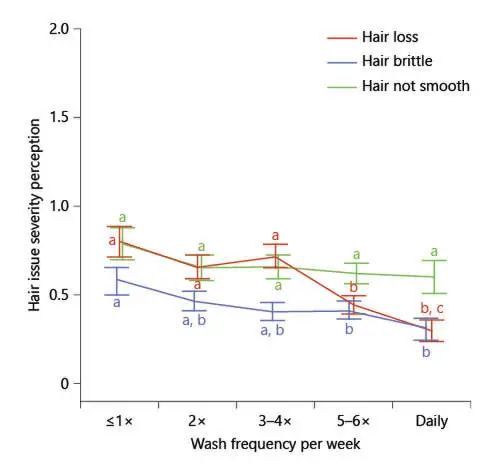
Whether it's hair, hair fragile or smooth, self-perception doesn't change much
In addition, a composite parameter reflecting self-perception of hair status was assessed and referred to as “great hair days”, representing the highest overall satisfaction of members with the appearance and feelings of their hair。
An analysis of "hairday good day" found that the number of days the members of the team were generally satisfied with their hair status on a weekly basis increased significantly as the frequency of hair washing increased。
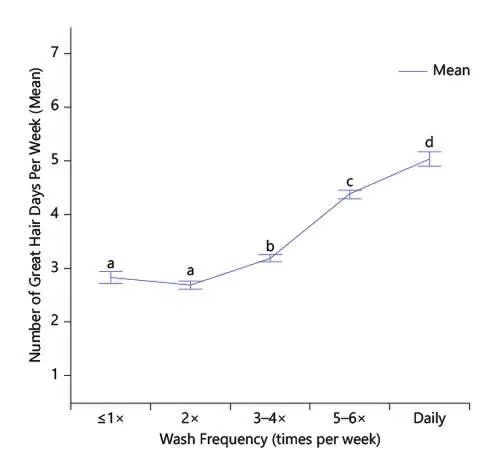
The number of days that members of the team are generally satisfied with their hair status on a weekly basis increased significantly as the frequency of hair washing increased
Measurements of oily hair glitter show that, compared to 7 days without shampoo, normal daily shampoo is less oily and less hairy water vapour is absorbed, representing a more effective angular barrier generation。
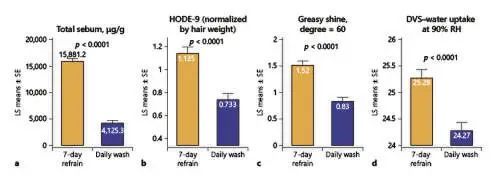
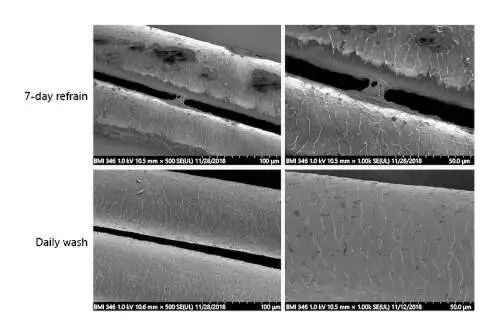
7 accumulation of no hair wash and daily grease cleaning
In any case, there are fewer problems with hair-washing, skin-skin and self-perception, and even fewer problems with drying。
Caution: the high frequency of shampoo is described here at most once a day in the study, and in subtropical areas such as guangdong and hainan, many people have a habit of getting washed several times a day, and the effect of this high frequency cleaning on their hair is not yet sufficiently studied。
People who don ' t wash their hair much to wash their hair often also significantly reduce the levels of leather, the extent of detaching, the volume of peroxide and the smell of the skin。
While there are more or less differences in individual circumstances: age, onset, living space, drug use, in general, this study, which has taken down the old cow's nose, concludes that:
Increased scalp cleaning would benefit both the normal scalp and the epilepsy, such as the presence of lipid perfunctory。
At the same time, in the case of hair conditions, since protective angular barriers are more functionally effective, thus reducing the absorption of water vapour, combined with self-assessments by testees in this study, the higher the frequency of hair washing, the better their hair position is evident:
Less greasy, healthier, less grumpy, less bored, less dry and less broken。
Another study had shown that shampoo per se did not cause more hair to fall, since the roots of hair were in the lower part of the skin, and normal shampoo would only allow those already falling hair to leave early。
This piece of research gives us a lot of evidence to wash our hair. There was a sudden increase in pressure..
Of course not, but it is too heavy a burden
1. The frequency of shampoo depends on the skin: for people with dry skins, it is possible to wash them once in a few days and choose to use warm and wet shampoo, while for people with oily skins, it is easy to wash them once a day。
There is no limit to the period of wash-up: in the morning, at noon or at night, no matter which period, wash-up is sufficient。
3. There is no direct link between hair taking off and hair washing: washing does not itself lead to more loss of hair, but merely to the removal of already falling hair from the skin。
Some people are destined to wash their hair today
New year -

Source: small bo on the slope + p on his own
May we wash away our disease and our poverty
With all the people around me
Medical beauty surgeon, shandong skin hospital
Punyani, s., tosti, a., holdinsky, m., yeomans, d., & schwartz, j. (2021).
Women are taking their hair less than three times a week for the first time in a decal