Application for free probation, counselling telephone: 400-8352-114
Concrete expansion agents are used for the preparation of expanding concrete (including compensation for condensed concrete and self-resilient concrete), compensation for condensed concrete to compensate for the dry contraction and compact concrete, improved concrete resistance to seepage, and, in the case of civil works, mainly for waterproofing and crack resistance, more often in the form of high-level waterproof concrete and an appropriate extension of stretching or retrenchment distance (in seamless construction)。
1 analysis of the causes of the fragmentation of concrete structures
Cement is a lethal disadvantage of concrete material as a result of the volume contraction caused by chemical and thermodynamic reactions during the waterization process. In particular, structural cracks in waterproofing works such as underground, waterworks, seaworks, subways, tunnels, hydropower, super-long steel concrete works and secondary refilling projects will cause serious quality defects. The main causes of the fragmentation of concrete structures are the following:
(1) cement is watered and becomes cement hardened in less absolute volume. Studies have shown that for every 100g cement, 33 ml water is mixed with a hydrochemical deflation value of 7-9 ml; if cement is used in 300 kg/m3, the size of the hole is about 21-27 l/m3, which is the underlying reason for the low strength of the concrete resistance and the low value of the extreme stretching deformation. Under dry conditions, the water in the concrete stitches will escape and generate a catheter pressure leading to dry contraction。
(2) cement reacts with water to produce heat ranging from 165 to 250 j/g of hydrolytic heat, which can rise by up to 50 to 80°c as cement use increases in concrete. The study showed that when concrete had an internal and external temperature difference of Δt = 10°c, the cold indent was 0. 01%; when Δt = 20-30°c, the cold indent was 0. 02% ~ 0. 03%. When the cold indentation value is greater than the maximum stretch of concrete, the concrete structure breaks。
It is clear from the above that the volume changes caused by the chemical, physical and thermodynamic reactions of cement in the waterification, hardening processes are the underlying causes of contractionary cracks in the early days of concrete。
2. Fragmentation-resistant measures for concrete
There are a number of fracking and anti-fracking measures for concrete. From the point of view of building materials, there are five main types:
(1) scrap ash or slag powder in concrete. Coal ash or slag powder, which is beneficial for reducing hydrocrystals, reduces temperature differentials and reduces costs, has become a traditional anti-fracking measure for the bulk of concrete and commercial concrete, but does not fully address the cracking of concrete, which can only be reduced。
(2) polypropylene fibre in concrete. Polypropylene fibres are small and unorganized, which concentrates on diffuse stress and has a better effect on reducing plastic cracks in concrete and preventing their development. However, because of the higher cost and the fact that it only reduces the level of fragmentation, it is less applied in the works and is more used to relieve self-flowing concrete or sand cracks。
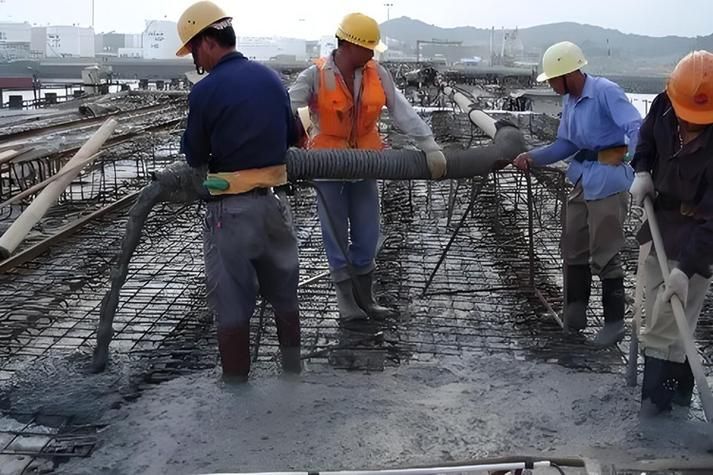
(3) integrating steel fibre into concrete. The elasticity of steel fibres is one order of magnitude greater than the elasticity of concrete, which increases concrete resistance and resilience and enhances concrete's own resistance to cracks. In addition, small steel fibres can spread the condensing stress and fine the cracks. However, the process of construction of this method, which is cumbersome and costly, is difficult to replicate and can only be used to counter the higher fragmentation requirements of components and roads。
(4) absorption in concrete. Deflators can be effective in reducing the piping pressure when concrete loses water, and can reduce concrete's dry contraction rate by about 20-30 per cent, but because of its high cost, they generally apply only to hard-to-conserve concrete structures。
(5) embezzlement in concrete. The incorporation of an expansion agent into cement at a rate of 8 to 12 per cent can compensate equally for the condensation of concrete and have the effect of filling and clogged cracks, significantly improving concrete's ability to seep and fracking and making it less costly。
In comparison with the above five measures, it can be seen that the expansion agent is currently the best concrete fracking, fracking and anti-fracking material, and that it is the best and most widely applied when used with fine blending and material mixes。
3. Classification and selection of concrete expansion agents
3. 1 classification of expansion agents
Concrete expansion is the generation of quarries, or products such as quarries and calcium hydroxide, or calcium hydroxide, with cement, water mixing and subsequent hydrochemical reaction, in order to generate an excretion of concrete。
Based on the product of expansion agents and cement, water mixing and subsequent hydrochemical reactions, it is common to divide expansion agents into three categories: calcium sulphate condensants, calcium sulphate-acin oxide concretizers and calcium oxide concretizers, which have developed through three stages of high-alkali, middle-alkali and low-alkali. The three main eligibility indicators for the current concrete expansion are alkali content, water-restricted inflation and air-restricted dry contraction。
3. 2 optimizer choice
The main function of the swelling agent is to compensate for the drying and cold contraction during the sclerosis of concrete. The jc476-2001 concrete expansion agent states that when selected for expansion, there are three main indicators: 碱0. 75% alkalin content; ≥0. 025% limit inflation rate of 7d in water; and ≤12% mixing. The compatibility of an expansionant with cement and other additives should be taken into account when selecting an inflation agent. The incorporation of an inflation agent generally does not affect the sclerosis rate of concrete concrete and its ease and condensation, but because the wateration rate of cement has a greater impact on the strength and expansion of concrete, co-use with the accumulator would result in an excessive expansion of concrete and, if not properly limited, a reduction in the intensity of concrete. Therefore, the swelling agent should be tested before being used in combination with other additives。
3. 3 concrete expansion source
3. 3. 1 phosphate
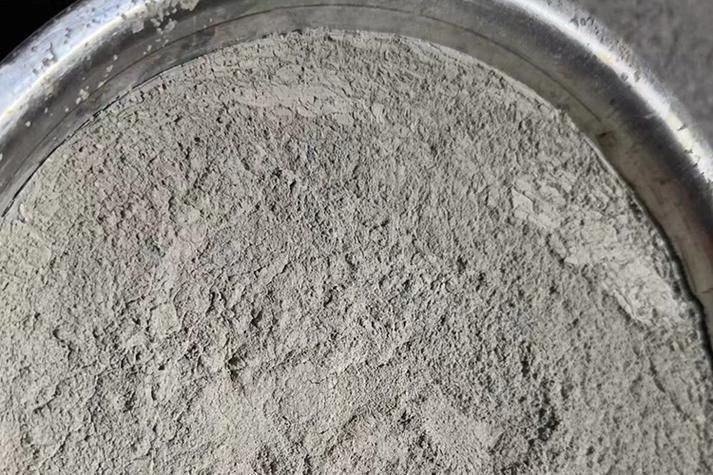
The majority of the concrete expansion agents produced in our country are sulphate expansion, which is based on its aquatic products. Apart from the quality of the plaster, its activity depends largely on the quality of the inflatant clinker. Improving the stability of aquatic products, increasing their resistance to carbonization and inhibiting alkaline-assembly reactions are key to ensuring the quality of concrete expansion agents。
The chemical reaction patterns that form the quail are as follows:
6cao+al2o3+3so3+32h2o→3cao al2o3-3caso432h2o(1)
It is known from the reaction (1) that, under the full volume of al2o3 and ca(oh)2, the amount of the quartz formed depends on the quantity of so3 in the cement base material expansion system. If the plaster is dissolved quickly, the quartz is formed quickly, thus reducing effective expansion. The majority of the concrete expansion agents produced in the country are composed of hard plasters, which contain less impurity and are relatively slow to dissolve, with so3 content of 48 per cent in general。
3. 3. 2 high calcium dust and industrial plaster
Use of inflated components of solid waste such as high calcium powder ash and industrial waste plasters (pyramid) the development of new concrete expansion agents by free calcium oxide or calcium sulphate crystals with different crystals is also an important way to develop concrete expansion agents。
The expansion components of high calcium powder ash are mainly ambulatory calcium oxide, which is expected to cause expansion; the expansion components of industrial waste plaster are mainly calcium sulfate crystals with different crystals, which are involved in the formation of quail during hydrochemical processes。
4. Issues to be addressed with concrete expansion
4. 1 limiting inflation
Concrete limited inflation rate 2 is very important in engineering applications. It increases as concrete intensity increases, but the relationship is not positive. ε2 is large and self-resilient, which compensates for contraction and is highly resistant to seepage; ε2 is small and has a weak ability to resist seepage. Therefore, limiting inflation rate ε2 is an important parameter in building structures that are resistant to fragmentation。
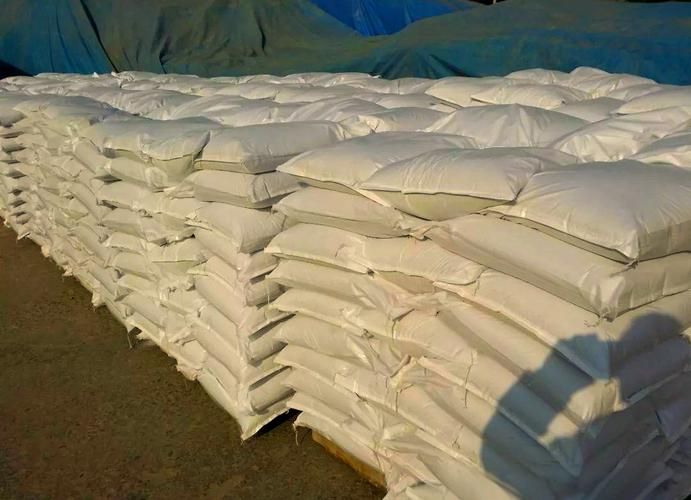
The fracking requirements of different structures and parts of concrete vary. Extensive engineering practice has shown that the limit inflation rate for the floor concrete slurry for waterproofing works is 2 = 0. 02 ~ 0. 025 per cent, the limit inflation rate for the side wall is 2 = 0. 03 = 0. 035 ~ 0. 035 ~ 0. 045 per cent, and the limit inflation rate for the refilling or expansion belt is appropriate 2 = 0. 035 ~ 0. 045 per cent。
4. 2 bulking of expansion
Because of the activity inherent in the swelling agent, which can be considered part of the cement, the mixture is calculated by replacing the adhesive material by an equivalent. In the actual works, the requirement to compensate for contraction should be met by a scientificly reasonable mix of different amounts of inflation, depending on the structural location. For refilling or swelling bands, large expansion of concrete is required, with a concrete inflation rate of 0. 035 to 0. 045 per cent and an increase in intensity of 5 mpa, to be achieved with an expansion agent of 14 to 15 per cent, which would not meet the design requirements of 12 per cent, with the potential to break the concrete structure. However, if overblended, it would not only increase costs, but would also make construction unconstructive, which is a problem for the time being。
Because of adaptive problems with both expansion and partial additives in concrete, the input provided by the expansionist plant can only be used as a reference, and the actual incorporation should be based on the design of a limited rate of inflation, using raw materials from the field, and determined by a concrete test。
4. 3 increased mixing and increased evenness of expansion
The main measures to improve the balance of the swelling agent, which is the basic condition for ensuring compensation for the condensation and fracking of the concrete, are: one strict mix and condensation system, which should extend 30 s over a period of time over ordinary concrete to ensure that the swelling agent and cement, water-reducing agents are evenled and evenly balanced; and two transports of concrete and fabrics should be carried out in strict compliance with construction regulations to prevent decomposition。
4. 4 enhanced conservation
The required rate of inflation can only be achieved through full hydrosis if it is evenly mixed with cement. The need for more moisture in the process of composting concrete has shown that mixing and water alone are far from meeting the requirements of wateration, and it is therefore important to strengthen water conservation to compensate for condensed concrete, which should have a wet conservation period of no less than 14d. For the bulk of concrete, surface storage must be maintained. Conservation can also be carried out through water spills and plastic sheeting。
4. 5 adhere to the principle of optimizer selection
In the first instance, an expansion agent should be correctly selected; a certain temperature and humidity must be guaranteed in the use of a concrete expansion agent in order for the performance of the quartz to remain stable; and the use of an expansion agent must be strictly in accordance with national standards and be adapted for use。