


From the mba think tank encyclopedia (https://wiki. Mbalib. Com/)
General description of the law of jan time
Time is the most important factor in transactions in the jiangn doctrine. Jane's time law is used to reveal the pattern of price reversals。
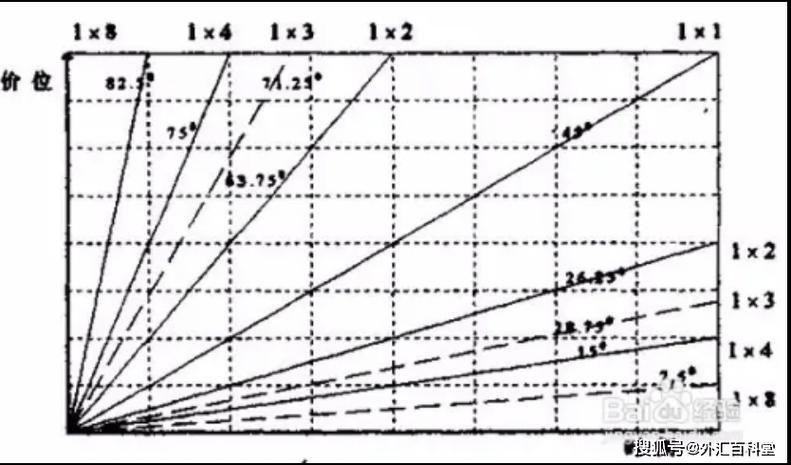
According to jiang, a certain rate of price reversal takes place at a given time, and the actual rate of price reversal can be predicted using the jiangn time rule。
Jiangn defines time as the year of the jiangn trade, which can be divided into two, i. E. Six months or 26 weeks, or three, four or more, for example, one eighth and one sixteenth。
There have been important time lags in the course of the jan trading year. For example, because there are seven days a week, and 7x7 is 49, he sees 49 as a very meaningful day, with some important peaks or floors ranging from 49 to 52 days. The transition time between mid-level trends ranges from 42 to 45 days, while 45 days is exactly one eighth of a year。
Jiang also pointed to important time intervals at which price reversals can be predicted:
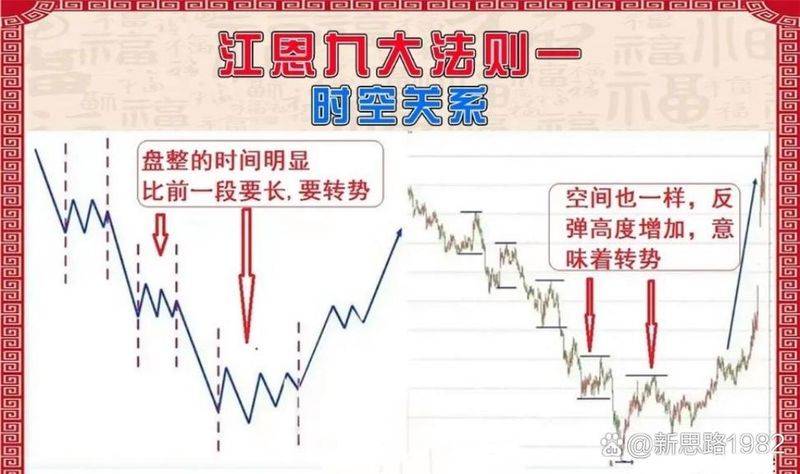
1 general market echoes take place from day 10 to day 14, and if this interval is exceeded, subsequent calls will occur from day 28 to day 30
2 there's a small turnback after seven months on the main top or bottom.
3 the main or final anniversary。
In addition, the law of jane's time also takes into account a variety of factors such as season, religion, astronomy, etc。
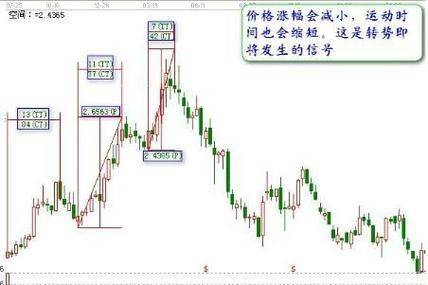
The division ratio is based on eight, i. E. 50 per cent (one half), followed by 25 per cent (one quarter) and 75 per cent (three quarters), followed by one eighth, three eighths, five eighths and seven eighths. As we look at the trends in the deep-seated stock market, we can find a wealth of practical examples to prove the validity of the jiang split ratio. Let's look at the weekly diagram of the index. On 20 november 92, the number of weekly drawings collected was 401. After 13 weeks of rise, the weekly closing index was 1499. 7 points on 19 february 93, with an increase of 1100 points, the peak of which was 1558 points during the week, then began to decline after a six-week decline, to 2 april 93, when the weekly closing index was 944 points, a decline of 556 points, or about one half of the increase, or about one half of the increase. With these examples, we can see the importance of the 50 per cent division of jiang. The experience of jan has been drawn from the united states stock market and the current market, but this conclusion is equally valid for our stock market. The law of jan's fluctuations and partition ratios are not limited to a particular region; it is a natural law, which is a law that people naturally follow in the course of dealings. It is a reflection of a fixed habit that is not easily broken。
If the task of a military group is to be carried out from a to b, because of the long distance and the need for rest in transit, it is likely that this rest will be at 50 per cent of the total road. If a person worked eight hours a day, he often worked four hours in the morning and four hours in the afternoon. See also the weekly chart of the cpi, which operated 28 trade weeks between 29 july 1994 and 17 february 1995 and increased from 333 to 1052 points for 7 weeks, then fell to 533 points after 21 weeks. The increase was one quarter (25 per cent) and the decline was three quarters (75 per cent) of that period, while 25 per cent and 75 per cent were split points to which jiang attached great importance。
From "https://wiki. Mbalib. Com/wiki/%e6%b1%9f%e6%81%a9%e6%e6%97%b9%e9%e9%b4%e6%b3%95%e5%e8%99"



