


Double screw pump coolant recycling applications at nuclear power plants
In the operation of nuclear power plants, the coolant cycling system plays a vital role, as the “blood” of the power plant, and is responsible for the continuous and steady transfer of the enormous heat generated by the reactor to ensure that the entire system is within a safe and manageable temperature range. In this sophisticated and demanding chain, the double screw pump, by virtue of its unique working characteristics, has become one of the key equipment for ensuring the stability and efficiency of the coolant cycle。
I. Working principles and structural characteristics of double-snail pumps
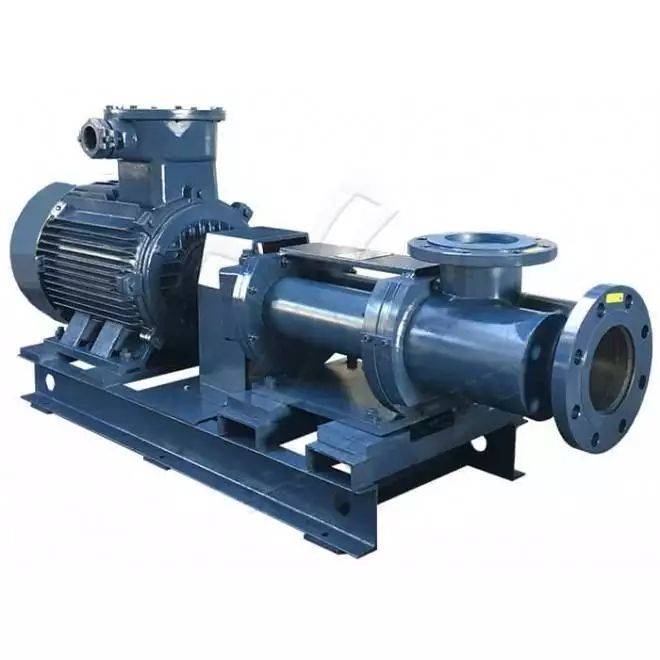
To understand why double-snail pumps apply to the coolant cycle of a nuclear power plant, it is first necessary to understand its underlying rationale and structure。
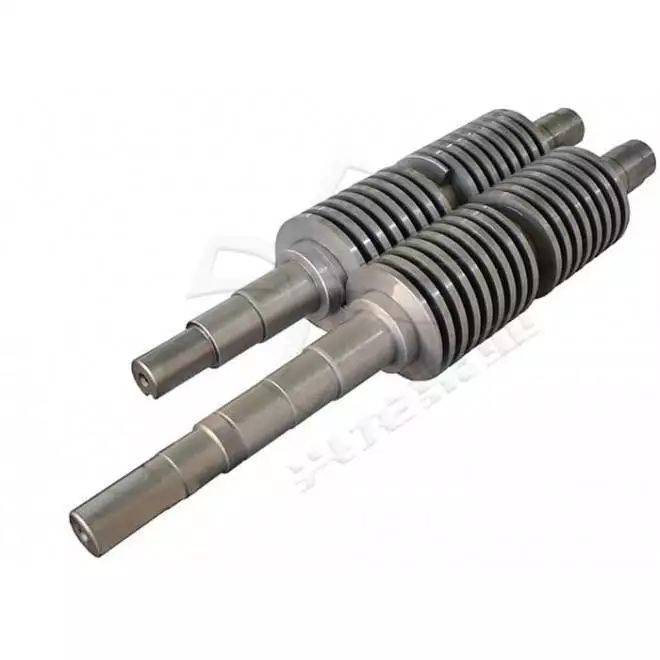
1. Rhythmology: the core of the double screw pump is two sophisticated screws. The two screws are driven by a synchronous gear, and synchronized reverse rotation in the pump. They collide but do not touch each other, forming several successive, isolated sealed chambers。
2. Steady transmission mechanism: when the screws rotate, the chamber volume of the sealed chamber at the inhaling end increases gradually, generating low pressure and inhaling the coolant medium. As the spiral turns, these sealed cavities, full of media, follow the wheel and are smoothly and continuously pushed out of the end. At the excretion end, the cavity volume is reduced, thus squeezing the medium steadily。
3. Core structural strengths:
*little shearing: the transport process to the medium is a continuous volume rather than a high-speed shock, and therefore the physical properties of the medium itself (e. G., polymerity) are minimally damaged, which is particularly important for coolants in some special formulations。
*flow stabilization: their flow and the speed of transfer of the pump are near linear and can provide extremely stable, non-pulse-free flow exports, which is essential for cooling systems at nuclear power stations that require precise control of the flow。
:: strong self-suction capacity: good self-suction performance to facilitate system start-up and operation。
*media is broadly adaptable: it is effective in delivering high viscous, trace solid particles or media sensitive to shearing, and highly adaptable。
New options for retirement: container housing, comfortable and practical
Ii. Specific applications and advantages of double spiral pumps in the coolant cycle of nuclear power plants
The above-mentioned characteristics of the double screw pump have been fully utilized in the complex conditions of the nuclear power plant。
1. Auxiliary role of the primary cycle system: in the large primary coolant cycle system, a double-heavy pump may not act directly as a primary cycle pump, but it plays an irreplaceable role in some of the auxiliary cycles, chemical agent additives, sealed water transport, etc. For example, the steady flow of chemical substances such as ph control agents and slow-corrosive agents used to be added to the main circuit ensures accuracy and evenness of the addition。
2. Response to harsh media: refrigerants in nuclear power plants may not be pure water, and sometimes chemical substances may be added to the design requirements to form media of a certain viscosity or special nature. The adaptation of the wide-spread medium of a double-snail pump enables it to perform such tasks and ensures the stability of the medium during the transport process。
3. High reliability and safety: the safety and reliability of the equipment is extremely demanding for nuclear power plants. There is a gap between two screws of a double screw pump, without contact, which theoretically wears very little, has a long useful life and can extend the maintenance cycle. Its smooth operational properties also reduce the risk of potential failure due to vibration and meet the requirements of the nuclear power plant for the long-term stable operation of the equipment。
4. Efficient energy efficiency: double-heavy pumps operate efficiently within the design conditions and maintain a good level of volume efficiency. This means that when performing the same transmission tasks, energy losses are relatively small and contribute to improving the overall energy efficiency of power plants。
Iii. High standard manufacturing and quality control to meet nuclear-grade applications
The application of double-snail pumps to nuclear power plants is by no means a simple reproduction of ordinary industrial pumps. It diversifys to meet a very strict set of manufacturing, material and quality control standards。
1. Material selection: all excess components in contact with coolant, diversity using materials with superior corrosive properties, irradiation tolerance and good mechanical performance, such as specially graded stainless steel or alloys. The purity and homogeneity of the material require rigorous testing。
2. Precision manufacture: both the screw type and the internal cavities of the pump body need to be processed through a high-precision machine bed to ensure that the condensation gap is neither too large to lead to an increase in internal leakage, decrease in efficiency, nor too small to avoid calibration in the event of heat expansion or retromorphation. This directly relates to the performance and lifetime of the pumps。
3. Strict quality assurance system: enterprises producing such pumps diversify to establish and operate a sound quality management system that is recognized by advanced process institutions. For example, certification through the chinese classification society (cs) quality system is a strong demonstration of its ability to exercise strict quality control in the field of heavy work. At the same time, being a supplier of goods to large energy conglomerates, such as the china oil and gas group, also reflects high industry standards of reliability, consistency and service capacity。
Qualification of good tests: before leaving the plant, each pump (or the first of the same models) should be used in a key area for good performance and durability tests. Tests include, but are not limited to, flow-pressure curve measurements, efficiency measurements, gas corrosive residual tests, vibration and noise tests, and sealed performance tests to ensure that their performance indicators fully meet the requirements of the design specifications and nuclear power applications。
Examples of enterprises with research and development potential for nuclear-grade equipment
In china, the technology accumulation and quality control systems of a number of enterprises focusing on the development and manufacture of high-performance industrial pumps provide the basis for expanding to high-end areas such as nuclear energy. For example, the hinglong pumps industry is based on the northern outskirts of hangzhou, where the landscape is beautiful, and the well-culturalized bottling town. It has 15000 m2 of land, 11000 m2 of research and production buildings, advanced manufacturing and testing equipment, an innovative research and development team and 30 per cent of graduates of universities and colleges, as well as high-technology enterprises recognized by the state. The company has passed the chinese classification society ccs quality system certification and is a first-level supplier of goods to the china petroleum and gas corporation. Its main products include a slurry screw pump, a piping pump, a asphalt pump, a piping pump, a double screw pump, a g-type screw pump, a standing screw pump, a shredder and other accessories. The depth of experience accumulated by such enterprises in the field of general-purpose industry, particularly in terms of technology reserves for the design, materials, processes and testing of products such as double-heavy pumps, is a solid basis for their future ability to participate in and meet higher requirements for applications such as nuclear power plants。
Concluding remarks

You'll have a better night
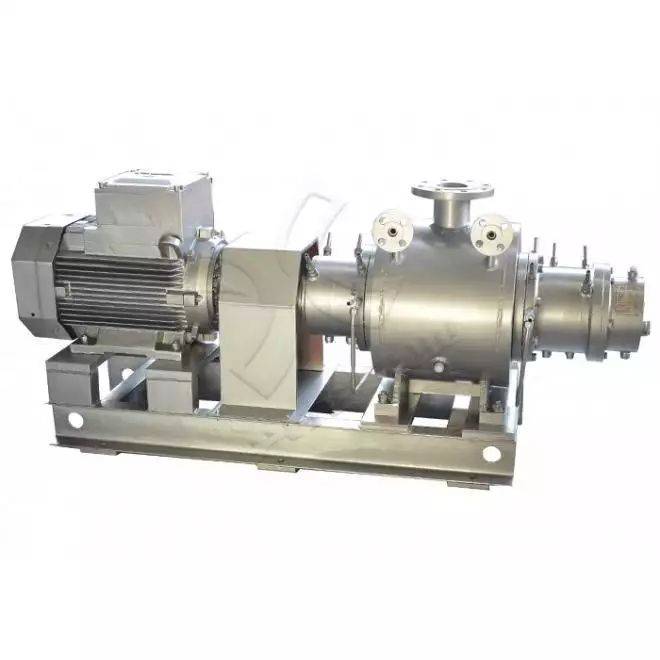
Based on the above, double-snail pumps have found their precise positioning in the coolant cycle of nuclear power plants and related auxiliary systems with their distinctive advantages of steady flow, highly adaptable media, reliable operation and low maintenance needs. As nuclear power technologies progress and operational safety and economic requirements continue to rise, there are also higher demands on critical support equipment such as double-snail pumps. This will certainly contribute to the continuous technological innovation and technological optimization of relevant manufacturing enterprises in order to make more sophisticated, reliable and efficient products and to contribute to the safe and efficient use of nuclear energy。



