


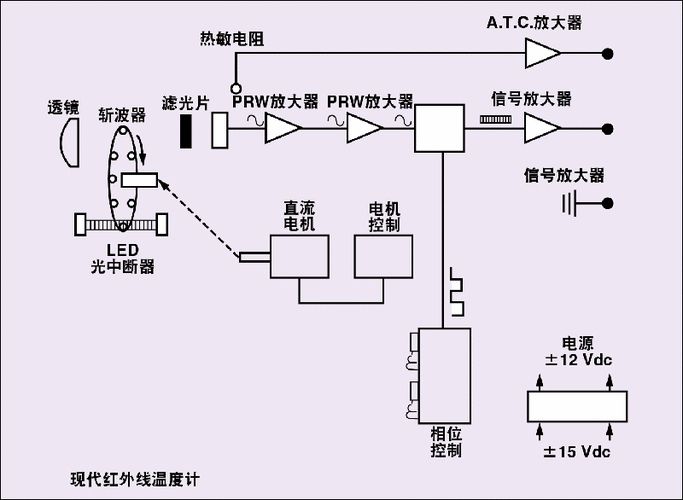
Non-contact temperature measurement techniques are playing an irreplaceable role in industrial monitoring, medical diagnosis and even routine electrical engineering. Among them, the infrared temperature sensor is the core device whose rationale and application is the knowledge that every electronic electrician must possess. How does it translate invisible infrared radiation into precise temperature readings? How do their internal semiconductors and fibre-optic components work together? Understanding the principles of infrared temperature sensors not only helps you to correctly select this advanced electrician tool, but also provides critical data support for equipment state warning and for the safe monitoring of distribution systems. This paper will provide an in-depth analysis of its working mechanisms and share practical techniques within the industry. If you have any specific problems with your application, you are welcome to contact us at any time to receive professional technical support. I. The core working mechanism for the resolution of infrared temperature sensing, in order to understand the principles of infrared temperature sensors, requires first to understand a basic physical law: any object above absolute zero degrees is exposed to infrared energy, the intensity and wavelength distribution of which depend directly on the temperature of the surface of the object. Sensors measure by capturing this energy. Specifically, it follows several key steps. First, infrared radiation from the target object is collected through lenses at the front end of the sensor (which may be made of particular fibre-optic components or optical materials). Second, the energy gathering is directed to the core infrared detection component. This detector is usually a semiconductor device, such as a heat reactor or a heat decomposition detector, capable of efficiently converting incoming infrared radiation energy into a weak telecommunications code. In addition, some high-end models integrate a laser diode that sends visible laser points not for temperature measurement, but as a precise targeting indicator to ensure that you measure the correct target point. This weak telecommunications signal was subsequently sent to the processing circuits inside the sensor for magnification and linear treatment, leading to the calculation and display of corresponding temperature values based on stephen boltzmann's law. The whole process was completed in an instant, with real non-contact measurements. The best practice of the electric industry in increasing thermal infrared accuracy, once the workings of the infrared thermostat sensors have been understood, makes it key to ensure the accuracy of their measurements in the complex electron landscape. Here are some proven industry best practices that help you avoid common error zones. 1. Misconduct and improper selection of elements are the main causes of error. Please follow the following: 1. Take care to measure distance and light spots (d:systems) and ensure that the target object fully covers the measurement field of the sensor. Taking into account the launch rate on the surface of the object, it is recommended that a special sticker or spray paint be used to increase the launch rate for light metal surfaces. 3. Avoid measuring targets through media such as glass or plastic, which absorb and reflect infrared. To ensure that the sensor's temperature is within a stable range, so as to avoid extreme changes in ambient temperature affecting the stability of electronic components. 2. The value of the specific application of infrared temperature sensors in the maintenance of electrical distribution systems and equipment in the field of electrical engineering lies in their preventive maintenance capabilities. It is widely used for: 1. Thermal spot screening of the distribution system: rapid scanning of circuit breakers, cable connections, main lines, timely detection of overheating risks due to poor exposure. 2. Electrical and bearing temperature monitoring: monitoring of the electrical shell and bearing temperature by non-contact means to determine overload or insufficiently lubricated. Thermal analysis of electrons: during development or maintenance, the temperature of selected semiconductors on circuit boards is checked. For complex temperature field analysis, an upgrade to the infrared thermal imager could be considered, which would provide visual temperature maps of the entire equipment to make the failure point clear. If you need to equip your team with appropriate tools or training in infrared thermal imaging, please contact us and provide a complete solution. As can be seen from the above discussion, the work of infrared temperature sensors relies on accurate capture and conversion of invisible infrared energy, the core of which is a combination of physical law and modern semiconductor device technology. As a powerful electrical tool in the hands of electrical engineers, it gives us the ability to diagnose the dangers of the distribution system and to assess the health of the equipment without interruption. A mastery of its rationale and adherence to the correct operational norms is a cornerstone for ensuring reliable measurement data and achieving predictive maintenance. I hope this will help you to understand and apply this technology in greater depth. If you have a challenge in the application of a specific project or need a more in-depth technical exchange, contact us whenever you have a problem。



