


Michel foucault, 15 october 1926-25 june 1984, a french philosopher, historian and social theorist, was one of the most influential thinkers of the twentieth century. His research cuts across areas such as philosophy, history, sociology and political science, and is known, inter alia, for its profound insight into power relations, knowledge production, speech analysis and the formation of the dominant nature。
Fukuo's ideas not only reshaped the way power and knowledge are understood today, but also had far-reaching implications for cultural research, gender studies, law, medicine and education. This paper will provide a comprehensive analysis of this complex and profound thinker in terms of his life background, key ideas, academic contributions and historical significance。
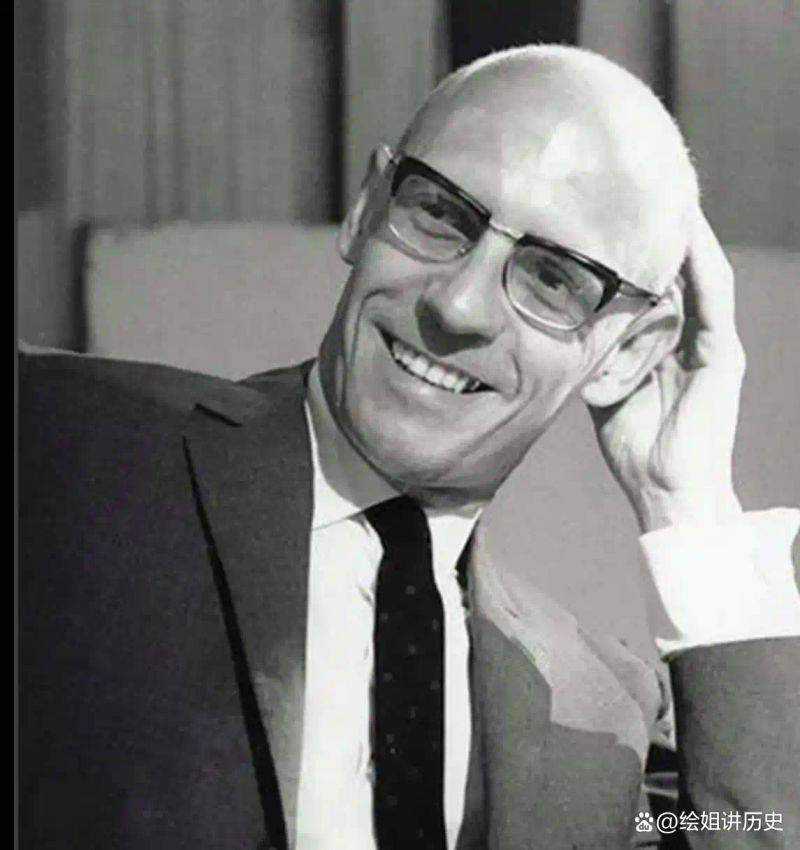
I. Background and life: the watch of an age
Michelle foco was born in a middle-class family in pwaje, france, and joined the paris teacher training school in the 1940s to study philosophy and psychology. Early on, he was influenced by a mythology and structuralism, and then evolved into a unique system of thinking。
In the 1950s, fukuo taught in sweden and poland, while also conducting in-depth studies of psychiatric and medical history. In the 1960s, he began to publish a series of far-reaching publications, such as madness and civilization (1961), words and objects (1966) and intellectual archaeology (1969), which established his position in academia。
In the 1970s, fukuo's research shifted to power and substance, with the representation of three volumes of the law of discipline and punishment (1975) and the sex history (1976-1984). He was also active in political activities, focusing on social issues such as prison reform and homosexual rights。
Core thinking: power, knowledge and discourse
1. Power is not oppression, but production
Fukuo has subverted the traditional understanding of power. In his view, power was not mere oppression or domination, but a network of relationships that pervaded all levels of society. Power not only limits people's behaviour but also shapes individuals ' identities and behaviour through discipline, norms and knowledge production。
2. Knowledge as power
Fukuo introduced the concept of “power/knowledge”, emphasizing that knowledge and power constitute each other and that knowledge is not a neutral truth, but a product of power relations. Words from different historical periods determine the form and content of “truth”, and the process of knowledge production is the process of power。
Language analysis and archaeological methods
Foco uses “discourse” to analyze how society constructs reality through language and knowledge systems. His “archaeological” approach aims to explore the rules and structures of different knowledge systems in history and to reveal the power mechanisms hidden behind them。
4. Education and social formation
In the law on discipline and punishment, fukuo analyses how modern society is able to control and manage individuals through discipline mechanisms (such as schools, prisons, the military) that shape “behavioured bodies”. Primacy is not self-generated, but is structured and shaped in power relations。
5. Sexual and subjective emancipation
In its sex history, foco explored how sex is taught by the language of power, while also pointing to its potential for emancipation as an important dimension of the subject matter. He stressed that by exposing power mechanisms, individuals could redefine themselves and gain greater freedom。
Academic contributions and impact
1. Breaking disciplinary boundaries
Fukuo research promotes interdisciplinary research across philosophical, historical, sociological, political and cultural research. His methodological innovations, such as speech analysis and archaeology, laid the foundation for post-structuralism and post-modernism。
2. Impacting cultural and social criticism
Fukuo's criticism of power and knowledge has inspired cultural research, feminism, gender studies, cool theory, and has prompted scholars to re-examine social norms and identity。
3. Prison and penal reform
Fukuo's analysis of the prison system reveals the mechanisms of individual control of the modern state, affecting the theory and practice in the field of prison reform and criminal justice。
4. Redefinition of subject matter
Fukuo's idea of the subject matter is not static, but rather dynamically generated in power relations, challenging traditional humanist philosophy and providing a new perspective for contemporary philosophy and psychology。
Iv. Historical significance and contemporary values
Fukuko's ideas remain extremely relevant in contemporary society. As the information society and globalization develop, and power relations become more complex, foco's analysis of the pervasiveness of power and the interplay between knowledge and power provides a powerful tool for understanding governance, monitoring and identity politics in modern societies。
In addition, fukuo has emphasized critical thinking and self-care, encouraging individuals to reflect on the power structure in which they live and to pursue the fundamentals of emancipation, which is a positive contribution to civic awareness and social change in contemporary society。
Concluding remarks
As one of the most original thinkers of the twentieth century, michelle foco opened a whole new philosophical and social theoretical horizon with his insight into power, knowledge and substance. His theory has not only changed the academic paradigm but also provided an important tool for understanding the power mechanisms of modern societies. Today, fukuo's ideas continue to inspire scholars and social activists around the globe to promote the constant exploration and practice of freedom, power and identity。



