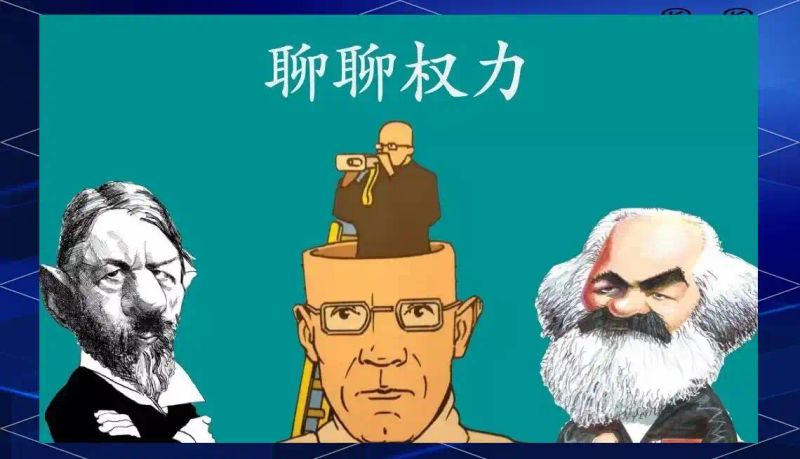
In exploring the essence of power, we inevitably encounter the theories of the three thinkers, max, weber and foco. They have shown us the complex meaning of power from different perspectives. We will then look at their power interpretation separately with a view to a more comprehensive understanding of the three pillars of power。
The power interpretation of western thinkers
The triple theory of power
In exploring the essence of power, we often touch upon the theories of the three thinkers, max, weber and foco. They each have unique perspectives that reveal to us the deep meaning of power. Next, we will look at their power interpretation on a case-by-case basis with a view to gaining a more comprehensive grasp of the triple perspective of power。
Marx's idea of power
First look at max. Marx closely linked power to the political and economic sphere, emphasizing the need for power to derive from class rule, through which the rulers defend their own interests in various areas, including the economy. In marx's vision, state power or political power is at the core, and the essence of a modern state is power. The state is regarded as a repressive and violent machine whose operation depends on the state apparatus of government, administration, army, police, courts and prisons. However, the effective functioning of these national machineries also requires ideological support, an ideology that encompasses many areas, including religion, education, law, politics and the media。
In marx's theoretical system, state authority is built around one centre. As you can imagine, power is at the top of the pyramid, the monarch or the ruling class at the top of the pyramid has power and the ruling class lacks power. Monarchs or ruling classes dominate and control individuals through the state apparatus, thus establishing a top-down system of rule. At the same time, the ideology of the ruling class, through law, education, the media, etc., preserves the order and legitimacy of domination and inhibits and precludes any act that may threaten domination。
Weber's power analysis
Then we turn to webb's power interpretation. Weber placed power within the framework of social relations, arguing that power existed not only between superiors and subordinates, but more broadly in relations between friends, lovers and even strangers. In weber's view, any social relationship may constitute a power relationship as long as one of the parties obeys the other. For example, a man opened the door for a woman and indicated her preference, and even if she did not want to, she had to submit to this “woman first” arrangement because of some pressure. Thus, weber considers power to be pervasive and diverse。
Moreover, cooperation, as a general phenomenon in social relations, also implies power relations. In the process of cooperation, participants are required to observe certain rules and objectives, which are essentially a power relationship. In this sense, cooperation is not only a form of behaviour but also a manifestation of power relations。
Weber further suggested that sociologicals should look at power rather than power in general. Power is a tangible expression of power in the political sphere, more intuitive and explicit than power. In the functioning of power, marx is concerned about how the dominant class exploits and oppresses the ruling class through power, while weber explores how they empower the rulers from the standpoint of the governed. In weber's view, the existence of a person's power does not depend on his or her status or status, but rather on the subject's compliance with that power relationship. The existence of power thus becomes a key measure of its existence。
As a result, weber further proposed three dominant relationships: traditional, charismatic and jurisprudential. Traditional authority exists mainly in societies such as china, where the legitimacy of the emperor derives from ancient traditions and there is a widespread belief that the role of the emperor has existed since ancient times. Thus, while the rebels, chen seung-gang and others, initially declared their intention to overthrow everything, they themselves became the object of the overthrow. Similarly, the restoration of the late emperor qing dynasty after its demise is undoubtedly an expression of traditional rule。
Charmic rule focuses on the charismatic charm of the rulers, a power that is not based on law or tradition, but on the belief of the rulers. As for jurisprudential rule, it emphasizes the importance of laws and regulations rather than the power of an individual or a certain tradition. For example, the way in which rules and regulations are managed within a state or company governed by the rule of law reflects the characteristics of jus cogens。
Fukko's concept of power