


Throughout history, chinese culture is inherited by han; at this moment, chinese culture is spread。
With the care and care of the children of china for generations, after thousands of years of socio-cultural history and the growth of the spirit of the times, the chinese word has become an important cornerstone of national self-confidence and an important element of the soft power of the state. However, with the advent of the age of information and intelligence, the normative writing of the chinese word has also been severely affected, and the promotion of the chinese word is imminent. Revealing the history of the chinese word helps to promote the rule of the chinese word。
The body of han chinese history carries the source of the rule
For thousands of years, chinese characters have changed in their shapes, in their form, in their form, in their form, and in their different forms, in their different forms, but without any major fissures, they have always maintained the constant stability of their development. In the case of individual chinese characters, every chinese word has its own history of evolution and development, although its origin has varied from time to time. It is also necessary to know their historical shapes. Some of the words in the daily han writings are very easily miswritten, such as “fake” in the upper part of the writing, and “pulmonary” in the right part of the writings in the “city”, mainly because of the limited level of chinese literacy among writers, lack of knowledge of the historical shapes of these words and lack of understanding of their construction。
The lower part of the text of the word “fashion” is a “eye” for the eyes, the upper part of which is a “m-poo” for the “hat”; the “spot” in the words “tip” in the words “tip” in the words of the war countries is stretched to the lower side of the hat to show the taped down by the lower side of the hat; the lower part of the plume is not connected to the middle pen, but is a “tip” for the cover; and the example is not much different from the plume, except for the shortness of the pen. The lower part of the word “speaks”, which means that the upper part of the speech is a fiction of the flow of air; the ancient words of gold, the words of war and the words of xiaoxi, which basically inherit its form; and the pens of the upper part, which are bound to the right side of the word “mouth”, vary from one another to another. It is clear that the difference between the word “silver” and the word “silver” is clear, except that in the current example, the word “silent” in the upper part of the word “false” is often miswritten because of its proximity to the word “silent”。
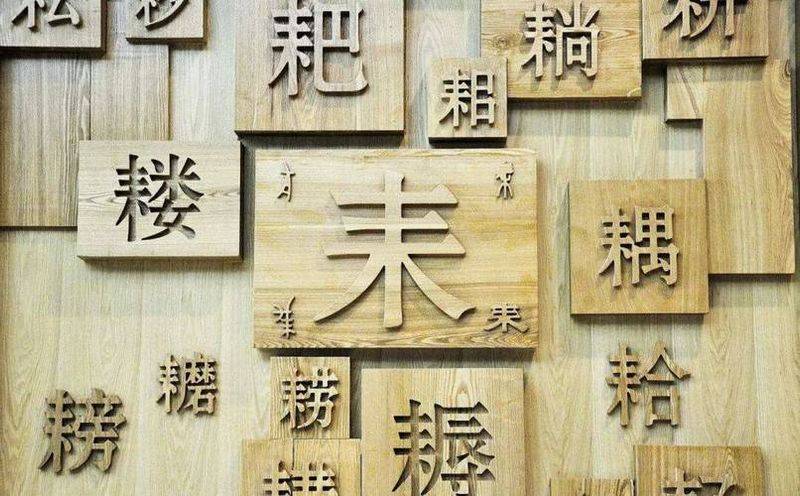
To the right of the word “pulmonary”, the gold word “single” is used as a hieroglyphic. It is a pictogram of the finger, an adornment that was hidden in front of the garments of the ancient ages, which differs significantly from the ancient writings of the “city” words “single”, “golden” and “single”. In the current norm, the word “pulmonary” is used as a sound sign and is often written by mistake because of its proximity to the word “city”。
Moreover, most of the shapes that regulate the chinese characters are not new, but the accumulation of history, and there are quite a few of them, some of them old-fashioned, and some of them old-fashioned, even older than their respective complexes. According to li lo yi, researcher at the institute of language and text application of the ministry of education, “more than 80 per cent of the current simplified words were used or existed before the 1950s of this century (the twentieth century). Of these, about 30 per cent came from the late qin and two han.” it is not new to have the word "none" or "none" as a simple word for "none" or "none" or "none" as a simple word for "none" or "none" or "none" or to examine it, but it is a simple sketch of the dancer's dance or a hieroglyphic. The current norm is to activate the classical character。
The history of han chinese has been used to regulate the creation of characters
The fundamental value of the chinese word to its creation and existence lies in its “use”. Since the creation of the chinese script, it has been alive and alive to this day, mainly because it accurately records the chinese language and because its form, sound and meaning fit the characteristics of the chinese language. However, in the history of chinese characters, there is not a simple correspondence between characters and words, and the common term is a complex relationship such as polygraphs and monologues。
The short story of lu xuan's "photo bed" tells the master that there are four ways of saying "single bean" and that only one way of writing, which seems to be simple, carries with it the important question of the formalization of the chinese word, namely, how to define a form as a normative font in a word-to-word historical body, while treating other forms as non-standard. The four words of the word "thirty" are followed by the words "back, back, back and back." the word “return” is the ancient language of “return”; the word “return” is the word “return”; and the word “relay” is the word “relay”. As the existence and use of the other three forms can be seen in a specific context or context, it is “back” that is used in a broader context and that its historical properties determine its mission as the norm。
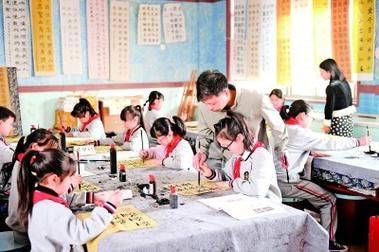
Of course, it has to be viewed in a dialectic manner. In the process of developing the general standard hampshire, published in 2013, the principles of science, stability and probity were used, and each group of characters and each font was repeatedly validated, reviewed and re-identified, and it was stipulated that, in the future, a simple “cancellation” approach would be adopted to the different characters, instead of “identify” and “design”. Thus, on the basis of a wide range of comments, the list reverts to the original 51 heterogeneics, such as the words “single” and “single” and “single” because of the high frequency of the use of the word in a person's name, which is included in the table, and notes that “may be used in the name of the person”
Moreover, cognitive regulation of the choice and establishment of a han character cannot be unduly applied to the use of the word and must respect conventional historical writing habits. For example, the term “sculpting insect technique” was first derived from north s. Lee's sculpture, which means carving; and insects, which refers to a book of birds, which is a type of ancient mandarin, the whole of which represents a marginal skill. “sculpture, chalk, platinum, platinum.” “sculpture, platinum, platinum.” it appears that “sculpture” refers to a predator; “sculpture” and “squadium” denote, respectively, grafts and jade, which should be the word “sculpture” of “sculture”, “sculpting”. The second year of the proclamation of the left read: “indulging in the spirit of justice, with a wall.” this word is used as a word. If so, why is the "sculpture" of the "sculpture" made of "sculpture" rather than "squawk" or "squawk"? The reason for this is that the ancients used the words “sculpture” to mean “sculpture”, "spoken with black teeth" and "sculpture with paintings." this is a writing habit at the time and a reflection of the chinese written language's self-optification. As a result, the term “sculpture” has the dual meaning of “raptor” and “carving”, and the word “sculpture” has slowly been replaced by the word “sculpture”. In keeping with historical writing habits, when defining the normative font, the table receives “sculpture” instead of “twirl” and “twirl”。
The rule of chinese writing follows the evolution of chinese characters
In the midst of history, there are two forces driving the evolution of the chinese word, one of its own patterns of evolution and the other of artificial improvement. The two forces interacted, driving the chinese word together into the twenty-first century with a brand-new face, and increasingly with a near-optimal posture carrying the mission of spreading the chinese history and culture. In the history of the development of the chinese word, the norm of the chinese word has been followed, reflecting a close human response to the evolution of the chinese word itself。
Based on the actual status of the scriptures and the use of the chinese script, the qin of the first province has a chinese scripture. "today get out of the car, in the same words, in the same words, in the same way." according to the pipe, "it's true that i'm the one who fights one by one, the one by one, the one by one, the other by the same name, the same track." the “same book” (name) contained in the observatoire, “the pipe”, was found to have occurred between the late mid-week and the spring and autumn of mid-week. The first book in chinese history, “study of history”, should have been the product of this writing。
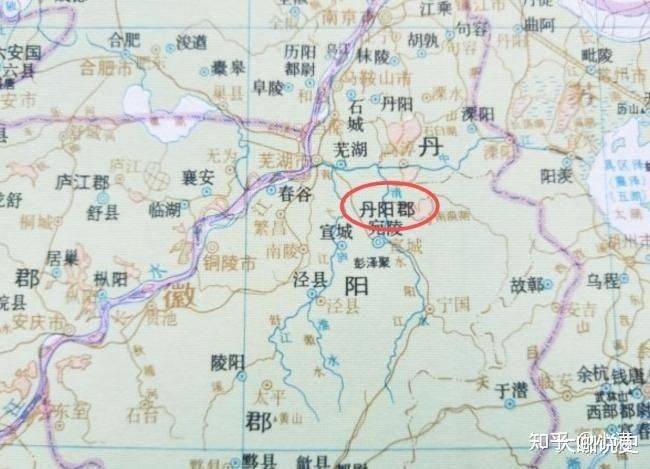
In the era of war nations, “the power of power, not the rule of the king”, led to “dissemination of words and the opposite of words”. “the first and foremost emperor of qin, the emperor of qin, and his highness, lisnège, have joined the qin people. The chinese ministry of culture has ordered zhao goo to write the book, and the chinese ministry of foreign affairs has failed to honour the book, either in terms of history or in terms of change, and so on.” the qin emperor has promoted “books and scripts” in order to regulate the ancient language of the six kingdoms and to preserve the one-size-fits-all system of the qin empire。
After the handyman, after the change of the words, there were also various variations. As a result of the rise of the system of zhongdang, the entire society has attached great importance to the formalization of chinese characters, and the tang song government has been promoting the correct fonts, followed by a series of monographs dedicated to the correction of fonts, such as zhang zinghuen, tang zhendu, and guo zhongjun, etc. This initiative, which has served to reduce the number of characters, regulate stylist fonts and promote text harmonization, is an important change in the history of the development of the chinese typhus。
Since the establishment of the new china, there is an urgent need to improve the cultural literacy and education levels of the country in order to adapt to social development. In this context, the chinese word also needs to be easy to write, so the simplification programme was developed and published by the country, and the simplification matrix was published. More than half a century of practice with the simplification of chinese characters has shown that the use of chinese characters has been effective in promoting the transmission and popularization of traditional culture of excellence and has greatly improved the overall literacy level of the country。
Thus, starting with a well-documented “book-like”, and until today's hanword rule, the real-word movement runs throughout the history of the chinese nation's development, which is, to some extent, a chinese norm. In the history of the great renaissance of the chinese nation in the new era, the destiny and future of the chinese people are linked to the growth of the nation. After a series of efforts to sort out the foreign form, simplify the complexity, and promulgate standard fonts, the hanword has abandoned the irrationality of its own system and has gradually been standardized and standardized, which is a necessary trend in its self-development and a great achievement of the new age's chinese writing。
(authors: ray dawn, wang yuxiang; professor and doctoral student at the faculty of literature, northwestern teacher training university, respectively)



