


01
What's the principle of food refrigeration
Food deterioration is mainly caused by fermentation by micro-organisms, which reproduce in large quantities and biochemically under enzyme-catalytic conditions, and cause fermentation of food when the food found in micro-organisms is suitable for its growth。
The strength and weakness of this fermentation deterioration are closely related to temperature and moisture. Generally, lower temperatures and reduced moisture reduce these effects, thus slowing the rate of food decay and deterioration。
02
Why does the fruit and vegetables have to cool and not freeze
Vegetable foods such as fruit and vegetables are generally stored in cooling conditions in order to keep them alive. Vegetables and vegetables are still living organisms and are breathing, controlling enzymes that cause food deterioration, and being resistant to the intrusion of outside microorganisms, which is beneficial to the food itself. Respiratory consumption, however, is the substance in the vegetable foods, which causes the living body to grow old and die, while the large amount of heat released by the respiratory activity accelerates biochemical reaction rates and promotes the growth and reproduction of microorganisms. Therefore, fresh fruit and vegetables must be subjected to rapid cooling measures to control their respiratory effects. Reducing the temperature of the storage environment reduces its respiratory strength and reduces the rate of consumption of substances, thereby extending storage periods. However, storage temperatures should not be too low, otherwise they may cause a physical disease of the fruit and vegetable living body, leading to freezing。
Vegetable and fruit-like foods should therefore be stored in a low-temperature environment free from freezing. Meat foods are generally stored in cold conditions。
03
Why do animals like birds, fish, animals have to freeze and freeze
For animal foods, such as poultry, fish, livestock, when stored, because of the death of the object cells, it is not in itself able to control the effects of enzymes causing food deterioration or to resist attacks by microorganisms. Thus, when storing animal foods, the temperature below their freeze points is required to contain the breeding of microorganisms, the role of enzymes and the slowing down of chemical changes in foods so that foods can maintain their quality over time。
04
What's with the freezer
Refrigeration banks are sites where products are processed and stored. Broadly speaking, cold storage is a building that is artificially refrigerated to allow fixed space to reach the required temperature to facilitate the storage of items. It originates in ice cellars and is used primarily as a constant-temperature storage for food, dairy products, meat, aquatic products, poultry, fruit and vegetables, cold drinks, flowers, green planting, tea, medicines, chemical materials, electronic instrumentation, etc。
05
What are the causes of food corruption
The incidence of corruption and deterioration of food is closely related to the condition of the food itself, the type and number of bacteria and the environment in which the food is found. For example, foods such as meat and meat products, fresh fish herbs, poultry eggs, cow milk and vegetables produce an aroma and sex changes, most of which are contaminated by pseudosyncs; food fermentation, fruit corruption, acidization of beverages, most of which are contaminated by bacillus acet; and pickle hairs, adhesives, which are often the result of contamination of bacillus and saline. In order to limit the rate of food deterioration and to maximize the nutritional content of foods, the use of refrigerated storage methods is increasing。
06
What's the purpose of meat cooling
Following the slaughter of livestock, the heat in the body has not been dispersed and the high temperature and humid surface of the body is highly suitable for the growth and reproduction of microorganisms, to the detriment of meat storage. The purpose of meat cooling is to rapidly remove heat from the inside of the body, reduce temperature in the deep body and form a dry membrane on the surface of the body in order to prevent the growth and reproduction of microorganisms, reduce enzymes and prolong the storage of meat。
07
What do you mean, meat cooling
The two-part cooling method for meat refers to different cooling temperatures and cooling wind speeds. The cooling process can be done in the same cooling room or in two different cooling rooms。
The cooling temperature for the first stage is -10 〜-15 °c, cooling the wind at 1. 5 〜3 m/s, cooling 24h, reducing the temperature of the cooling body surface to 0 〜2 °c and the internal temperature to 16 〜25 °c。
The cooling temperature for the second stage is 0 〜-2°c and the cooling wind speed is around 0. 1 m/s, and cooling is up to 10 〜16h。
The advantages of the two-part cooling methods are low dry consumption and good control of microbiological reproduction and biochemical reactions, but high unit cooling。
08
What's with the mature meat
Following the slaughter of the livestock, the body was rigidized because of the catalytic effects of the enzymes in the body, known as rigidity. Physical rigidity is less resilient, humid, aroma-free, uncooked and uncooked. Thus, the consumption of freshly slaughtered livestock is not very good and nutrition is not suitable for human absorption。
The maturity of the meat means that, after a period of storage, rigid meat becomes soft, juicy and aromatic as a result of enzyme effects in the meat。
09
The difference between cold and cold
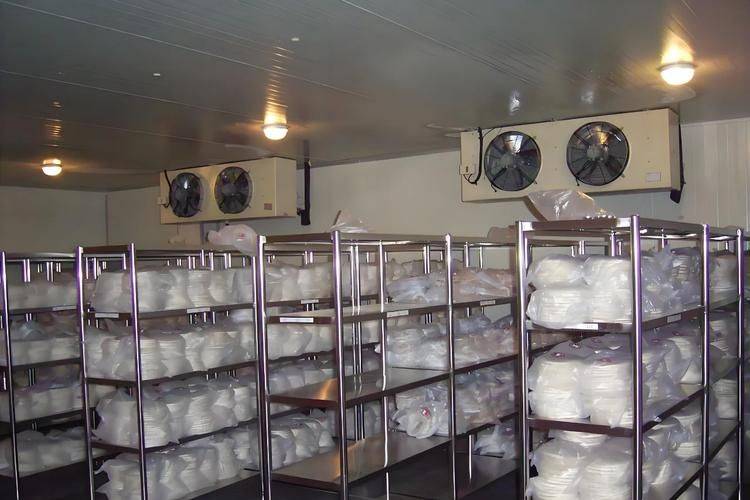
Refrigerated and refrigerated conservatories are cold banks that use cold temperatures to protect fresh food, but there is a clear difference between the two。
Refrigerated conservation is limited to life-saving activities that reduce fresh food, crops, seed fruit, etc., through low temperatures, while life-saving activities, such as fresh food, crops, seed fruit, etc., are still available, albeit minimal。
Refrigerated meat is first frozen and then stored, and once frozen foods are frozen, their life activity ceases completely, and the advantages of frozen meat are that it lasts much longer than colded food, and that foods are completely stopped and can be preserved over time。
10
What about hot meat
Hot meat is defined as meat known as hot meat in a fresh state that has not yet lost the warmth of its raw precursors。
Eleven
What's with the cooling meat
Refrigerated meat, known as cold meat, is used to store meat for short periods of time. It refers to a series of changes in muscle tissues by placing post-slaughter pork at 16 〜24h in a chilled environment of around 0 〜4°c, relative humidity of 90%. The rigidity of the muscles that meet the cooling requirements is gradually disappearing, with massive muscular cellulose gradually shifting towards small fibres and fibre sheeting as a result of a variety of factors, such as acid and protein enzyme, calcium activating enzyme, while proteins produce amino acids and flavour substances in the form of enzymes, making muscles tender, juicy, rich in meat scents that allow humans to digest and become food meat in the true sense of the term。
12
How the cooling meat is stored in the freezer
The specific requirement for cold meat to be stored in a freezer is that the meat be kept at 1 〜0 °c before it is placed in the freezer, before it is reduced to around 4 °c, after the meat is in the freezer. In the case of pork, for example, the cooling time is 24h, which can be saved for five and seven days. Through cooled meat, the surface forms a dry membrane that prevents the rapid growth of bacteria and slows the evaporation of internal moisture and prolongs the preservation time。
13
What about frozen meat
Refrigerated meat means meat that is placed below -28°c and frozen at temperatures below -15°c in its centre, then stored at 18°c and sold in a freeze. From a bacterial point of view, when meat is frozen to 18°c, the growth and reproduction of the vast majority of micro-organisms (bacteria) is inhibited and relatively healthy。
However, during the freezing process, the size of the body increased by about 9 per cent, with the formation of a large number of crystals, causing cell ruptures, some disruption of the organizational structure, the thawing of tissue cells, the loss of nutrients and a marked decline in the flavor。
14
How the cooling meat is stored in the freezer
Frozen meat is more durable than cooled meat. In order to improve the quality of frozen meat and restore it to its taste and nutritional value after it has been unfrozen, most freezers are now using the fast-frozen method, which is used to bring the meat to the freezer room at 40°c, bringing the temperature down quickly to below 18°c and then moving it into the freezer。
15
What do you mean high and low temperatures
Refrigeration refers to the storage of food in a low-temperature environment in order to avoid deterioration and decay。
The normal cooling temperature is -1° 〜8°c, known as thorium cooling. For most foods, high-temperature cold storage is a less effective food conservation technique that slows the deterioration of foods and does not really stop their deterioration。
Refrigeration is defined as keeping food below 18°c for a longer period of time. Thus, cryogenic refrigerated foods actually refer to frozen foods, which are commonly referred to as refrigerated。
16
What's the meaning of frozen food
Refrigerated foods, known as fast-frozen foods, fast-frozen foods and fresh foods, are generally referred to as foods that have been processed by freezing (frozen, refrigerated, fresh) so that they can be kept in cold storage for several months。
Refrigerated foods are classified as cooled foods and frozen foods. Refrigerated foods are easily preserved and are widely used for easy meat, poultry, aquaculture, milk, eggs, vegetables and fruits. The production, transportation and storage of spoiled foods, nutrition, convenience, health, the economy, the high demand of markets and their importance in the developed countries are also at a rapid stage of development in my country。



