


In one sentence, he crucified countless people to the pessimistic cross:
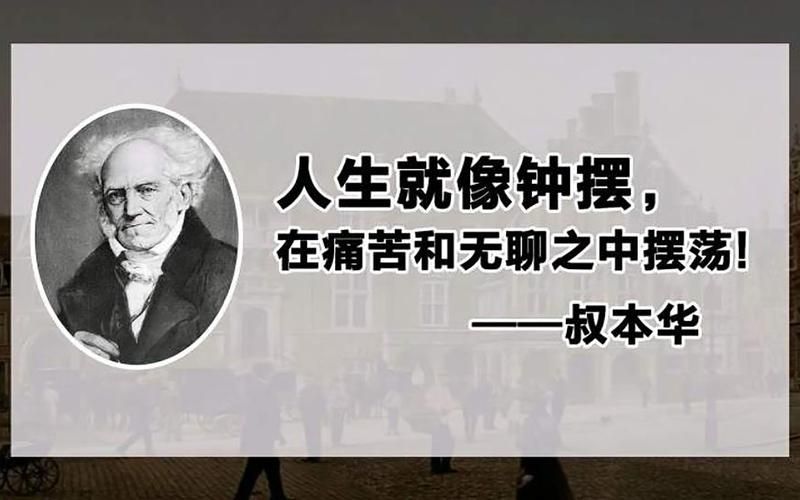
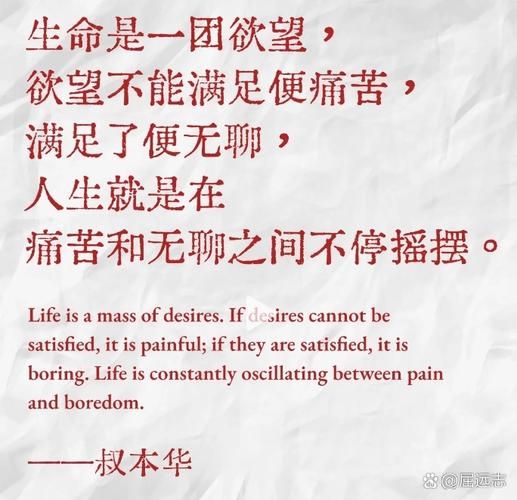
"life is like a clock swinging between pain and emptiness."
Desire is not available, pain. Desire satisfied, empty. The circle goes back to the dead。
Many people recognized themselves in that sentence and lamented that life was in vain。
But this nail, what's nailed and what's missing
He only told half the truth — the static, one-sided half. He looked at the desire from the cross-section of “possession”, but missed the vector movement of “creation” dimensions; he described the plight of “consumer” but remained silent about the way forward for “generator”。
On the other hand, desire is not a shackle, it is your only helper。
The key is never desire per se, but where do you direct its energy — possession, generation, out, or transformation
I. Philosophy is physiological: desire is the bottom code of life
All high-minded philosophy must face a flesh and blood。
Hunger, sexual lust, fear of death — these are not original sins, they are not fascination, they are the most primitive and true claims of the body. The ultimate question of "who am i?" was initially the result of a lack of physical attention to the outside world. The edifice of civilization, however ambitious, is the foundation of this body that desires to live。
In essence, the grotesque "brained bells" are a huge mass of biological energy that has not been properly deployed and that has resulted in disruptions caused by collisions in the body. He saw the disorder and misjudged the cause of the disease — he treated desire as a disease in itself, not a symptom of energy mismatch。
That is exactly what reveals a pessimism: desire is not the enemy, it is the only engine of life that you are born with。
The question is not how to “stop the fire”, but how to “driving”. He was a great diagnose, but the prescription was too negative — he suggested that the will be extinguished through artistic static and abstinence. This is equivalent to the fact that engine noise is too high, and the choice is to remove the engine. The engine's gone, the noise is gone, but you stopped there。
Modern neuroscience gives a more precise picture: the default mode network of the brain (dmn) is the most active in a "silent" state, which is the biological basis of inspiration. In other words, what shubbonhua calls "emptiness" is precisely the creation of a womb. It's not the wrong desire, it's the wrong pattern of our response to desire。
Ii. Five bottom cards of desire: life function seriously underestimated
The mask of desire is stripped, and it hides at least five times the functions that are seriously underestimated. He only saw the first one on the back, and he rushed the verdict。
Desire is a sense of direction
A man's got no desire, not a break, but numb. Many middle-aged people “seed out”, which is, in fact, “no thought” after the decline in life. Without a desire to push, people will stop in place, slowly rusty. At least desire makes it clear to you which direction to take。
2. Desire is the fuel of creativity
All inventions, art and institutional changes in the world begin with three words: unsatisfactory. If the status quo were to settle, the stars above us would remain silent, and the wheel of civilization would have stalled。
Nietzsche took over the concept of the “will” of uncle benhua and transformed it into the “will of power” — not the greed for power, but the impulse to transcend and create value. Was van gogh in pain when he painted star sky? Pain. But that is not the pain of “not having bmw”, but the creative tension that “must express this vortex”. Did proust fill the void when he wrote "remember the year"? No, he's rebuilding a cathedral of memory in words。
It is not empty, but born — new problems, new works, new self。
3. Desire is a mirror of self-awareness
What you want is more faithful than what you say. What a person really desires is often the most honest negative of his soul. The process of combing your desires is a profound self-awareness。
4. Desire is a bonding agent
People yearn for understanding, need, desire for deep connections — these are desires and the most fundamental bridges between people that build trust and warmth. Without these desires, everyone is an island。
5. Desire keeps you alive
Swinging between pain and emptiness, at least one thing: you are alive and you care. It is truly terrible that it has never been tormented by desire, but that it has not even taken a swing and left。
He saw the trap of desire, but seriously ignored it as the only ladder out of it. He accurately described the tragedy of “occupying desire”, but remained blind to the comedy of “creational desire”。
Sexual desire: the most hidden nuclear fusion of civilization
Of all desires, one is the most secretive and powerful force that drives civilization, but is permanently overshadowed by morality and hypocrisy — sexual desire。
We must face up to the cold truth: the unending impulse of men to seize resources and pursue status, the oldest biological script of which is precisely to win sexual choices. This is the most direct evidence in the history of macrocivilization of philosophy。
But this force has been demonized. Religion seals it with a “preliminary sin” and the ritual castrates it with a “scrutinizing mind”, not to eliminate desire, but to force it into a more distorted dark corner。
Real wisdom is domestication, not extinction。
When this flood was tarnished by the rules of civilization, a great transformation took place: knights fought for honour, a projection of courage under the pressure of sexual choice; craftsmen grinded for great craftsmanship, a physicalization of sexual glamour in their work; poets wrote a thousand-year-old singing, the highest elegance when desire was suppressed. From the ancient greek arena to the renaissance studio, from the garage of silicon valley to the trade hall of wall street, the sex selection bottom algorithm always works backstage。
The french philosopher druze introduces the concept of the “mechanism of desire”, which is free of constraints and free of movement of productivity, constantly connected to the outside world, producing relationships and knowledge. This is in stark contrast to the “direction of fear” in ancient societies — religion that constrains the desire of fear, leading to stagnation in development; and the desire for liberation in modern societies, leading to technological explosions and material enrichment。
What is important is not to judge the desire for “highness” but to learn to be its rudder rather than its prisoner。
The alchemistry of desire: from "possession" to "be"
The charlatan theory, which is limited to the lowest level of “consumable desire”, is: hungry, thirsty, sleepy. This desire to be satisfied through simple possession and rapid consumption does follow the logic of “satisfaction or emptiness”。
But what makes people human is that they create higher patterns of desire。
Maslow's demand-level theory is essentially a “break-down” version of the t-shirt: bottom-line desire (physiology, safety) follows the bell-swing pattern — when it's full, when it's money, when it's money; but high-level desire (attribution, respect, self-realization) is regressive — satisfaction is not an end, but an expansion of power. You have learned a language not to “posses” it, but to enter a new world of meaning, where new problems await your resolution。
The best way to live is not to persuade people to be impotent, but to practice the alchemy of a desire — the little desire that will be sought from outside — into the great love that will grow inside。
It's also a greed, and you're content with consumption, but if you turn desire from "eating" to "research cooking," you go from consumer to creator. It is also the desire to be loved, not to be served, to suffer; but if you turn desire from “to love” to “to learn how to love”, it translates into a profound practice。
The central secret here is to change the verb from “possession” to “to become”。
What you really want is not a cold object, but a man of knowledge, a man of art, a man who can see beauty even in ruins. And when the object of your desire is no longer the object of your object, but the more ideal self, you are completely out of the curse of the clock. Frustration becomes indelible, and emptyness simply does not breed — because “becoming” is an infinity game, with no end, only an iterative one。
Your life has been transformed from a dead clock to a river and river along the way。
V. The treo bower in your mind: the place of animal place
If an individual can escape the clock by changing the pattern of desire, in group life we are faced with a more hidden, larger trap — the climber。
In south america, there is a tulip, whose tragic parable is a perfect reflection of the plight of humankind. When these birds are alone, the nest is enough for them. But once there is a homogeneity to nest next to it, both sides will be caught in a mad arms race. Add a branch, and we will add two, until one of them dies。
They are driven not by objective survival needs, but by the status anxiety that comes with their appearance. This is precisely the animal roots of human society's rising psychology. We also live in the heart of a tribblebird that allows us to squander our limited lives in an arms race where the end line moves indefinitely and judges strangers。
The four most profound stabbings of this scale-up mechanism deserve an autopsy:
It tampered with your system of demand
It was enough for a person to live in a 60-square house, but the neighbour lived in 120-square flats, which suddenly became “not enough”. It's not space, it's face. The borders of “need” and “want” are completely blurred and large amounts of consumption are thus manufactured in a vacuum。
It turns happiness into inflation
Your happiness no longer depends on having more absolute values, but on having more people around you. That means you'll never be satisfied because there's always more than you. On one track, only the first was the winner, but all were forced to die。
It creates a total reversal of value
In the end, things are not like things, but people. Whatever you drive, you're defined as the person in the class. Things are tools, but eventually they enslave people mentally。
It creates a huge social energy leak
All are performing overtime because others are not leaving; all are in remedial classes because others are. This ineffectual competition does not create any real value, but simply exhausts the energy of all。
However, the only difference between humans and twibobirds is that they have the ability to detect this built-in program and then to rewrite it. There are three core keys in the modified toolbox:
• define your own “sufficient”. When materially able to provide for a decent life and spiritual leisure, no extra cent is worth living for。
• switch your inner scoreboard. Instead of taking a sense of superiority from "i'm better than anyone else" and getting a sense of solid growth from "i'm better than i was yesterday"。
• the ultimate creation, not the competition. In your independent aesthetic and rhythm, build a nest that you really want to live in, rather than a giant monument that society has designated you to build。
“having” is the tomb of desire: the ghost of pursuit and rebirth
There is also one of the easiest pitfalls in personal practice — the desire to “own”。
We are often reminded that it is cowardice to move without having them. But the truth is more complex. We think that “possession” is the end and reward of desire, but in fact, possession is often the grave of desire。
Before they get away, desire is alive, people are hot and light is in their eyes. The object that did not project the perfect vision in your heart. But once you have it? Once it's fresh, it's a forgotten piece of furniture in your life. The pursuit of tension is zero, illusions are shattered and new desires are raised again. This is the exactest local feature of the clock: the process of pursuit is alive and the moment of possession is dead。
However, this in no way amounts to an assertion that “do not have it”. Because you don't have it, you're going to fall into a much more terrible trap: to live forever in the perfect of imagination and to lose the chance of the shadows. And possession is the only way to hide. One thing you can't get, it's a perfect prick in you, can't take it, can't let go。
The real way out is to see that what you really want is not the object itself, but what you fantasize about is “the ideal that i will become”。
When you dig through this layer, you don't have to go any further. Go straight to "be" the person, not indirectly through "possession". In concrete practice, it is more important to learn to translate “end-of-pipe possession” into “experimental experience” — possession of which is not locked into a cabinet, but a continuous chemical reaction with it. The value of a book is not placed on a shelf, but has changed some of your ideas。
I'm sorry
He said that the human being was a prisoner of desire and that he was in constant swing between pain and emptiness。
But the second sentence he did not say was: the door of this cell was always locked from inside and the key was in your own pocket。
The key to it is not to eliminate desire, but rather to make the flame of desire from burning its own wildfire into a burning fire that brightens the way forward, and from the endless competitions that perform for others, into a sculptor of self-empowerment。
In the end, the extreme difference is — being held hostage by the desires of others — is the unsolved bell; and you truly see and choose your own desire, the wheel of your life。
When desire is taken over by you, pure, and eventually lead to self-emergence, your life is no longer a swaying, unmoved instrument, but a journey forward, flowing into the sea。
This is the strongest and most powerful response to the pessimism of shubunhua and the beginning of our true responsibility as a modern human being for our lives。



