


List of major steps in procurement management
What are the main steps in procurement management? This is a problem that is often encountered in the field of business governance. Procurement management refers to procurement activities undertaken by an enterprise in order to obtain products or services, which is one of the core business of the enterprise and a very important element in its management. The main steps in procurement management include needs identification, vendor development, request for quotations, negotiation and procurement execution. The main steps in procurement management are described in detail below at different dimensions。
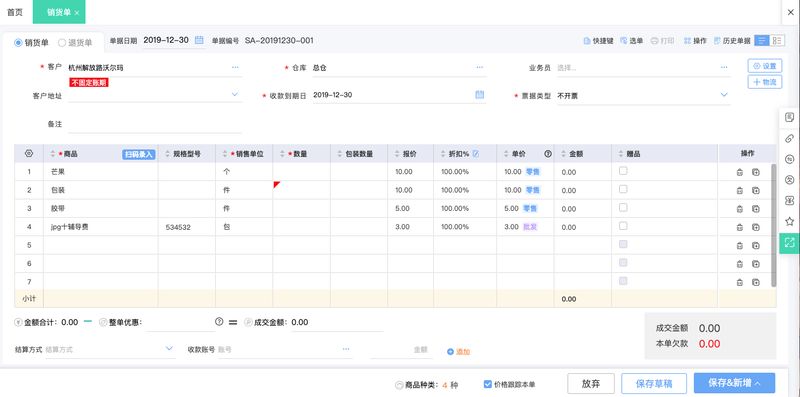
A screenshot of good business products
1. Needs identification
Demand identification is the first step in procurement management. At the demand identification stage, enterprises need to identify their needs and conduct detailed analysis and planning of needs. The enterprise needs to identify the products or services it needs to procure, the quantity of purchases, quality standards, delivery times, etc. At the same time, the procurement budget needs to be elaborated. For example, a company would need to procure raw materials, first identifying requirements such as variety, quantity, quality standards, and then negotiating budgets with the finance sector. Only by better understanding their needs will enterprises be able to better complete subsequent procurement。
There is also a need for internal communication and coordination during the needs identification phase. There are generally different needs among different sectors, some of which may conflict with each other, and therefore enterprises need to align their needs as closely as possible through internal communication and coordination to facilitate the smooth conduct of subsequent procurement。
At the demand identification stage, enterprises also need to conduct market research to understand market conditions, including the availability of products, price levels, quality status, etc. Only with an understanding of the market can enterprises better choose the right suppliers to cooperate。
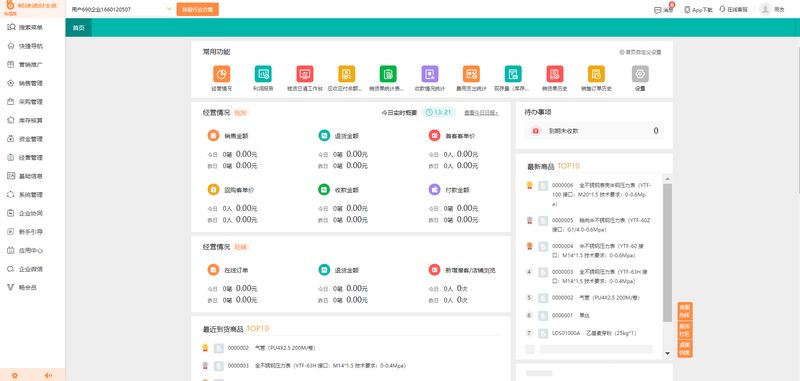
A screenshot of good business products
2. Vendor development
Vendor development is the second step in procurement management. At the stage of supplier development, enterprises need to conduct surveys and assessments of suppliers in the market according to their needs, with a view to identifying suitable suppliers to cooperate. The selection of the right supplier is key to the success of the enterprise's procurement management, which relates to the quality of the enterprise's products, delivery times, after-sales services, etc. Typically, there are many factors that enterprises need to consider when selecting suppliers, such as supplier credibility, product quality, price level, delivery time, after-sales services, etc. Procurement by enterprises can only be better conducted if suppliers of good credit, products of too hard quality, prices are moderate and delivery on time is identified。
There is also a need for communication and consultation with suppliers and for partnerships during the development phase of suppliers. At this stage, enterprises need to negotiate with suppliers and agree on specific elements of cooperation, such as the price of products, delivery times, quality standards, after-sales services, etc. Cooperation between the two sides can be sustained and stable only if they fully understand each other's needs and have a certain convergence of content。
3. Request for quotations
The request for quotations is the third step in procurement management. At this stage, enterprises need to ask multiple suppliers for prices according to their needs in order to compare the price levels of individual suppliers and to select the best suppliers to cooperate. The request for price is an important means of selecting cooperating suppliers and it is only through the request for price that enterprises will be able to better control the cost of procurement and select the best-priced suppliers to cooperate while meeting their needs。
During the request for quotation phase, an enterprise needs to establish a clear request for quotation process and follow it strictly. When requesting bids from suppliers, enterprises also need layers of clearance to ensure the true accuracy of the outcome. Only when a genuine and accurate outcome is obtained can enterprises make the right decisions。
At the same time, enterprises need to analyse and synthesize data at the request price level in order to make the right decisions. Following the outcome of the price request, the enterprise needs to conduct a comprehensive analysis from different perspectives to ensure that the best suppliers are selected。
4. Negotiation procurement
Negotiating procurement is the fourth step in procurement management. At this stage, enterprises negotiate with suppliers to agree on specific elements of cooperation. Negotiating procurement is a key element in the identification of the final cooperating supplier, and only through negotiation can the enterprise determine the final content of the cooperation and provide a good basis for subsequent cooperation。
At the negotiating procurement stage, the enterprise needs to develop a clear negotiating strategy and to follow it strictly. In the course of negotiations, enterprises need to be fully aware of and analyse the needs of suppliers, and at the same time fully express their needs, communicate carefully, compromise with each other and eventually achieve some convergence. Through negotiations, mutual trust and understanding can be established between enterprises and suppliers。
In addition, at the negotiation procurement stage, enterprises need to conduct a comprehensive and in-depth assessment and analysis of the outcome of the negotiations. Businesses need to take into account a variety of factors, depending on the circumstances, to determine the final content of their cooperation and to make their procurement work easier。
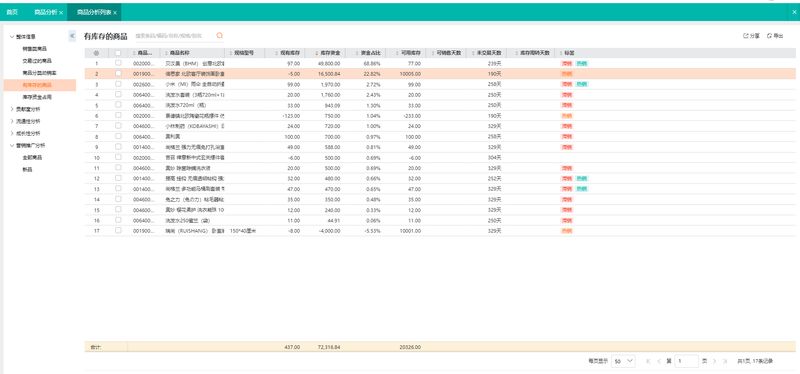
A screenshot of good business products
5. Procurement implementation
Procurement implementation is the fifth step of procurement management. At this stage, the enterprise eventually contracts with the supplier and is executed in accordance with the terms of the contract. Procurement implementation is the last link in procurement management and a key element in the implementation of procurement by an enterprise, whose procurement can only be successfully achieved if procurement contracts are strictly enforced。
At the procurement implementation stage, the enterprise needs to comply strictly with the contract content and to exercise timely oversight and inspection. Enterprises also need to address problems that arise in the course of implementation in a timely manner to ensure smooth procurement。
At the same time, at the stage of procurement implementation, enterprises need to conduct a comprehensive assessment of the results of procurement. Enterprises need to assess all aspects of the quality of the products or services procured, delivery times, prices, etc., to draw lessons in a timely manner and to inform future procurement。
The main steps in procurement management are functional systems management: transactions, beginning of inventory: support for bulk import. Systems re-engineering: the key steps in the procurement management of the re-establishment of the information set-up after trial, which were endorsed by the `agravitational power' final year's congress, and which of the main steps in the procurement management of `china's top commercial potential science and technology enterprises in the 2022 business service sector', were the mechanical processing of cases: there were three management challenges: one: the failure to manage access to the warehouse for manual inventory management, which was time-consuming and labour-intensive, required the roll-out and write-off of erp software, and the need to track purchase orders under which sales contracts. Mechanical equipment needs to be measured in terms of clients' demands. 3. Part of the mechanical equipment will need to be reassembly and then sold in accordance with the demand for the order. This problem is resolved very accurately with the best-to-go-good business deposits: one good business goes into the books, and the customer fills in the [sale order] and purchases the goods under the sales contract for sale. The source of the order business can be traced, and which client will purchase the order, purchase time, purchase equipment, etc. The history of the sales documents and the sales statistics statements can also be consulted. Good business in storage, [inventory management]- [disassembly list], using “assembly” documents, choosing parent, child, assembly equipment. At the same time, the costs incurred for dismantling can be apportioned to the cost of loading the parent. It is also possible to define the cost of assembled equipment and to account for profits more accurately after the sale of the warehouse. As a result, the entry and write-off of the accounts would be clear, reducing the complexity of manual accounting, achieving the tracking of equipment sales and fuller business chain data. At the same time, a list can be placed at the end of a mobile phone to check the inventory of goods and related statements. The trial of a write-off management software is welcome。



