Slower。
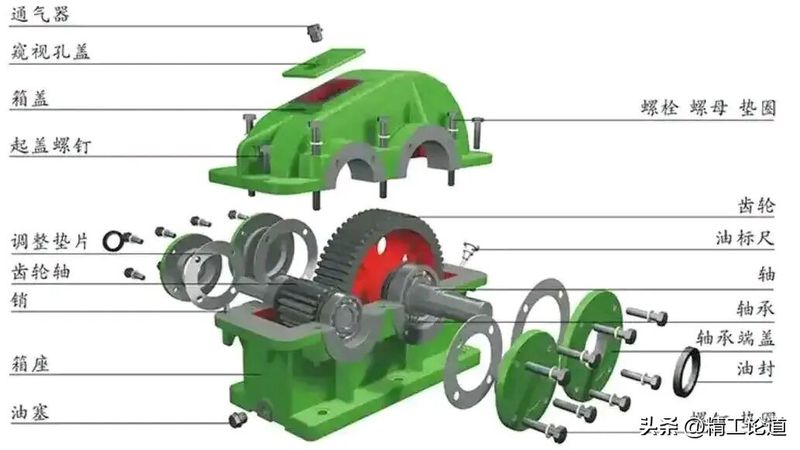
A lot of people think it's a brake, but it's a big mistake. The brake is essentially a "power amplifier." today, we'll tear it apart, tear it apart, and use the most glamorous words to explain exactly what this industry's master translator does。
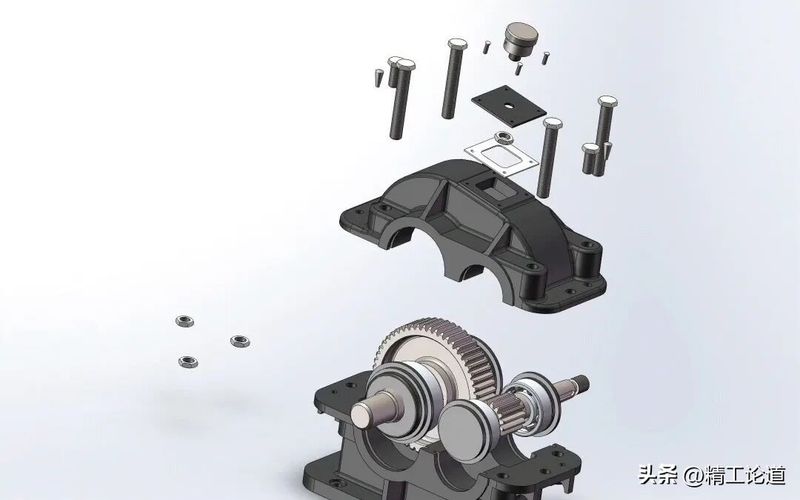
First step: to understand its "job" - to slow down
In order to understand speed-reducing machines, you have to forget complex mechanical structures and go back to the principle of energy persistence in high school physics。
In mechanical motion, there is an iron rhythm: power = twirling × turn speed。
The vast majority of electric generators (original motivations) are characterized by very high rotation speed, but low output strength (twirl). And what is often needed in the real world is machines (work machines) that slow down, but are powerful enough to pull heavy goods and crush hard ores。
This creates a supply-demand paradox. The speed-reducing machine is the "translator" in the middle of the balance。
Image metaphor:
Imagine you climbing the hill on a speed bike。
When you switch to a low-speed block, you feel it's easy, even if it's steep, but slow。
When you switch to a high-speed barrier, it's hard, but fast。
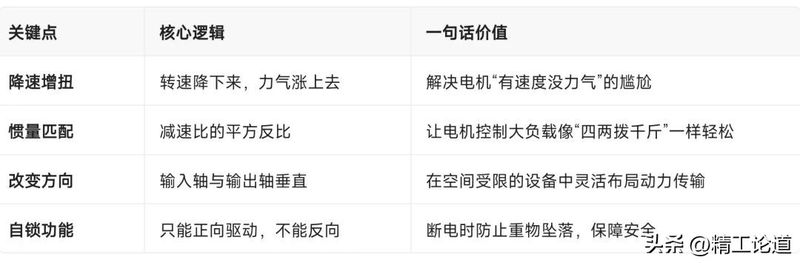
It's the slow-down thing. Through a combination of gears, it sacrificed part of the turn-off, in exchange for double the twist。
Here's an example of arithmetic:
Assuming an electric velocity of 1,500 turns/minutes, the twist is 10 oxen rice。
If by a 10:1 slowing machine:
:: rotation speed: 1,500 ÷ 10 = 150 turns/min (slower)。
:: twisting: 10 x 10 = 100 ox rice (ten times more powerful)。
Do you understand? It does not create energy in a vacuum, but it converts something like “turn speed” to “twirl”. That's why a lot of heavy machinery, even small power power, can produce a thousand power。
Step two: seeing its "deep value" -- not just slowing down
Many of our friends think that the brake machine is a gear box, but it plays a much more complex role in modern industry. In addition to the “swing-and-rolling”, it has three very important hidden functions:
1. Inertial matching: making robots more precise
In the area of automated control, particularly in the robotics industry, there is a term called “turning inertia”. If the load is too heavy (e. G. A mechanical arm), the electric power is like a skinny man pushing a giant wheel, starting hard, brakes are too much, and it's very unstable。
By a square relationship of the deceleration ratio, the speed-reducing machine will reflect back to its axis after the load has been “reduced”. This amounts to a powerful lever for the skinny, which allows him to easily steer the wheel and achieve rapid start-up and precision positioning. And that's why industrial robotic joints don't drive high-precision speed reduction machines。
Redirection: give the power a “turn”
Some slow-down machines (such as snail snails or paratroopers) can make input and output axes 90 degrees vertical。
This is very useful in equipment with limited space layouts. For example, the electric power is installed on the ground, but you need to transfer power to the equipment on the side, so that the speed-reducing machine can tactfully turn power。
Self-lock function: prevention of “inflow”
It's a very magical feature. In some snail snails, when the speed ratio is high enough, there is a “self-lock” phenomenon — that you can use an electric engine to drive the load, but, conversely, you want to shake the output end with your hand, and it's unwieldy。
This is essential in upgrading equipment (e. G. Elevators, rollers). Once power is out, heavy matter does not fall because of the rotation of its own gravity tow, thereby ensuring safety。
Step 3: the common type of literacy — who is fit for heavy work and who is fit for embroidery
In order to keep you out of these complex models, we need to understand the three main main camps:
1. Hard-hand pie: gear-reducing machines (including planetary-reducing machines)
:: characteristics: well-structured, highly efficient (usually over 95 per cent), rigid and long-lived。
:: application scenario: it is the main force at the industrial site. For example, conveyor belts, cranes, excavators, and pressurized equipment that requires great miracles。
Precision factions: wave-reducing machines and precision planet-reducing machines
* characteristics: if the gear-reducing machine is a “grave”, the tune-reducing machine is a “girl embroidery”. It can achieve very high accuracy and very small backsliding (almost gaps)。
:: application scenario: joints of industrial robots, precision number control machine beds, robots for medical surgery. There is no need for force in these places, but there must be no deviation。
3. Economic utility: snail snail brakes
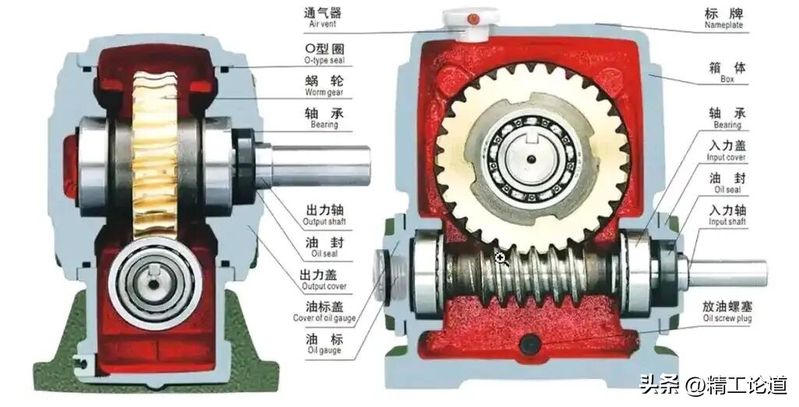
* characteristics: relatively inefficient, slightly hot, but it has a “self-lock” function and operates very quietly。
:: applied scenery: often used in low-speed, light-loaded or safety-required settings such as valve control, small lifts。
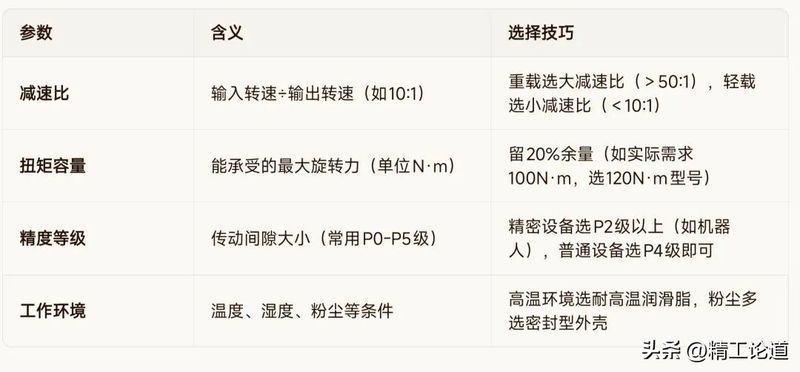
Summary of core dry goods (recommended collection)
Conclusion: it is the “invisible building block” of industrial civilization
In retrospect, speed-reducing machines are by no means simply a gearbox. It is a “bridge” between power sources and working institutions and an indispensable “power regulator” for modern mechanical transmission systems。
In principle, it is based on simple corsets, reduced speed and increased rectangularity achieved by the number of teeth compared to the number of teeth; functionally, it not only increases, but also matches inertia, changes direction and even provides security. Without it, the vast majority of heavy machinery and automation equipment would be unstoppable。
In this time of pursuit of efficiency and precision, such basic components as speed-reducing machines are often hidden in the depths of the equipment and remain invisible. But it is these seemingly incomprehensible “heavy screws” that form the cornerstone of modern industrial civilization。
Value reaffirmation: focus on the industrial sector beautiful
We focus on speed-reducing machines, not only to understand a mechanical principle, but also to understand the logic and wisdom behind those huge machines. The beauty of industry is often hidden in the transmission of these sophisticated gear bites。
If you are also interested in these “hard core” technologies that support the world, you are welcome to focus on this. Here, we will continue to take you off the hard shell of industrial technology and explore the underlying logic of changing life. See you next time。