


Gas phase polypropylene production process exploration
Summary: an important process in the production of polypropylene is the gas phase, which analyses the gas phase polypropylene production processes, including the innocente process, the horizone process, the unipol process, the novolen process, the sumitomo process and the spherizone process, and examines the current state of production in the country。
Keywords: gas phase method; polypropylene; process
Analysis of processes for production of different gas phase polypropylene
1. 1 innocente process
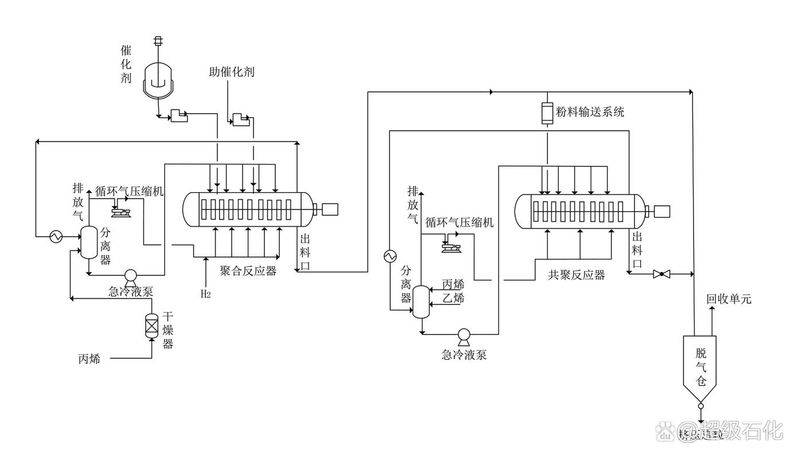
The innovene process, also known as the ineos gas phase polypropylene process, is derived from the amoco-chisso polypropene process. The main characteristic of this process is the use of a unique, near piston stream, bed-laying reactor. The reactor is a cylindrical pressure vessel with a mixer in the axle, which theoretically corresponds to the effect of more than three fully mixed tank reactors. The main features of the reactor are: (a) the narrow distribution of particle time to stay, which allows for the production of highly rigid and shock-resistant co-movable products; (b) the avoidance of catalyst short circuits; and (c) the short transition time, easy switching of products and fewer transition products for products of this unique reactor design。
Another feature of the process is the airlock system. When materials are delivered from the first reactor to the second reactor, the airlock system avoids the flow of the two reactors. In particular, when producing co-polymers, the gas phase of the two reactors is different and, if run-off occurs, it will seriously affect the quality of the product, so the isolation of the two reactors is key. The process can be fast and smooth by stopping catalyst injections and, in exceptional circumstances, by releasing reactor pressure within 3min and driving again after re-pressure and injection of catalysts. Due to its unique design, the process has the lowest energy consumption and operational pressure in the various processes, with the hedge polyolithic rubber division evenly distributed, and products with the same ethylene content have a higher impact resistance。
1. 2 jpphorizone process
Jp horizone, also developed on the basis of the amoco-chisso polypropylene process technology, has many similarities with innocente, especially with regard to reactor design. The response conditions of the horizone process are similar to those of the innocente process. The main difference between the two processes is twofold: the horizone process two reactors are deployed vertically, the first reactor is produced directly by gravity into the airlock and then delivered to the second reactor by acrylic pressure. The two reactor units of the innocente process are deployed in parallel horizontally, with the first reactor producing material first delivered to a high sedimentor, the separated polymer powder then gravitationally into the airlock, and then to the second reactor with acrylic pressure。
The horizone process is designed to be simpler and less energy-consuming than the horizone process; second, the horizone gas phase polypropylene process uses the thc-c catalyst, which is highly active and selective, typically 25000-40,000 gpp/gcat, but which requires pre-treatment, is made of hexa-alkanes into plasma, and is pre-assembled with a small amount of acrylene, otherwise the product increases in fine powder, is less mobile, and co-reactives are difficult to operate。
1. 3 unipol process
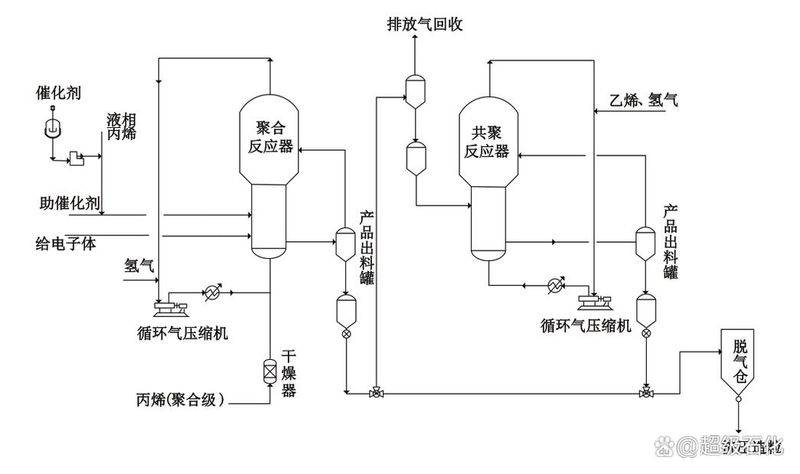
The unipol process is the process of transplanting the fluid bed process applied in polyethylene production to the production of the pp. The process reactor is a cylindrical, vertical pressure packaging with an extended upper diameter. Synthetic reaction heat is removed by thermal relief of cold acrylic gases from the reactor's circular air cooler. The unipol process has many unique advantages, the greatest of which is its high single-line capacity. Notable features of the unipol process are: a fully fluent operation with simple reactor design; 2 which can be complemented by supercooled condensed operation, known as the supercooled gas phase fluidized bed process (scm), which most effectively removes the reaction heat and allows the reactor to increase its capacity significantly without any increase in volume, e. G. By increasing the proportion of liquid in the reactor to 45 per cent, increasing the existing production capacity to 200 per cent; 3 single fluidized bed primary reactor, which can produce homogeneity and unprogrammed homogeneity, allowing for the maintenance of product performance in the larger range of operations; and 4 the process, which is short, has no special requirements for the material, has a small surface area, has a high potential for production, has low cost and good performance. The bopp is its characteristic product。
1. 4 spherizone process
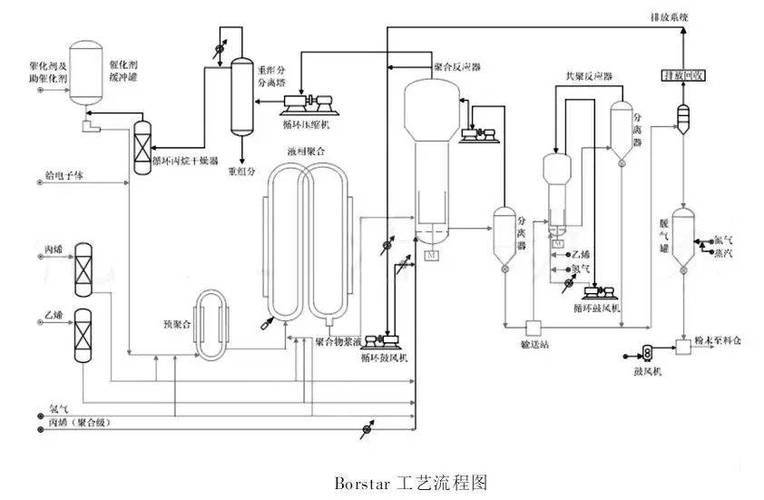
The spherizone process is currently the most innovative and advanced polypropylene production process in the world. Specially designed upgraded tube-based multi-area reactor (mzcr), consisting of two reaction areas, where polymer particles circulate between two different reaction areas of the multi-sector cycle reactor. In the elevated reaction zone, polymer particles are taken upwards by single-body air currents. At the top of the reactor, the polymer particles enter the reduced reaction area, sink the polymer particles to the bottom of the reactor under gravity and are then sent to the elevated reaction area to repeat the above reaction cycle. In order to create a different response environment in the reduced response area than in the elevated response area, there is a barrier zone at the top of the reduced response area at the bottom of the polymer bed. The barrier area is at the core of the multi-sector circular reactor because it enables a single reactor to achieve different conditions for reaction in two different response zones. However, the process is slow to cool, and there may be blockages in the mzcr reduced response area; mzcr reacts with a reaction gas cooler by taking a ring to cool water. This process is particularly relevant for the development of products with double-peak or hyperwidemolecule distribution because of special reactor designs。
Status of application of gas phase polypropylene production process in the country
The industrial production of polypropylene in our country began in the 1970s and, after more than three decades of development, has largely resulted in a combination of various production processes, such as solvents, intermittent liquid phase, liquid phase-gas, gas phase, etc., in which production patterns coexist at large, medium and small scale. The country's large polypropylene production units are now dominated by imported technologies and medium-sized and small polypropylene production units by national production technologies。
Several features of the technological development of the new polypropylene installation process in our country are: first, the development of gas phase diversification, the introduction of the innovene process, the horizone process, the unipol process, the novolen process and the spherizone process; second, the rapid development of the unipol process, which is leading the world market for gas phase polypropylene; and third, the introduction of the world's newest and most advanced spherizone process。
3. Concluding remarks
Gas phase polypropylene production processes are favoured because of the simplicity of their processes, operation, production flexibility, high single-line production capacity and high safety, and lower investment in equipment. The gas phase process will develop rapidly and dominate the world's new production capacity for polypropylene over a considerable period of time, with future research focusing on further improvements in industrial technologies, improvements in catalysts, advanced controls and the development of predictive models to improve single-line production capacity and expand product coverage and applications, reduce costs and increase market competitiveness。



