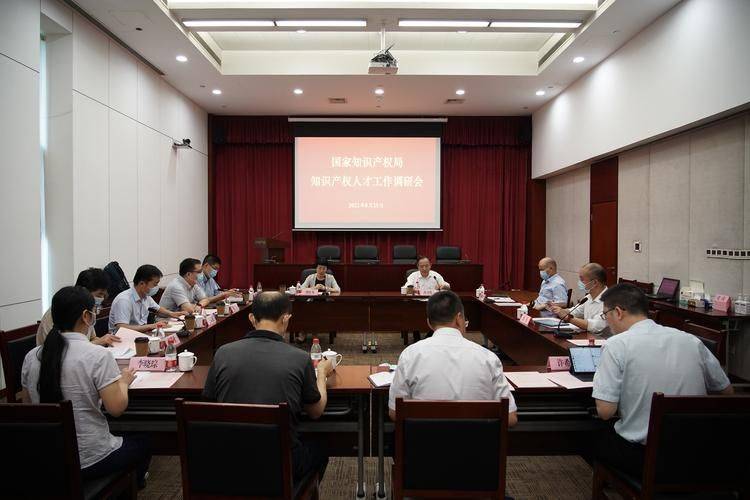
Talent development, systems are at the core. Strengthening and improving the work of the national intellectual property authority and building a high-quality intellectual property workforce will not only focus on addressing the outstanding problems facing human development at present, but also on overcoming institutional and institutional constraints to human development。
One is a well-integrated talent coordination mechanism. In 2013, in order to take full advantage of the central leadership role of the bureau in the work of intellectual property professionals and to strengthen organizational leadership in the work of intellectual property personnel throughout the country, the national intellectual property agency established a talent leadership group, currently headed by the director-general of the sun and vice-president of ganshonin, which is responsible for studying the implementation of the spirit and requirements of the central talent, the implementation of the national medium- and long-term talent development plan (2010-2020), the development of work plans and policies for the implementation of intellectual property talent and the study of key issues and important decisions on intellectual property talent work. The steering group consists of the national working group on intellectual property systems and the national intellectual property agency working group on talent, which are responsible for the organizational coordination of the work of the national intellectual property system and the coordination and implementation of the work of the national intellectual property agency. The national intellectual property authority's plan of action for the implementation of the 13th five-year rule on intellectual property (hereinafter referred to as the action plan) provides for the further improvement of the working mechanisms of the human resources management group and the agency's working group on human resources, as well as for the clarification of the responsibilities for macro-level guidance, scientific decision-making, coordination and follow-up, and emphasizes that the sectoral units are responsible for the overall organization of the work of the human resources in their sector and for the implementation of specific tasks, as well as for the improvement of the system of sub-level human resources work in the various sectoral units and the establishment of institutions for the sound functioning of human resources。
Based on the opinions on further strengthening and improving talent work (state secretariat) [2011] document no. 141 requires the departmental departments to identify the heads of the units responsible for the management of talent, and for a large number of units, to designate the heads of the departments concerned to assist the heads of the units concerned in organizing training and training. Since 2013, the bureau's talent office has led the formation of a cadre of talent focal points, educational training focal points, proxy training of teacher contacts, the national intellectual property agency's integrated training management system (sipalms) focal points, among others, and has conducted several thematic training sessions. The plan of action calls for a significant strengthening of the talent workforce itself, a comprehensive upgrading of its competencies and a further development of its role as a bridge between the talent workforce and its focal points。
The second is the selection mechanism to improve scientific norms. The plan of action proposes to improve the selection criteria for mid- and high-level talent, adjust the selection conditions for middle- and high-level talent, optimize the selection and evaluation process for high-level talent and leading military personnel and promote excellence. To improve the structure of four levels of talent and expertise and to invest in increasing the number and proportion of cadres. Following the growth pattern of talent, and taking into account the development of sectoral units, science sets up the number and proportion of personnel in the sectoral units, particularly in the overseas patent review collaboration centre. The focus is on merit, merit and contribution-based evaluation, overcoming the tendency to be academic, merit-based and dissertation-based, highlighting competencies and performance orientation, with a particular focus on evaluating the performance of participants in their positions of responsibility. At the same time, support has been given to the creation of centres of excellence to provide specialized expertise in the areas of the operation and management of intellectual property rights, which are in urgent need, as well as special channels, special policies and precise introduction。
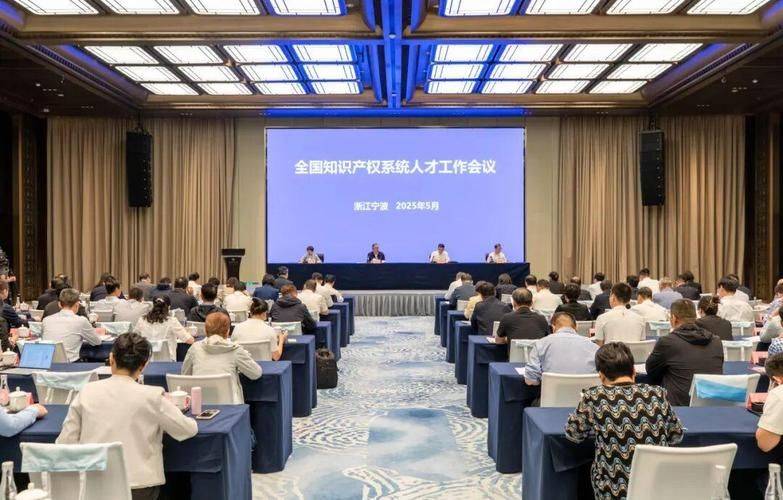
The third is to build mechanisms for the use of talent. The plan of action calls for a systematic increase in the use of high- and middle-level talent in major policy formulations, major projects and major projects around the goal of building a strong intellectual property power. Support for the participation of high- and middle-level personnel in national planning projects, major regional engineering projects, and support for a greater role for all categories of personnel in national and local intellectual property work. Priority should be given to the use of medium- and high-level talent and expertise in such urgent tasks as the establishment of the tokyo overseas patent review collaboration centre and the examination of complex and difficult cases. In the sector in which the talent is found, it is necessary to use it through job training. The subjective motivation of all categories of people at all levels encourages individuals to participate actively in the development of intellectual property rights。
At the same time, medium- and high-level talent is encouraged to participate in support programmes for all categories of talent and specialists at the national and local levels. (b) encourage and recommend the participation of high-level personnel from the national intellectual property agency in the national competition for intellectual property leaders, high-level personnel and young people. Supporting the advancement of middle- and high-level personnel in their professional development and professional development, under the same conditions, priority is given to military personnel in the evaluation of the qualifications of first- and second-level patent examiners. Priority is given to higher-level candidates in the evaluation of the qualifications of third-level patent examiners. Priority is given to those above the four-level patent examiners。
Fourth is the development of diverse mechanisms for the exchange of talent. The action plan proposes to support and encourage the participation of all categories of personnel at all levels in the cadre exchange programme, giving priority to middle and high-level personnel in the selection of personnel. It is important to expand the channels for the exchange of talent, fully tap existing and potential resources, strengthen the interface with the relevant ministries and units ' talent projects, and explore the establishment of a corporate intellectual property commissioner. Strengthening the exchange of posts among the various sectoral units of the agency and creating more opportunities for job exchanges with the outside sector. To improve the mechanisms for communication between the extra-kyoto patent review coordination centre and the various sectoral units in the country, to organize exchanges among leading military personnel, high-level talent, cadres and specialists at the extra-kyoto patent review coordination centre and to promote an orderly flow of talent across the board。
Fifth is an innovative and efficient talent development mechanism. The plan of action emphasizes the need to optimize the four levels of the talent development system, to ensure the training of leading military personnel and high-level personnel, to strengthen the training of cadres and to ensure the quality of basic skills development. Increased efforts are being made to combine job development with hands-on training and to expand the channels of talent development and practice using such high-quality resources as the china intellectual property training centre, the reviewer's practice base and the national intellectual property training base. Educational training is conducted using a combination of subject-based learning, action-based learning, structured seminars, and optional courses. Middle- and high-level personnel should attend relevant training at the request of the bureau. A sound system of on-the-job self-learning for talent supports the encouragement of in-service self-learning. Increased international cooperation in intellectual property skills development and targeted training. The selection of mid- and long-term external learners gives priority to middle- and high-level talent. At the same time, it encourages and supports the active participation of leading military personnel, high-level personnel, cadres and basic personnel in the capacity-building programmes for specialized personnel and the development of intellectual property complexes。
Sixth is the development of scientifically effective talent assessment mechanisms. The plan of action calls for the strengthening of talent appraisals with the aim of releasing and enhancing the dynamism of talent, encouraging talent to function on a job-based basis, urging the various sectoral units to enhance the use of talent and promoting a good situation for all categories of talent at all levels. Study the establishment of a system of scientifically sound talent appraisal indicators and the rationalization of the mid- and high-level talent examination period. The evaluation focuses on the participation of talent in training and performance, with a particular focus on the participation of talent in the priorities of bureaux and sectoral units. (b) strengthening the evaluation of the use of talent in various sectoral units. At the same time, research has been carried out to establish a system of targeted accountability for managerial staff at all levels, to refine performance indicators, and to strengthen evaluation efforts, using the results of the evaluation as an important basis for evaluation by the leadership. Zhang li chen li wei