China has officially discontinued the use of financial resources to cover the high cost of open access to periodicals (oas) and as an opportunity to promote an autonomous academic evaluation system. This is not a closed country, but a sobering adjustment to academic monopolies and malformations, aimed at spending on scientific research。
Stop paying the price: why did you do it
For a long time, chinese researchers have published their papers in top international journals, not only at no cost, but also at the expense of tens of thousands of copies. In the case of nature-communications, the single-page cost of $7350 (approximately rmb 52,000) is sufficient to free up start-up funds for a small project。
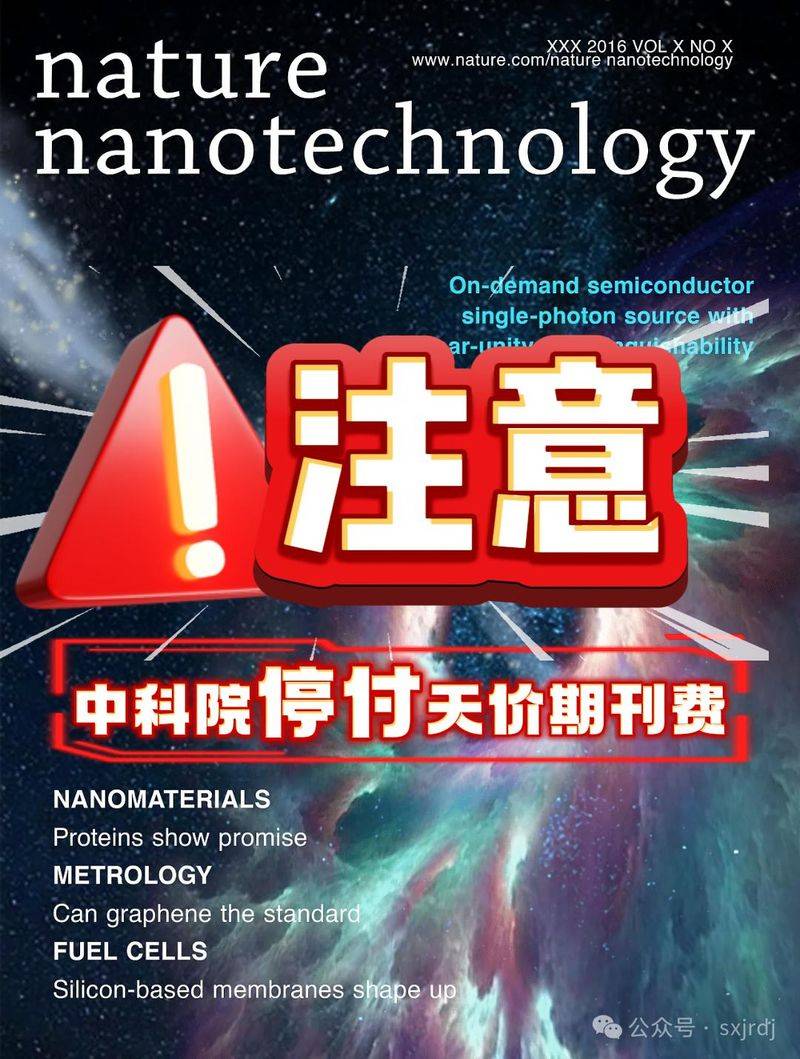
It is even more noteworthy that nearly 40 per cent of these periodicals come from chinese authors — who contribute to the core results — while paying for the “double profit” model of western publishers: they collect both publishing fees and the right to read and reap the global funds for research。
This has led to two salient issues:
The policy is very restrained: rather than prohibiting contributions, it is clear that financial resources are not paid for the premium — researchers can still make their own contributions through horizontal subjects, corporate funds, etc., but public funds no longer flow to the “air prices journal”。
Promoting self-evaluation: how to break through
Discontinuation of the high-charged version of the page and direct pressure on domestic academic evaluation to move from “what to what” to “what to achieve”. More critically, china is accelerating the construction of an autonomous evaluation system to break the overdependence on western standards。
For example, in 2026,** the eastern wall index** was issued as a standard for the evaluation of periodicals developed by china on its own initiative, covering 127,000 periodicals in 10 key disciplines worldwide. Using a new method of “retrospective + gradualization of the network of seed journals”, it is no longer known as a hero, but rather as a discipline-specific expression — which is more closely related to scientific practice and allows evaluation to return to the outcome itself。
At the same time, national scientific institutions are exploring multiple evaluation:
Together, these initiatives have contributed to the deepening of the “new and new” reforms。
Impact and future: reshaping rules
As a result, the international publishing community was shaken. Since chinese authors are “core contributors” to a number of high-cost periodicals, the percentage of manuscripts remains between **28 and 41 per cent** per year, with some disciplines even over half. For the first time in a number of publisher's financial statements, there was a “china contribution downside risk”, with some actively approaching domestic laboratories to explore adjustments in the rates。
Behind this is a shift in china’s attitude in science and technology: from the past, when china was “upgraded” into the international system, to today’s more proactive engagement in rules games. As the commentary points out, a mature scientific and technological power cannot be simply the recipient of the rules, but rather the participant and shaper of the rules。
Discontinuation of the daily price bill, which appears to be a cutting at the economic level, is a reshaping of the academic ecology. It allows researchers to focus more on innovation than on writing; it also creates space for home-grown journals and autonomous platforms to grow. This “one cut” cut off the price premium and raised the question of china's scientific research seeking to be self-sufficient in its openness。