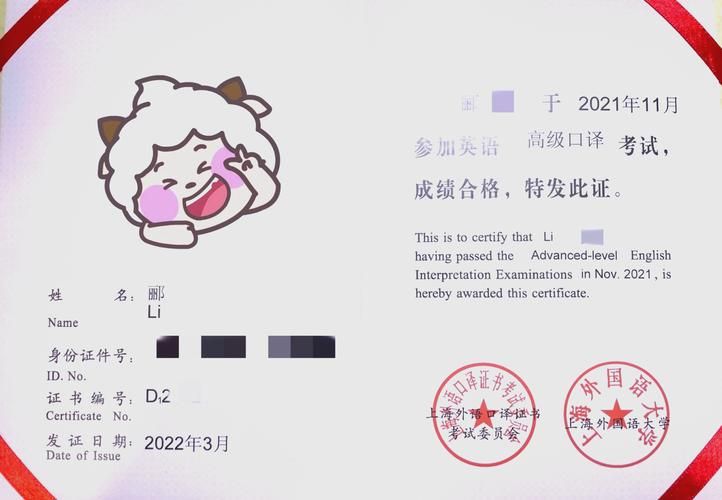
The mid-level interpreter tried to (twice) 2011-04-11 16:30 1. 1 min topic does not prepare deliberately. Because this part of the pass rate is 99%, and it's just an overstep, so it's a little more informative, and on the other hand, it's an adjustment to yourself. Put 200 per cent of its energy into the preparation of four 16 interpretation sections in the back. Gentlemen, this is an oral test, and it's time to put down the vocabulary, throw away the fluorescent pens and the books of the world's rowed day. Of course, the simulations behind the intermediate interpretation course are very good exercises. Two sets of questions per day are fully adapted to interpretation requirements. The order and process of the interpretation examination are fully adhered to. And the teachers at the avery side strongly recommended the recording, and i'm familiar with the recording software because i'm used to recording it, so it's easier to get it up, and i can find the problem by listening to my own version. I mean, if you spend extra effort on recording, don't do it. All you have to do is make sure that i'm completely simulating, that i'm very familiar with the doo-doo, and that you have to develop the ability to flip, even if you don't, to keep the sentence intact, and to try to supplement the details. 3. Talk about some internal consumption. And there's something on the internet, like, you have to say hi, nod your head or something, and remember, it's not an interview, and even if you don't say hello, it doesn't affect your scores, the teacher is busy, you say hi, and people don't care about you. Really. Also, on the internet, and in the books of the angry, the new east, it's said, when preparing topic, you can write outline on the other side of a paper, and so many people have gone on to preach this technique, and i just want to say, don't focus on it. Even if you don't have a piece of paper, five minutes to prepare a little speech, it's really too simple, not to mention that the teacher doesn't listen to what you're talking about, and it's broken in 20 seconds. Also, let's not focus too much on finding "the real question of the calendar." the interpretation course is followed by a year-long question, and the two-stage text is good. There's about 10 or 20 parts of the translation on hand, and it's good enough. In that sense, it's actually like an instrument exam. That's all you have to play. And finally, don't rush, what's the big deal, "trends of this year" or something, and don't be so preposterous, making yourself like a strategist, that's what training institutions do. What you're going to do is just, like i said, practice the material on hand. Interpret the curriculum, no matter the second and third editions, it's the same. 4. A refresher course is planned to read the relevant interpretation material for half an hour per day. It's for speech. Language is the soul of english learning. And then, do two complete simulations. If it's too late, make one. If we don't have time, we'll train each other for two days. It's all right, just, to keep that interpretation feeling. 5. Practice in specific interpretation. We all have a strange habit, when we start playing, the pen closes to the paper, like liu shang starts running. Actually, my personal feeling is that when listening to a recording, it's totally supposed to relax. Especially when you hear the first half of the sentence, you're going to have to sketch out the scene in your head right away, and it's a sense of hierarchy on paper. For example, who appreciates who and who, who in the interim did what, what and what development did besides contributing. The structure frame will be ok. Nouns are not the key, sentence structure is the key. Your sentence structure and main meaning come out, and it's hard for a teacher to score you. 6. Don ' t be stuck in a word. We're very happy to be here in this autumn wind, during the seasons of dan's fragrances... And like all your guests, to express our sincere gratitude... Some of our classmates just lost their minds when they heard dan's fragrances. This reflects an easy mistake for many of our candidates. It's not that we don't have enough memory, it's that we've given unnecessary indigence and energy to boring words. Like this sentence, "in this beautiful seat with cool breeze and great smelling of flowers, we r very glad to hold and welcome." and without prejudice to the original sentence, the point is that your sentence structure is coming out. There's only a limited number of requests for mid-level interpretation, and we can actually ask ourselves what this means in the simplest words. It's the same thing with the translation of "accessful, wounded." i'm not well-versed