For many users who are prepared to build a two-track system, it must be almost one of the greatest inputs and the easiest to choose. It seems to be the clearest part of the “hardest indicators”: power, several european outputs, how many road inputs, balance, how much brand size... But it is only when they actually buy home that many people find that it is not the larger the parameters, nor the more expensive they are to make a sound. Whether it is suitable must be seen together in the soundbox, space, volume, music type and system upgrade plan。
In terms of system role, it carries multiple responsibilities such as control, drive, dynamic residual, voice orientation and interface management. It affects both the soundbox's ability to be stabilized and the density, strength, speed and hearing resistance that eventually emerges from the entire system. It is also for this reason that it is not the limited budget that is the most taboo to buy credit, but rather the single parameters that ignore the overall match。
Disaggregate the structure: integration, front and back, gall and stone. Yes
The easiest thing to confuse when many candidates do their job is what the different structures do. The advantage of merging machines, which combine the front and back stages with the same equipment, is that they are simple, space-poor, more manageable and suitable for most household users. The back-to-back compartments remove signal control and power amplification, which are usually more advantageous in terms of extension, power size and system adaptability, but also more complex systems and overall budgets。
In the case of bold machines and stone machines, there is a greater preference for differences in technological routes for magnification. Courage machines are often considered to be more fratricidal and human voices, but maintenance, heat, power and matching requirements are also higher; stone machines are usually more suitable for most households in terms of control, stability, low frequency harvesting and long-term maintenance. For ordinary users, the first step is not to rush the station, but to look at its own space, the efficiency of the speaker, the sound habits and the will to make it happen. Do you want a stable durable system that can be easily used on a daily basis, or are you willing to accept a higher maintenance threshold in exchange for a certain sound base, which directly affects route selection。
The power is not as powerful as it is. The real key is match and balance
The first reaction of many users when they look at it is to ask “how many watts”. Power is of course important, but its reference value is significantly reduced if seen outside the soundbox sensitivity, resistance to curves, room space and target volume. For example, a pair of relatively high-sensitivity, smooth-resistant bookshelve boxes may not necessarily need to be exaggerated in small and medium-sized spaces to push well; in turn, some drop-in boxes that resist volatilities and current consumption, even if the nominal watts are low, may be loose, weak and low-frequency if power and control are inadequate。
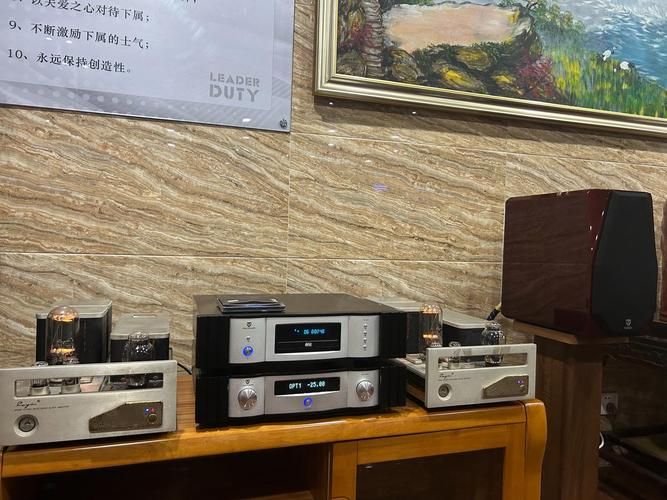
The more mature way to judge is to see if there's enough under the real load, not just to look at the 8-eu nominal power figures. In the family environment in particular, it is not only responsible for “sounding out” but also for maintaining a sense of control, density and stability in complex musical dynamics. Rather than blindly pursuing paper power, more attention should be paid to whether it is sufficiently driven and safe to match the target speaker。
Keep your voice away from the soundbox and space. Look
Many hifi users discuss sound labels such as “sweet” “cool” “sweet” “sweety” “sweety” “sweety” “sweety”” labels, which have some point of reference, but conclusions can easily be distorted if they are heard away from the speaker and room. For example, a powerful, fast-paced stone machine, coupled with a light, thin soundbox itself, could tighten the system; it could be placed on low-frequency loose, decomposition boxes, but it could fill the shortboard。
In other words, the sound orientation of power is not the more individual, but the more complementary the system is. If your room is more reflective and your hearing is nervous, it is no longer appropriate to focus on speed and brightness; if the system itself is slow and its layers are not clear enough, excessive heat-seeking may also make the sound worse. A mature mix of ideas gives priority to finding a balance rather than pursuing a single label。
Interfaces and functional configurations to service usage rather than face needs
Much of today's work is not just a pure simulation amplifier, but rather a combination, streaming, earplay, singing, bass cannon output, sidewalks, room correction, etc. Such integration programmes are indeed attractive to users wishing to simplify the system, as they reduce the quantity of equipment and the wiring pressure. At the same time, however, there is a need to be alert to the situation of “whatever you want, what you want”。
If you already have a mature player and dac, you don't have to buy another complex one-on-one machine for functional superimplation; if you have a system goal that is simpler and can be used by families together, then a blender with streaming media or decoding functions might be appropriate. The key is not so much functionality, but whether it actually reduces the complexity of the system or simply increases the budget and learning costs。
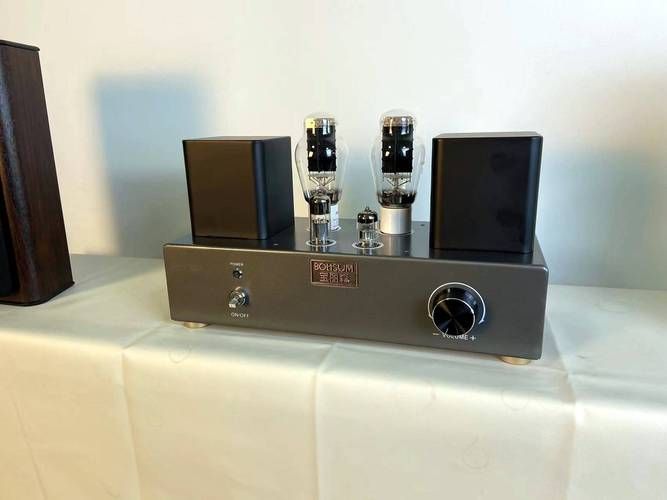
Budget allocations need to take into account the level of the soundbox, so that there is no imbalance
It was true that the budget could not be too low, but it could not be lifted from the soundbox and the overall system without a ceiling. For most of the two-track systems, the level of credit and speaker should be matched. If the soundbox itself is at the entry level and the room conditions are ordinary, too much effort may not be replaced by linear upgrading; in turn, if the soundbox is driven by a clearly high demand and uses a low-control device, it is easy to keep the system out of play。
It is therefore even more of a matter of concern whether it will be able to push the existing soundbox to a stable, hearing-resistant, long-term serviceable state, while retaining the space for modest upgrading. A truly reasonable budget would not make it seem the most expensive, but rather would leave the system as a whole free of obvious impurities。
It's a few common user categories
If you are the first user to build the hifi system and want to stabilize it, it is usually safer to give priority to mature integration machines; if you already have clear voice targets, soundbox-driven demand and are willing to accept more system complexity, back-to-back stratification becomes more meaningful; if you prefer people, are poorly developed, listen to sound and can accept maintenance costs, boldness can be taken into account; and if you are more concerned with control, low frequency, dynamics and long-term stability, stone machines are usually a more general route。
The most important here is not “which route is higher”, but which route is suitable for your system and way of life. It is not the most expensive and complex option for many users to be truly satisfied in the long term, but rather the system that matches the soundbox and allows them to listen daily。
The most common pits when buying hifi
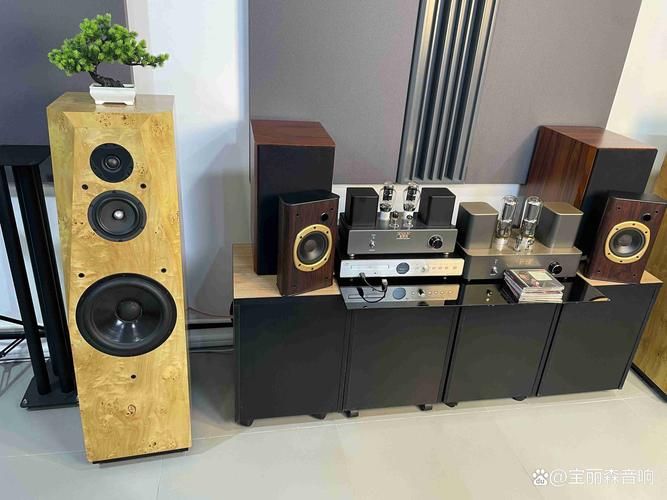
The first pit, which looks at only nominal power, does not look at actual driving power. The second pit was a blind and wind-crash or partition system, resulting in the discovery at a later stage that maintenance costs, heat, positioning and debugging thresholds exceeded expectations. The third pit is to use it as a panacea for all problems. If the room is heavily reflecting, the sound box is not set in a reasonable manner and the sound source front end is in disarray, a simple change of work cannot cure the problem。
The fourth pit is the neglect of heat dispersion, electricity supply and long-term use of the environment. Many of the power-releases are not low, and if the equipment cabinets, power supply, wire organization and ventilation are not planned in advance, the best is not necessarily stable in the long run. For household users, the system is truly mature, not only in terms of the right purchase of equipment, but also in terms of its long-term sustainability in a real-life environment。
Conclusion: the skeletal structure of the system is really standing when it's right
In the hifi system, it's more like the skeleton of the whole system. It determines not only whether the soundbox will be well driven, but also whether the system will end up being tight, loose, cold, warm, or even whether you have a clear path for future upgrades. It is more rational to look at the needs of the soundbox, space conditions, sound habits and system structures than to be taken from the outset by brands, power figures and “high-end routes”, and then to judge whether or not the mixer, front and rear, the galler or the stoner should be chosen。
When it actually matches the soundbox, space, front end, it does not lead to the lifting of a single-point parameter, but rather to a more stable, complete system and easier to hear over time。
Note: this paper is based on a compilation of public information and is based on a source of information from the taih. Cc series of selected topics for planning and open industry commons。