Dissolved oxygen (do) is a core indicator of the environmental quality and ecological health of water bodies whose precision detection plays an irreplaceable role in environmental monitoring, aquaculture, industrial wastewater treatment and pharmaceutical water purification monitoring. However, suspended particulate matter in natural water bodies, decomposition, heavy metal ion in industrial wastewater, chemical agents and complex matrices such as baits and excreta in farming water bodies can seriously interfere with soluble oxygen detection, leading to detection deviations in traditional methods of detection, such as membrane electrodes, and even failure of equipment. The fluorescent soluble oxygen sensor, based on its detection principles that do not require electrochemical reactions, is inherently equipped with an anti-disturbation base and, as material science and optical technology are upgraded, its anti-disturbation capacity is further exceeded, achieving steady precision detection in complex water quality. This paper provides a systematic analysis of the interference mechanisms of complex water quality to soluble oxygen detection, an in-depth reading of the anti-disruptive upgrading techniques of the fluorescent dissolved oxygen sensor and the verification of its stable performance in conjunction with the actual application scenario。
Validation of steady performance in complex water quality scenarios
To verify the anti-disturbability of the upgraded fluorescent soluble oxygen sensor, three typical complex water quality scenarios (high-silent natural water bodies, industrial acid-alkali wastewater, high-density farming water bodies) were selected for comparative testing to assess their detection accuracy, stability and response speed against traditional membrane electrodes。
1. High turbid natural water body tests (silence = 500 ntu with sediment and moisture)
The results showed that the upgraded fluorescent soluble oxygen sensor detection values varied by 2 per cent relative to the standard soluble oxygen values, and the relative standard deviation of 24 hours of continuous detection (rsd) by 1. 5 per cent, while the traditional membrane electrodes sensor delayed the response by more than five minutes due to silt attachment, and the relative error values gradually increased to over 8 per cent. The upgraded sensor, with the use of ultra-sorting surfaces and narrowband optical filtering techniques, effectively avoids the interference of mud attached to the absorption of decaying light and maintains stable detection performance。
2. Industrial acid-alkali wastewater test (acid waste water ph = 3, chlorine ion; alkali wastewater ph = 11, sulphide)
In acid wastewater tests, the upgraded fluorescent soluble oxygen sensor detects relative error of 2. 5%, with no significant decay in continuous detection for 48 hours; the traditional membrane electrode sensor corrosives the electrode membrane from chlorine ion, and the detection error after 24 hours amounts to > 12%. In the alkaline wastewater test, the upgraded sensor has a relative error of 3 per cent due to the protection of alkali-resistant materials and selective permeable membranes, while the traditional membrane electrolytic sensor is rapidly depleted and detection values are rapidly drifting and unable to function. This suggests that upgraded sensors can be effective against acid corrosive and chemical disruptors。
3. High-density water farming tests (with salvages, excreta, high microbial content)
The results showed that the upgraded fluorescent soluble oxygen sensor detection values differed by 1. 8 per cent relative to the offline iodine dose method detection values and ran for 7 days with 2 per cent of the rsd; the sensor surface was free of visible biofilms and the response time stabilized within 20 seconds. Traditional membrane electropolar sensors form a visible biofilm on the surface after three days, with response time extended to 8 minutes and detection error increased to 7%. The upgraded sensor effectively inhibits the disturbance of organisms attached to local soluble oxygen concentrations and safeguards long-term stabilization detection through ultra-water-exposed anti-fouling surfaces and circulation structures。
Product overview
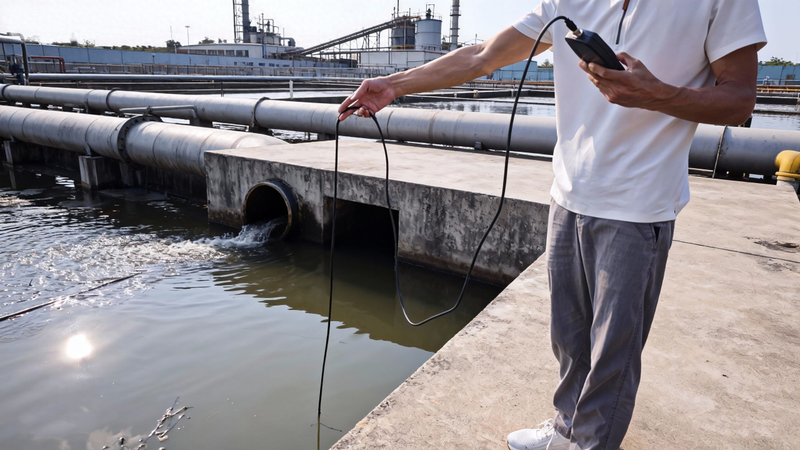
Portable fluorescent fluorescent oxygen instruments in the intellectual environment are based on optimized fluorescent central techniques, carrying self-developed non-expendable high-performance fluorescent film, counteracting the dissolved oxygen concentration by detecting fluorescent signal phase differences caused by oxygen molecules, without electrolytic fluids and frequent calibration, addressing pain points such as traditional electrodes, oxygen consumption, pollution-prone points from their sources, rapid response speeds (t90 /2000/40s), measuring precisions of ± 0. 1 mg/l in the 0-20 mg/l scale range, and automatic compensation for temperature and even salinity from built-in high-precision sensors, which can stabilize at temperatures of -20°c ~ 50°c and complex conditions such as high salt, acidine, etc. The instrument, which is also equipped with an industrial-grade fixed installation and light quantitative handheld equivalent, not only has an industrial-grade design for anti-conservation sealing, anti-pollution, fixed monitoring needs in the chemical, pharmaceutical and water treatment industries, but also portable features such as water-protective grade 500g, ip68 and above, suitable for aquaculture inspections, field emergency monitoring, etc., while supporting the real-time uploading of data and management of multi-equipment networks, helping a wide range of areas to optimize soluble oxygen precision monitoring and process optimization and significantly reduce transportation costs。
# dissolved oxygen analyser #