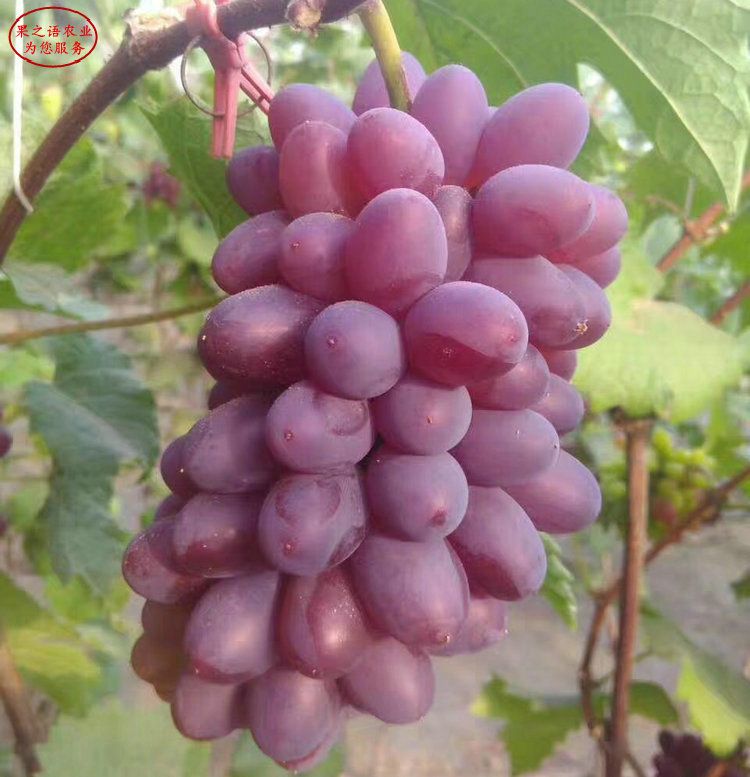
In may 2015, the guava of the angels was found in the village of yugumiyama, shaanxi county, and subsequently acquired a single strain of mutation through non-sexual reproduction, and developed a system of excellence for it. After three years of continuous observation, the results are of excellent quality and very large fruit, with an average of 756 g of single fruit weight, with a hardness of 1. 0 kg/cm2 of fruit seed grains, more than 17. 1 per cent of soluble solids, a high yield rate (over 70 per cent), high productivity and disease resistance, and high characteristics such as soft nucleotide and no residues after chewing. (c) good combination and stable genetic properties。
2 park selection and planning
The climate requirements are suitable for planting in an area of >2000h, with an annual precipitation of over 500 mm and an average annual temperature of over 14. 5 °c and an extremely low annual temperature of not less than -10 °c. Areas with extreme temperatures exceeding 40 °c require well-developed irrigation systems. It's a fragrance rain。
2. 2 soil requirements select either deep-dwelling (over 80 cm), perfluent, well-drained sandy soil or land blocks along the border, using micro- acid to micro-alkalinity (ph 6. 5 ~ 7. 5). Cultivation in alkaline soils with high ph is highly prone to iron deficiency and greening. It's not like we're building a park。
2. 3 parking shall be planned for planting areas, road systems, drainage and drainage systems (suggested drip irrigation or micro-jet facilities) and protected forest belts. A rectangular plant with a range of 3 m x 4 m in the flat field, and a hillland with an equation of 3 m x 3. 5 m in the range。
3 integration of fertile water
3. 1 soil management inter-cropping grass (white weeds) or green fertilizers are promoted, covered by straws, rags, etc., within the tree plate in order to keep the temperature wet and fertile。
3. 2 fertilisation techniques it is applied after harvest in autumn (october-november) and is applied mainly in the form of consumable farm or commercial organic fertilizer. Three critical periods of application were followed: nitrogen fertilizer before germination, nitrogen, phosphorus, potassium-balanced fertilizer after flowering, and potassium fertilizer during expansion. A combination of drip irrigation systems for water soluting。
(b) outposted fat: ~0. 2% ~0. 3% boron fertilizers promoting sit fruit, and ~0. 2% ~0. 3% potassium phosphate in the later stages of crop growth to improve fruit quality。
3. 3 hydrological management pomegranates resistant to drought and flooding shall be irrigated in a timely and appropriate quantity according to soil conditions, with a steady water content of 60% to 70%. The focus is on securing budding water, pre-flower water, fruit expansion and freezing water in winter. It is important that the rainy season be carried out in a timely manner in order to avoid flooding at its roots。
4 integrative cuts
4. 1 pomegranates are the main tree species. They are mainly natural pomegranates or small coronals. Naturally happy stem with 50 ~ 60 cm, with 3 ~ 4 branches, with small canopy, ventilated light, fast growth and skeletons; small canopy with 40 ~ 50 cm high, with visible central stem, layered with branches of results, with strong skeletons, good stereotyping, easy management, early results, etc。
4. 2 the principle of shearing is the main winter, summer and summer cutting, the combination of light and heavy, and tree cutting. Winter cutting takes place before the fall of the leaves, removing worm branches, cross branches, overlapping branches and over-stretch branches, short-term extension branches, retrenching weak branches and renewing them. Summer cutting takes place during the growing season, removing unnecessary pretences on the backbone and branches in a timely manner, taking care or twisting the sprawling in order to control the growth of nutrients and to promote the cleavages。
5 precise fruit management
5. 1 frozen berries after the present gust, all bellflowers (males) are removed in a timely manner, and barrel flowers (full bouquets) are retained for a single bouquet of 8-10 d to reduce nutrient consumption. In mid-june, it was determined that, in accordance with the principle of “punishment and necrosis”, insect fruit, malformation fruit, and small fruit from a bush. It is recommended that 80 to 100 fruit-bearing trees be given to adults, so that the fruit can be distributed evenly within its crown。
5. 2 vegetable pack the best bag takes place in late june, after the greening of the larvae and before the high onset of the disease. A bag is sprayed with an enzyme microbicide once it is fully dry. The bag is operated in such a way that the fruit plant is in the middle of the bag, avoiding friction damage or sunburn caused by contact between the bark and the wall. Finally, you have to tighten the bag with a wire. For fruit that is born directly on a thick parent branch, it is difficult to keep the usual bag closed. First, the middle of the pocket is torn by a gap of 3 to 5 cm, and then it is torn across the thick branch of the fruit trough。
Integrated pest management
In keeping with the principle of “preventives, integrated treatment”, priority is given to agricultural, physical and biological control measures, which are scientifically soundly complemented by chemical control。
(1) agriculture. Early foliage and decomposed disease, cmi 2, requires the complete removal of the trimester branch during the winter, the scraping of the old pelvis, the eggs and the disease tissue, and its central burning or deep burial. The trunks are then white-treated to reduce the fissures of the bark caused by temperature differentials during the day and night, to eliminate the insects that go through winter in the cracks and to prevent freezing。
2) physical control. During the peak of pests in mid-july, frequency-fibrous insecticidal lamps can be used to trap worms such as peach worms。
3) biological control. To combat orchard pests using aphids, mantis, spiders, mites and aphids。
4) chemical control. In mid-february, the garden was sprayed with 3,5-percent thiomers, killing winter bacteria and eggs. In early april, 50 per cent of the aphids were sprayed with 3,000 times more fluids to combat pests such as aphids, peaches and vermin. Between mid-may and early june, 80 per cent of the polybacterium + 25 per cent of the ethyl ether ester 2000 was sprayed to prevent dry decay, lignoma and scabies, while 2. 5 per cent of the high-efficiency chloromethrin 2000 was sprayed to prevent small larvae, pomegranate, etc. Follow-up is based on insect surveillance, with 48 per cent of the aphids 5,000 times the fluid, 2 per cent of the avil 2,000 times the vermin, etc., used for the prevention of pests such as tremors。
7. Timely harvesting and scientific storage
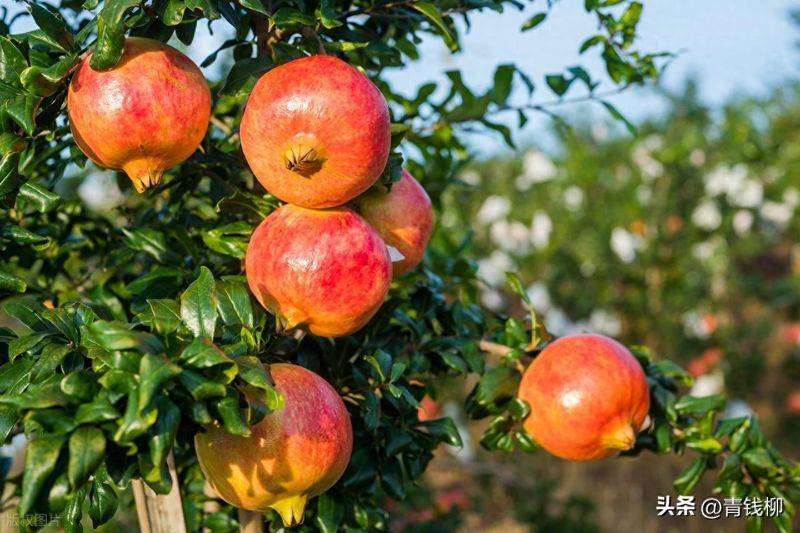
7. 1 at the time of harvest, the wakami 2 is a medium- and late-literate species with maturity from late september to early october. The base colour of the fruit is changed from red yellow to dark red, the face of the fruit is smooth and smooth, and the seed is collected when it is purple red。
7. 2 the method of harvesting should be chosen in the middle of the morning when the water is dry. The extraction is carried lightly, the evaporation of the water is reduced by retaining an encirclement, and it is effective in preventing the fungus from causing decomposition from entering the cut。
7. 3 post-harvest treatment and storage where long-term storage is required, professional cold storage should be used to strictly control environmental parameters. Juami no. 2 is thick, has large seed grains and has a juice yield of up to 70 per cent. The storage temperature should be maintained at 5-8°c, with a relative humidity of 90% and 95 per cent appropriate. In addition, there should be regular ventilation to monitor the gas composition of the reservoir, which can further prolong storage periods and maintain the taste and taste of fruit。