Technological system for the cultivation of soft-seeded pomegranates in tunisia
Liu yongsheng and others
The soft-seed pomegranate, an agro-specialty industry in xuanguang county, is now 448 million acres, with an annual value of 180 million yuan and a brand value of 254 million yuan. In 2018, the "soft-soft seed pomegranate" received the state geographic mark as a regional public brand. According to the soft-seed pomegranate planting area, its suitable planting area is located south of the qinqing-wi river. At the eastern end of the central plain, on the southern bank of the yellow river, there are semi-arid monsoon weather zones in the temperate zone, with an average of 2269. 1 h per year, 13. 3 °c per year, 625. 5 mm per year, 187-297 d per day, cold and dry winter, extremely low temperatures, 15. 4 °c, not a suitable planting area for softseeds, with a high risk of winter and spring frost in production, and a high vulnerability to the effects of bouquets in the summer. In response to this, in 2018-2023, we conducted a pilot demonstration of cold-garden cultivation in tunisian soft-seeded pomegranates, which is summarized below。
1. Varieties characteristics
Tunisia's soft-seeded pomegranate, which originated in tunisia in north africa (which is part of the mediterranean climate zone), is naturally growing at temperatures of 15-28°c, is warm and dry, has a sufficient level of light in the climate and is less resistant to cold than the chinese pomegranate. Since its introduction into the country in the 1980s, many years of domestication and breeding have led to the formation of farming systems suited to our climatic conditions. The plant can choose tunisian varieties (classes) such as tunisian soft seeds, chinese farmers' reds (twilight seed sprouts) and the guava1 (tunis soft seeds are one of their own)。
According to research such as wang woo-shang, tunisian soft-seeded pomegranates are more resistant to cold: non-nuptial seedlings are more severely affected by freezing at less than -9°c, -13°c, and they are slightly affected by freezing at 11°c. Thus, the cold-resistant tarzan 4 acid pomegranate or cep 1 can be selected for seeding to increase resilience。
It is also an option for the autonomous breeding of red and soft seeds. The species, which was validated by the forestry department of shaanxi province in 2021, is better resistant to cold than tunisian soft seeds。
Construction of facilities
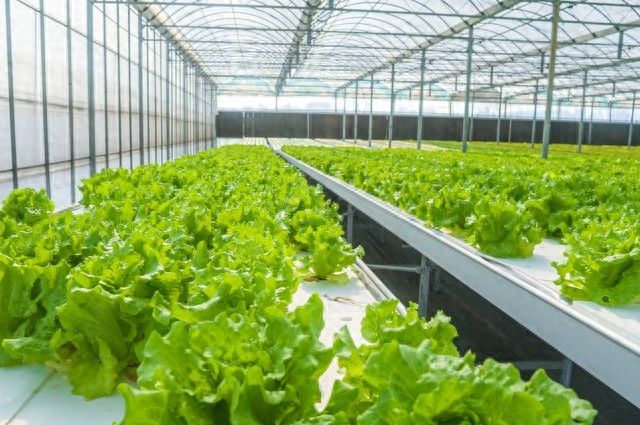
The construction of cold sheds is based on the choice of flat terrain, wind-shielding, deep earth cover, estranged soil, well drained water and less than 1. 5 m of groundwater, avoiding wind vents and lowlands. Land blocks with ph 6. 5 to 7. 5 are preferred to soil glues, the front of which are gardens of fruit trees, such as peaches, almonds and so forth, and associated plots。
The sheds use a whole steel frame structure, east-west direction, with 60 mm thermal plating of zinc steel tubes as a skeleton, with a height of approximately 4. 5 m, with a shoulder height of 2. 1 ~ 2. 5 m, an arch height of 2. 0 ~ 2. 5 m, a width of 7. 5 ~ 10. 0 m, depending on the size of the plot, generally appropriate for not more than 100 m in order not to affect ventilation. The choice of a single or contours, the former being easily managed and well ventilated, could be made on a case-by-case basis, while the latter was characterized by high land use and good temperature。
The side and top of the shed are equipped with vents to adjust the temperature and humidity of the shed in a timely manner, depending on weather conditions and the need for pomegranate growth. Po-free film covering 90% radium perm and 0. 12 mm thick。
3 plantation
In the autumn of the previous year, the park had been fertilized. Soils were pushed 40 cm deep and acres were applied to fully decomposed farm fat 4 m3+ bio-organic fat 200 kg+ per phosphoric calcium 50 kg. Line distance, 30 cm tall. If possible, integrated water fertilizer facilities can be installed simultaneously。
Between mid-march and early april (pre-emergence), the temperature was stabilized at 10°c and above. The marriage interface heals well. The seedlings are trimmed, immersed 6h with a root powder solution, soaked with sufficient moisture, covered with soil and water, and covered with black membranes or horticulture。
It is generally used to plant plants with a distance of 2 ~ 3 m and a row distance of 3. 5 ~ 4 m; well-fed plots can be properly rared, with a distance of 2. 5 ~ 3. 5 m and a range of 3. 5 ~ 4 m. The pollination varieties are selected for platinum, which is planted at a fraction of 8:1. No less than 1. 5 m of space is left at the edge of the shed to ensure the normal growth of the side trees。
Under 10 years of age, solid soft-seed pomegranate gardens can be built in cold sheds. Pre-reform measures such as retrenchment, short cut, twigs to reduce tree heights to 2. 5 ~ 3 m, wiping out twigs, insect branches and weak branches, retaining strong branches of outcome, and ensuring good ventilation. With little impact on production, one to two years can be used to overwhelm the facility。
4. Environmental regulation
1) temperature. Scheffer and others noted that tunisian softseed pomegranates can be frozen half a day in an environment below -10 °c, and that studies such as wang qingjun's show that tunisian softseed pomegranates have half-life temperatures of -7. 95 °c. Thus, temperature control (especially at low temperatures) is key to pomegranate production and cold shed cultivation。
In general, pre-winter (late october) covers the top of the balconies with half a balconies to prevent excessive temperatures in the balconies; the full membrane is sequestered after winter. Maintain night shed temperatures above 0°c. Close vents at less than 0 °c; increase the temperature of smoke at less than -10 °c (fired shredded maize straw, sawdust etc. Releasing thick smoke at 3 ~4 piles per acre). The following spring to dawn gradually rolls up the top of the cap and adjusts the time of exposure to changes in temperature to prevent the impact of the cold on pomegranates. Late in mid-april, the night temperature was stabilized at 8°c to remove the side film and in early may to the top。
Incubation occurs when the spring cold (at temperatures close to 0°c) is in time to avoid falling flowers due to cold temperatures. The bouquet is kept at 18-25°c and the bouquet above 15°c during the day should be properly ventilated to avoid high temperature (over 30°c) inhibiting pollination。
2) humidity. The caps are rolled up from dawn to winter, the tops of the rain or even of the rain are buttoned up to avoid flooding, and when the rain stops, the film is removed in time to refill the water in accordance with soil conditions. Water control is moderate between now and the beginning of the flower, inhibiting nutritional growth. The vagrant environment is controlled at 50 ~ 60 %, and is moderately dry to facilitate pollination and avoid high humidity. The soil is moist at 60% ~ 70%, 30 cm during the gestation period. In particular, during the july-september intensive rainfall period, care must be taken to prevent the accumulation of water in the sheds, resulting in a large number of fissures。
3) light. Pomegranate gland, cold-shed cultivation should be selected for light-skinned, dust-proof film, regular cleaning of the film, three years for a subfilm. When identified, the cape is gradually rolled up to enhance light co-operation. To reduce the sunburn damage to pomegranates, it is recommended to maintain the lower result, the upper branch covering the light. Lights in the shed are weak in intensity and have a full proportion of the cost, and full spectrum light is available, especially in the light of continuous rainfall, where artificial light can contribute to thawing and child growth。
4) carbon dioxide. During the critical period of pomegranate growth, such as the length of the new pace, the expansion of the fruit, the hard core period and the pre-chronic period of the fruit, the application of increased carbon oxidation has had a significant effect on the production of ablution. The concentration of co2 gas in the shed is regulated daily by vents depending on weather。
5 fertilizer water management
1) fertilisation. The base fertilizer is mainly organic, with 1,500 ~2 000 kg + potassium sulphate or calcium perphosphate 100 kg + 50 kg biobiological organic fertilizer applied to mature farmers after picking fruit and before falling leaves. Episodes, age trees, strips, fertilized water。
The long-term pursuit of fat follows the principle of "forging back". Before flowering (in the early stages of the bud), nitrogen fertilizer is used, supported by phosphorus fertilizer, with urea or phosphate, 20 kg/acre, which promotes proper flowering; three dollars of fertilisation during the precubation period, 20 kg/acre, which promotes fruit growth; and phosphorous fat at the end of the fruit (up to 15-30 d), which is supported by nitrogen fertilizer, 20 kg diammonium phosphate + 10 kg potassium sulphurate, which promotes fruit expansion and sugar enhancement. At the same time, long-term extra-root fertilisations were applied 3-5 times, urea was sprayed 0. 3 per cent ~ 0. 4 per cent during the extended leaf, oxen was sprayed 0. 3 per cent boar + 0. 2 per cent potassium phosphate, increasing the seating rate; once the fruit began to expand, it was sprayed 1 per cent ~0. 5 per cent potassium phosphate every 15 d and 3-4 times in succession. 20 d before harvest stop fertilization。
Water fertilizer integration facilities are available for high nitrogen-based water soluble fertilizer 0. 3 kg before the bud, balanced water soluble fertilizer 0. 2 kg for the current cedar, high potassium-based water solubility 0. 4kg for the expansion of the fruit plant, 0. 2 kg for the conversion of the fruit to phosphate, 0. 2 kg for the fertilizer fertilizer or 0. 2 kg for the cedar plant。
2) water. Every time you fertilize, you water it, you pour it on the leaves, you put it on the winter water, you put it on the buds, you put it on the flowers, you put it on the fertilizers, you take it on before you take it. Soil humidity is maintained for long periods, with a relative humidity of 50% ~ 60%. The rainy season prevents water accumulation。
6 flower fruit management
Appropriate humidity and light conditions are guaranteed for the pre-flower period up to the pre-premium boom period. Artificial pollination is combined with bee pollination, which ensures the quality of pollination and increases the rate of sitting fruit。
The curvature of the bud removes the bell-shaped flowers and keeps the pellets (heads, twigs). In accordance with the principle of “more and less”, priority is given to the preservation of one to two head or two of the short- and medium-effect branches, and to the elimination of three of the nuts, malformations, insects and insects。
Two weeks after the physiological fallout (first half of june), 4,500 fruit per acre and 25 fruit per leaf. The bag is completed in 10 d of the final product, with a pre-pack spray of 22. 4 per cent ethyl ester and 4,000 + 43 per cent thallol, 5,000 phthalm, and a dry liquid。
Circumcised ~2-3 knife (range 4 cm) in the first half of may to control nutrient growth, increase the rate of flower sprouts or spray 15% more than 300 times more thallium on the leaves between the second half of june and the first half of july, at a distance of 15 d, two times in a row, to ensure that the next flower is a good flower。
7 orthopaedic cuts
Tunisian soft-seeded pomegranates are moist, with smaller plants, open branches, soft and bendy branches, with lumbers mixed to the top or near the top of a strong, short branch, with the main cut being slow and trim。
You can use a single stem, small canopy tree, 2. 5 ~ 2. 8 m tall, dry 50 cm tall, spiraling around 10 ~ 12 main branches of 1 m length, 20 ~ 30 cm apart. Control the coronal and keep the results small, resulting in small and strong branches。
Cuts must be done before spring sprouts, with less alienation, cutting cross branches, long branches, redundant branches, competition branches, so it's not appropriate to move a large cut; flowers must be cut off with a view to ensuring a seat; summer is mainly a heart attack. In the autumn, it is mainly the second and third steps that promote the return of nutrients。
The old trees that are the result of years of age need to be retrofitted and retweeted to stimulate a healthy nutrient branch. It can also be used to update the branches。
8 disease control
Scratch of the leaves after winter, cleaning of ground debris in the garden, and shallow farming of the soil. Before the freeze and before the spring sprouts, each of the rinsing sulfur sulfur sulfur sprouts took three to five waves to eradicate the disease. 30 cedars per acre, 15 blue plates, 6 sugar and vinegar basins, 1 black light lamp, and physical control of pests。
Priority is given to biological pesticides for protection against dry corruption, anthrax, foliage, red spiders, aphids, peaches and moths. To the extent possible, 43 per cent of the peptol can be used to combat dry decomposition, 32. 5 per cent phenol or 10 per cent anthrax, folics, 0. 5 per cent platinum to combat red spiders, aphids, 40 per cent platinum to combat peach worms, 2. 5 per cent high-efficiency chlorocyanethrin, 20 per cent pyrethrin, etc。
9. Receiving and processing
In late september and mid-october, fruit peels were thinner, red yellow under the background, bright skins, micro-fissils and soluble solids were collected in batches over 15 per cent. Select clear weather to avoid high temperature periods. Take it easy, reduce damage. 24h pre-cold, classed。