Hello, folks
The current temperature is rising steadily, and the pomegranate trees are moving into the flowering phase, looking at them, and looking at them is a joy. Many farmers look at the flowers and look forward to a full harvest in the later years. But in reality, a lot of people get into trouble, spend their flowers in secret, sit down with little results. Little, little fruit that just grew fell and fell, spent most of the year working, and in the end there were not many fruits left on the tree and production was severely reduced。
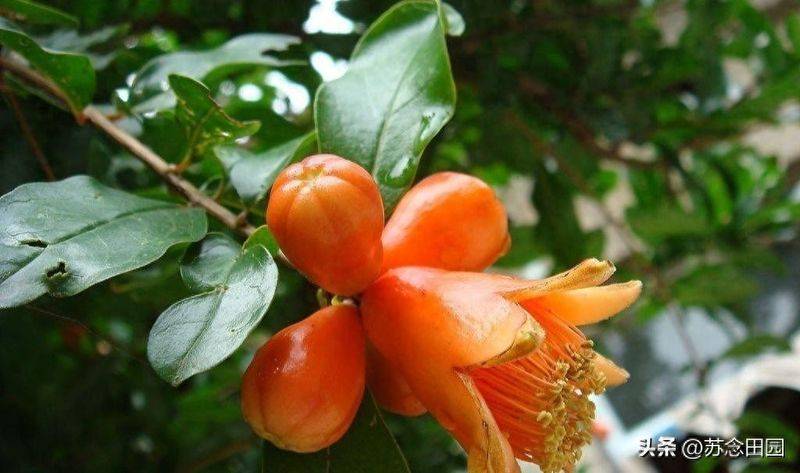
In fact, pomegranates are not a poor species of fruit trees, nor are the plots poor in soil, most of which are caused by a lack of bouquets. Many farmers feel that when flowers bloom, they grow naturally, without care, and in vain miss the critical period of plumbing。
In rural areas, i have been able to learn from the experience of tree-breeding in the surrounding neighbourhood, and for a short period of time, with proper management, i can significantly reduce the incidence of fallout, keep the fruit tree steady and bear fruit, while the posteriori branches bear fruit. Today, using the big words that we growers can understand, we share six solid field care methods that are simple and well-functioning, and that can be effective in stabilizing the yield。
I. Reasonable gravitation to reduce inefficient nutrient consumption
Pomegranates are particularly flowered, and a branch can produce more than a dozen flowers. If all the flowers are opened, the whole tree's nutrients will be consumed in large quantities, without sufficient nutrients to provide for the growth of its young, and nature will be prone to falling fruit. The first priority of the flowering period is therefore to do the leeway work in a timely manner, to abandon the weak flowers and to preserve the high-quality flowers。
Let's start with the kind of pomegranates that farmers can easily tell without the complicated terminology. One is a tubular flower with a full stomach and a large base, which has a high success rate of pollination and a high follow-up rate of success, which is the object of our main focus; and a small, thin and thin bellflower, which is almost difficult to bear, which can only take up nutrients in vain and be removed as soon as it is discovered。
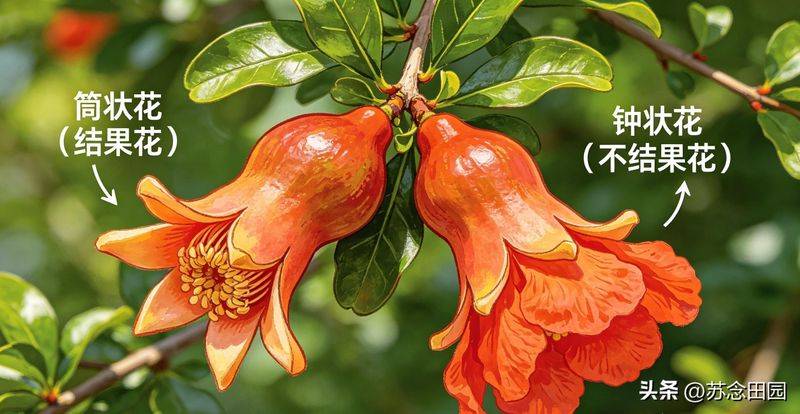
The flowering does not have to be completed in full at once, and it works better in two phases. In the early stages of flower expansion, the bouquets that grow from the thin branches of the tree and the hidden inside of the chamber are removed, and the bouquets at the top of the long branches are cleaned up; and when the flowers are opened, they are combed twice. Following the principles of weakness and weakness, the same branch, at a suitable distance, keeps a strong flower, with only one or two of the oldest flowers to grow together。
It is also necessary to keep the total number of flowers in order to adjust flexibly to the age of the fruit tree and the size of its canopy. Small-age, small-capture fruit trees, with an appropriate reduction in the amount of flowers to avoid overloading the damaged tree; strong, swollen, adult fruit trees, can reasonably retain more high-quality flowers. Surplus flowers are cleaned up in a timely manner, and the savings in nutrients are concentrated in the provision of retained fruit, which will increase stability significantly。
Ii. Scientificly assisted pollination to increase the probability of flowers sitting fruit
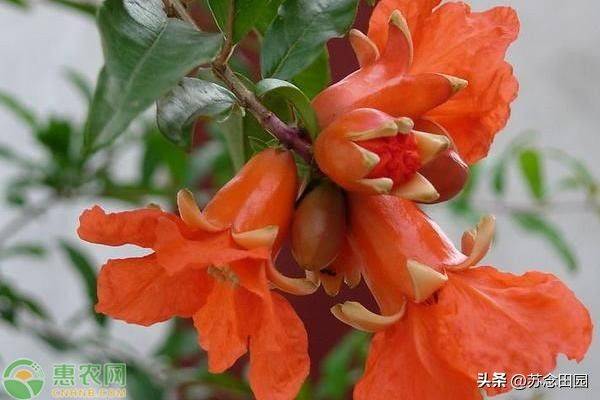
Many farmers find their own pomegranates to be flowering, but they do not find it easy to bear fruit, largely because of inadequate pollination. The pomegranate, which is a pollinator tree, can be improved by relying solely on natural wind blowing and insect pollinating, which can be reduced in the event of rain and wind-free weather, thus causing problems of flowering and the use of supplementary pollination。
There are two practical methods of pollination for day-to-day field care, which farmers can choose according to the size of their own farming. A few pomegranate trees were planted sporadically in the garden of the home, suitable for artificial pollination. Picking the sun at 8 or 9 a. M., during which time the most active pollen is taken, the strong male, which is already fully blooming, the flower pollen is removed, the female column is slightly painted, the movement is not to damage the petals and radiums, and each female is able to draw the pollen evenly。
In the case of large-scale orchard cultivation, artificial pollination is time-consuming and can be pollinated by rollers. In the clear mornings, the long, strong branches are moved gently so that pollen will flow naturally and pollen will be transferred between flowers。
During pollination, attention should also be paid to weather changes, which are the worst in the flowering season, which can directly reduce pollen activity, and which can be washed down by rain. In the event of a rain weather, the rains shake the branches in a timely manner, shake down the rainwater accumulated on the petals and reduce the impact of water accumulation on pollination. Pollination is done in such a way that the flowers are fully fertilized and the rate of subsequent sit-in increases steadily and significantly reduces the probability of early fruit falling。
Iii. Controlling the supply of water fertilizers and safeguarding the nutrients of flowers
During the growth phase of the flower fruit, moisture and fertilizers are essential foundations, and water fertilization is not well controlled, either if the nutrients are not small enough to grow, or if the water fertilization imbalance triggers a large number of fallers, the management of the flower fertilizer is stable and moderate, and blindly large water fertilities are taboo。
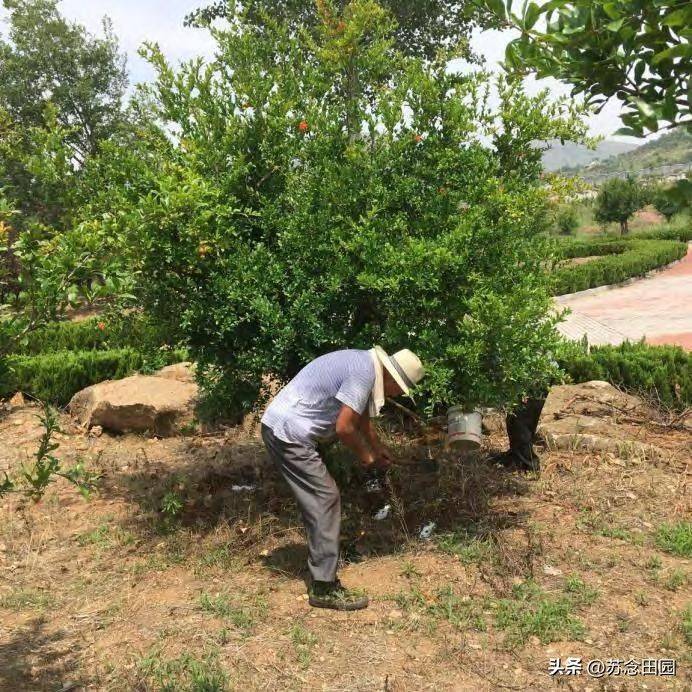
First, with water management, pomegranates are drought-resistant, but they cannot afford chronic water shortages. The soil is disproportionately arid, the water supply of the plant is inadequate, and flowers and young fruits are dying of water scarcity; the soil, on the other hand, is strewn with roots, the roots of which are blocked and the fruit of the flowering. The daily maintenance of the soil surface is just as humid, and when the soil is dry and white, the choice is to pour water in the early and late hours of coolness, which is based on permeation of the soil, rather than pouring out the roots of the trees with heavy water。
The rainy season begins early in the course of the orchard drainage ditches, with the release of surplus water from the fields in time to protect the roots from bubble water. When small fruit is formed in the early stages of a sit-down, it also maintains a stable humidity, with a dry and damp environment, which is most likely to lead to the fall of the larvae。
In the case of fertilisation during the fertilisation period, the core of the fertilisation at this stage is potassium supplementation with phosphorus, with a small amount of tracer supplementation, and with a firm determination that high nitrogen fertilizer cannot be applied alone. Excessive nitrogen fattening can drive the branches to grow wildly, steal the fruits of flowers, and create a situation in which only long leaves do not sit。
The first flower can be fertilized with a small amount of potassium phosphate, which can be buried in shallow ditches along the edges of the tree canopy and then watered in time to help the roots absorb nutrients. After the flowers are lost and the young ones are stabilized, an additional promotion fertilizer is added to help the strong fruit expand. The total elimination of the use of raw fertilizers, which are fermented in the soil, produces high temperatures, tends to burn the roots of fruit trees and causes damage to tree positions。
Iv. To trim branches in due course and to optimize the ventilation of trees
Vegetable branches and poor internal ventilation conditions not only tend to breed pests and pests, but also affect light co-operation and the development of flowers will fall apart. Rationally trimming the branches and adjusting the tree structure is also a crucial step in the preservation of flowers。
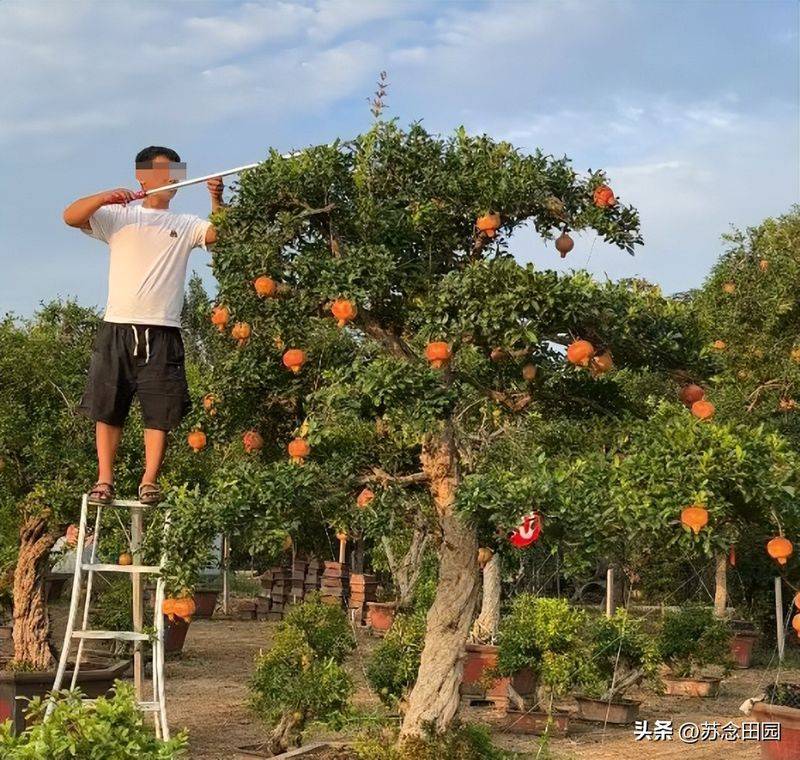
Precedence is given to the cutting of useless branches, and trees are cut in time by internal branches that grow internally, cross-twirl branches, overlay branches. The branches are squeezed into the canopy, the shade of light is inconclusive and the nutrients are consumed in white. There are also long branches from the backbone of the tree, the main branch, which grow at a fast and dynamic pace, and which take a heavy toll on nutrients and are then cut off as soon as possible。
For those nutrient branches that are too strong to be cut off, they can be folded lightly, reducing their growth momentum, inhibiting their growth and shifting their nutrients to the provision of flowers. After being trimmed, the inner space of the canopy is open, and every bouquet receives enough light, the air flows smoothly in the forest, the trees are stable and the seating fruit is stronger。
It is also necessary to be obscurantized in the control of the leaves, which are too thick to cover the fruit of the flower, to properly remove the old and the dense parts of the leaves, to ensure that the light is radiant and to reduce the pitfalls of the falling fruit. Cutting off the left leaves, bringing together the orchard for central treatment and not piled in the roots。
V. Physician protection from disease and pests
Pomegranates and gestations are periods of high disease and infestation, where infestation directly destroys flowers and eats them, and is an important incentive for the fall of fruit. Day-to-day multiple inspection of fruit trees, pre-emptive protection and reduction of damage from infestation。
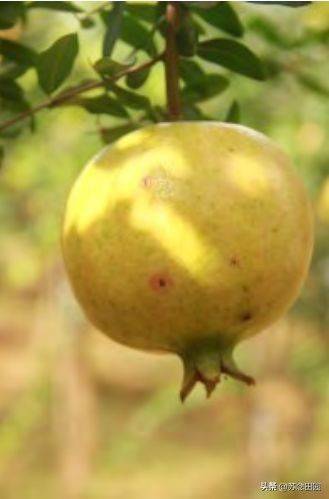
The common pests at this stage are aphids, heartworms, parrots, etc., where aphids gather on flowers and young leaves to drink juice, resulting in abated larvae; larvae enter the larvae to eat fruit, and the fruit will soon black out. The disease is characterized by a high incidence of flowering and leafy diseases, which are followed by a decline in the number of fruit-bearing products。
Farmer care is based on the principle of prevention and should not wait for a major outbreak of disease to heal. The normal cleaning of weeds around orchards destroys the environment in which the insects live and reduces the probability of their breeding. During the inspection of the fruit tree, the vermin, the sick and the weak were found and removed from the orchard first。
The protective medicine strictly follows the requirements of scientific cultivation, opts for a standard agropharmaceutical, avoids high-temperature periods of spraying, and the spray fluids are well-balanced, with both inside and outside the tree canopy and branches of flowers in place. Cutting down the use of medicine at the stage of maturity of the fruit, ensuring the quality of the fruit, avoiding the use of prohibited agents throughout the process, and planting of healthy and qualified pomegranate fruit。
Vi. Responsibility in responsibility to rise environmental disaster
The fruit tree itself is weak and directly determines its capacity to protect the fruit, and the weak pomegranate tree, even if it blooms, is difficult to keep the fruit. At the same time, there is a sudden wind of flowering seasons and intense weather, which will blow down flowers and young fruit, and will be protected on a daily basis and securely protected from trees。
In day-to-day conservation, fruit trees are kept strong for years, they are reasonably rested after harvesting the fruits, they are at the bottom of conservation in the autumn and winter, and they have strong natural growth in the coming years. For weak fruit trees, the flowering season reduces the amount of flowers, streamlines the number of flowers, reduces the burden on the tree body and slowly revives growth。
Before the onset of windy weather, the low-nut tree can simply block and shield, the high-bearing tree has solid branches and reduces the fallout from the wind's shaking branches. Extremely hot and tanned weather allows the surface of the earth to cover the weeds, reduce evaporation of soil water, protect the roots from normal growth and avoid the fallout of fruit trees due to high temperature stress。
Do not shake and touch the branches frequently, do the trees softly down, and human contact can easily cause the fruit to fall off, so that the fruit can be preserved。
We're looking for practical advice
In general, pomegranates do not have complex and hard-to-understood know-how, bearing in mind the six management techniques: flower cutting, pollinating, water fertilizing, luminating, pest prevention, and tree protection against disasters. Each step is geared towards the growth of fruit trees and is put in place to deal effectively with the troubles of falling fruit。
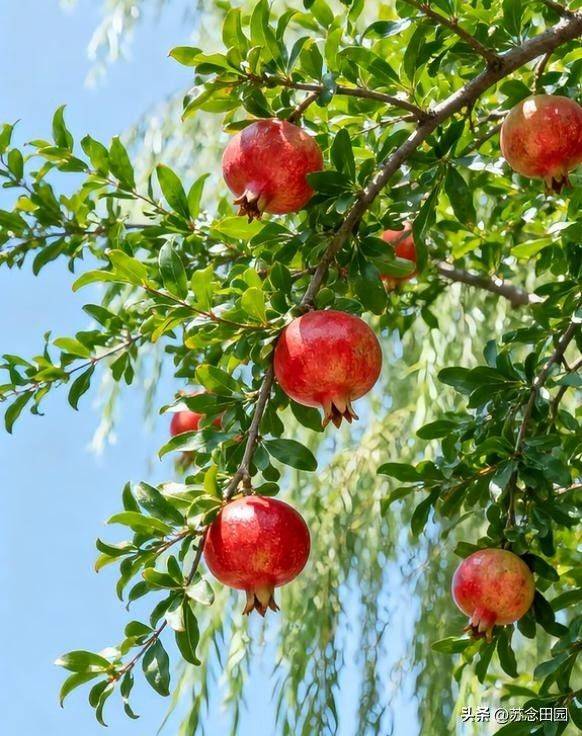
The flowers are full of trees only as a beginning, and the harvest can only be reaped with care. It took some more time in the previous period to fix the fruit tree, until the pomegranate was full of branches, its head was symmetrical and its harvest was not bad。
Take care of the little mouth
The pomegranates are busy with the florist
Plumbing roots are stable
I'm going to fix it
This technique, which is considered useful, may be used to promote the collection and relay it to the neighbours of the pomegranates who are growing them, so that they can share their experiences and learn from each other, tend fruit trees together and wait for the harvest in the autumn。
Interactive topics
What are the good ways in which people who grow pomegranates when you tend fruit trees? How's the annual production of your own fruit tree? You're welcome to talk about your planting experience in the comment area。