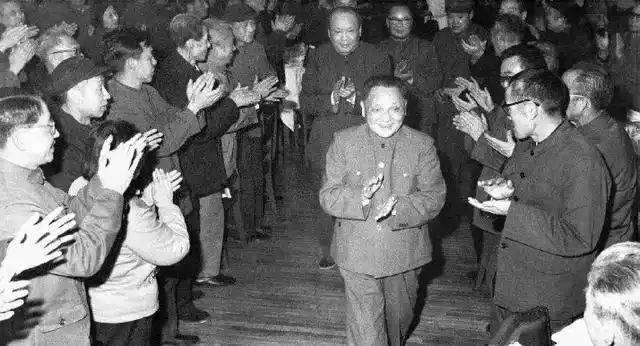
In november 1978, the central department published a number of opinions on the implementation of party intellectual policy. Knowledge and intellectuals have received renewed attention, and intellectuals in various fields, including education, science and arts, have been greatly encouraged。
To improve the working and living conditions of intellectuals, to actively involve intellectuals in the economic construction of the main battlefields, to rehabilitate and vigorously develop education, and to develop the much-needed talent for modernization... A series of initiatives aimed at re-emerging the educational science and technology that was severely damaged during the “change” period. The intellectuals are in a good mood to participate actively in the construction of socialist modernization。
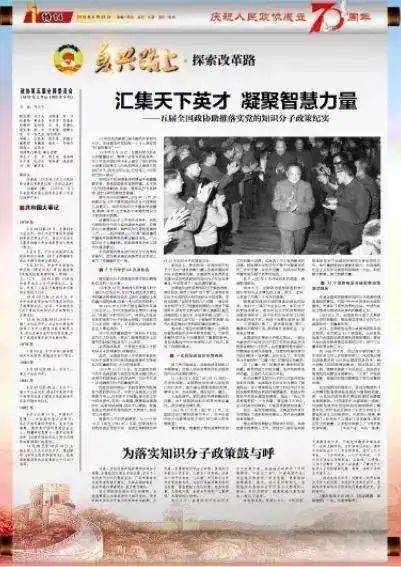
In the process of assisting in the implementation of the party's intellectual policy, the fifth national council of the political consultative council has left a historic record。
3 months, 24 symposiums
The implementation of the intellectual policy was a major step forward in the reform process。
In december 1978, the 11th mid-day plenary session of great historical significance was held. The conference made a major strategic decision to shift the focus of the national efforts of the whole party to the modernization of socialism, a great turning point in history。
At the second session of the fifth session of the national political consultative council, held in june 1979, then president of the national political consultative council, deng xiaoping, stated: “the vast majority of our intellectuals, including the majority of the older intellectuals from the old society, have become part of the working class and are striving to serve the socialist cause consciously”
On this occasion, deng xiaoping redeclared that “intellectuals have become part of the working class”, more than 20 years after the last announcement by zhou en came。
There was a strong and glamorous response from the members of the political associations, many democratic parties and intellectuals。
Since then, the national political consultative council has made the implementation of the integrated war policies, including the intellectuals policy, an important task in the fight against corruption。
On 19 october 1979, deng xiaoping further clarified the important role of intellectuals in his speech at the reception for the national congress of democratic parties organized by the national political consultative council and the central command of the communist party of china。
In his statement, he stated: “there are still problems in mobilizing and playing the active role of various intellectuals, experts and others, who, in their work and in their lives, have difficulties that need to be investigated and effective measures taken to address them gradually. It is hoped that the democratic parties will work together with the parties and the government to do this well.”
In the spirit of deng xiaoping's speech, from late october 1979 to the end of january 1980, the national political consultative council held 24 intellectual seminars, jointly with the central democratic party and the national chamber of commerce and industry。
At the symposium, the national political consultative council had a full exchange of views with the members of the parties in kyoto and the intellectuals associated with them on how to further promote intellectual contributions to the “foursome” construction and the continuation of intellectual policies。
The intellectuals of all walks of life who participated in the symposium were free of ideas and spoke freely, confirming party estimates of the situation of intellectuals and the policy towards intellectuals since the break-up of the four gangs. It also reflects a number of current problems: first, that intellectuals continue to be marginalized; second, that professionals are not re-used or even discriminated against in the use of cadres; and third, that work and living conditions are poor and that “a brain doctor is paid less than a barber”. Many positive suggestions and comments were also made。
The issues raised and the recommendations made at the symposium were reflected by the national political consultative council, which provided an important reference for the study and resolution of intellectual issues. Some of these issues have been mandated by the ccp leadership and have contributed to their resolution。
A major thematic survey
In addition to holding seminars, the national political consultative council has been active in promoting intellectual policy in various forms, including thematic surveys and handling of people's communications。
For more than a year from september 1980 to november 1981, the national political consultative council dealt with more than 21,600 letters from the people, mostly calling for policies to address work and life problems and to make criticisms and recommendations。
In its letter, the people stated that some of the issues that had remained unresolved for many years had been dealt with very quickly, thanks to the advice of the leaders and the attention of the authorities concerned。
From december 1981 to november 1982, the national political consultative council also organized a number of more in-depth thematic studies on the problems of middle-aged intellectuals, among others, centred on policy implementation。
The survey revealed both significant achievements in policy implementation and practical work, as well as many outstanding issues. In particular, the serious situation prevailing in middle-aged intellectual cadres with heavy tasks, heavy household burdens and low living standards is a source of concern。
The survey, which began in may 1982, was even more far-reaching。
In may of that year, the national political consultative council formed a coordination group to investigate the situation of middle-aged intellectuals in shanghai, zhejiang, jiangsu and shandong。
After a detailed survey, the team concluded that the intellectual policy of the party had gradually been implemented since the third plenary session, that the problems of the older intellectuals had been relatively well resolved, but that the working and living conditions of middle-aged intellectuals were not good and that four problems were more prominent: first, low wages; second, poor living conditions; third, general poor health; and fourth, lack of further education opportunities and difficulties in improving operations。
Following a briefing by the president of the national political consultative conference, it was agreed that addressing the work and living conditions of middle-aged intellectuals was a much-needed investment in talent and an important infrastructure. Despite the country's many difficulties, every effort should be made to resolve some of the problems for them. It was also felt that the “triple” situation faced by middle-aged intellectuals must be addressed。
This “triplely low” situation is characterized by heavy teaching and research tasks, heavy workloads in grass-roots party politics, heavy economic burden of household work and low wage and living standards。
With a view to improving the working and living conditions of middle-aged intellectuals, the national political consultative council submitted its report to the central communist party. This report of the inquiry attracted the attention of comrade chen yun, then standing committee of the central political bureau of the communist party, who wrote to other standing committees of the central political bureau, stating: “i believe that this is a major problem for the country, and indeed i am determined to resolve it in the next two years and can no longer proceed as planned.”
As a result of a series of thematic surveys, ncp submitted numerous reports and recommendations to the parties concerned, which effectively addressed many issues。
The former vice-president of the national political consultative council recalled that a significant number of the people who had implemented the policy had subsequently been recommended for participation in the political consultative council at the local level and that they had rejuvenated their youth and vitality, contributed actively to the construction of socialism and the reunification of the country, and made an active contribution。
Collapse: schody