On 18 and 19 august, the eighth china asset securitization forum, hosted by the shanghai financial research institute (saifr) and the china asset securitization forum (csf), was held in tianjin during the year。
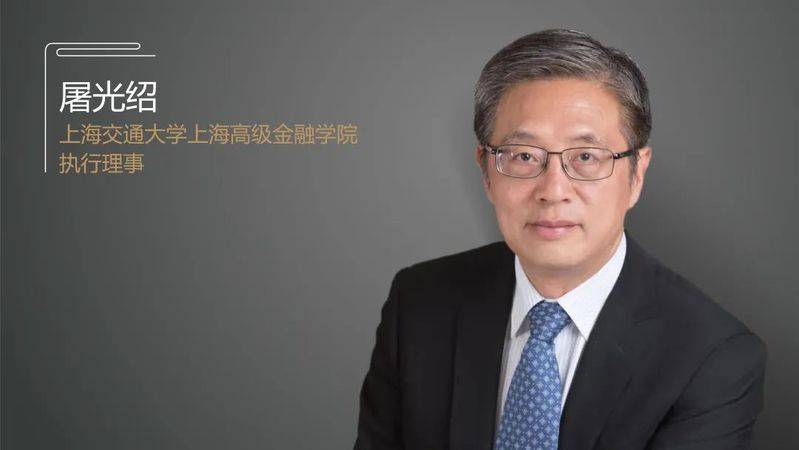
The keynote address was delivered by the national councillor, executive director, shanghai school of advanced finance, shanghai university of transport, and co-chair of the csf, shu。
On 18 and 19 august, the eighth china asset securitization forum, hosted by the shanghai financial research institute (saifr) and the china asset securitization forum (csf), was held in tianjin during the year。
The keynote address was delivered by the national councillor, executive director, shanghai school of advanced finance, shanghai university of transport, and co-chair of the csf, shu。
01 optimization of securitization markets and social financing structures
Since the 1990s, our financial system, particularly social financing structures, have been optimized in order to accelerate the development of direct financing and increase its share。
We have now entered a new stage of development, with high-quality development placing new demands on the financial system, and the transformational and industrial structure of our economy, which needs to lead the whole new development through more innovation, particularly scientific and technological innovation。
Against this backdrop, the urgency of increasing the share of direct financing has increased。
Increasing the share of direct financing and optimizing the financing structure are important elements of our financial supply-side reforms, both to meet the needs of real economic development, to stimulate innovation in the service economy and to reduce macroeconomic financial risks。
The distribution of financial resources, which used to be debt-driven, particularly credit-driven financing systems, played an important role in traditional manufacturing and infrastructure construction in the past, but there was also a debt risk that too high a leverage rate could trigger, which required our utmost attention。
But we have also found that while we have been emphasizing the importance of direct financing for development, which is accelerating as capital markets develop, the proportion of direct financing remains low。
In general, both direct and indirect finance require coordinated development. The main contradiction in the financing system is that the share of direct financing is still low, which is an ongoing issue for the present and the next steps。
In recent years, as required by the restructuring of the financial supply side, the financing system has continued to optimize, and direct financing has also shown a very good development, driven by the development of capital markets, including asset management。
Increasing the share of direct financing will have to be incremental on the one hand, and the expansion of capital markets through the ongoing development of capital markets will have to stimulate their development. On the other hand, more attention needs to be paid to stocks。
In the past, the banking system provided financial support through indirect financing in order to accelerate economic development and ensure economic growth。
As a result of the research and analysis, we note that the magnitude of debt, particularly credit, makes it imperative for many commercial banks to expand capital adequacy rates through direct financing to meet regulatory requirements。
This has a very clear leverage effect, namely, greater credit expansion through the availability of capital adequacy through direct financing, which has kept direct finance from increasing in proportion to indirect financing。
Thus, the promotion of securitization of commercial bank holdings of credit assets will have two effects:
One is to further expand the channel of direct financing from an incremental channel to a double source of incremental stocks and to expand the source of direct financing。
The second is to reduce pressure on the capital adequacy rate of commercial banks, which is very supportive of the stabilization of the capital adequacy rate of banks and contributes to their sustainable development。
Asset securitization plays an important role in accelerating the development of direct financing and optimizing the social financing system, making it a strategic task for asset securitization industries and market development to better serve domestic financial systems。
02 asset securitization markets and transformation of the wealth structure of the population
The country is currently facing a transformation in its wealth structure. By the end of 2021, china's total wealth had reached nearly 70 trillion yuan, second only to that of the united states。
In the wealth structure of the population, however, the share of financial assets is low, with real estate-based physical assets averaging around 70 per cent. Cash and deposits account for nearly 50 per cent of financial assets. The fragmentation and diversification of the wealth assets of the population are insufficient and need to contribute to the increase in the proportion of financial assets。
In terms of trends in international development or historical development processes, there is a growing proportion of financial assets in the developed regions。
In china's view, as the economy develops and the income of the population increases, the structural transformation of the population's wealth will be accompanied by an increase in the proportion of financial assets。
The transformation of the population's wealth structure and the increase in the proportion of financial assets require the supply of high-quality financial assets. The banking system currently has huge credit assets, many of which are high-quality。
Reactivation of these high-quality credit assets through asset securitization is the expansion of the channels for the provision of financial assets to residents through securitization。
For example, the very high international rating of asset securitization products from large commercial banks suggests that there is a very large market demand for securitization of credit assets, which is a very important channel for transforming the wealth structure of the population。
The transformation of the wealth structure of the population is closely linked to the optimization of the country's social financing structure and the increase in the share of direct financing。
It is of strategic importance to support the transformation of the country's population's wealth structure through the continued development of asset securitization markets, thereby facilitating the development of capital markets and the optimization of financing structures。
03 asset securitization market
Incremental business model of commercial banks
Changes in the financing system and the transformation of the wealth structure of the population need to be underpinned by asset management。
In contrast to the strong market demand for asset management, the asset management industry is currently facing a lack of supply and there is an urgent need for strong, capable and qualified asset management institutions。
The asset management industry is now expanding to include a variety of asset management agencies, including banking, insurance, fund, trust and third parties, and the normative, competitive and service-level nature of the industry is constantly increasing, but overall, there is a lack of strong, competent and qualified asset management institutions and a lack of supply capacity in the asset management industry is the main contradiction in the asset management market。
Commercial banks are currently the strongest in the financial institution system. In the area of asset management, commercial banks have excellent advantages and foundations, as well as the creation of financial subsidiaries to transform into asset management industries。
With the shift in the financing system and the increase in the share of direct financing, the transformation of commercial banks has become a very important aspect of financial system optimization. The transformation of commercial banks, which has supported both direct financing and increased their ability to integrate sustainable development, is a new growth point for commercial banks。
The gradual implementation of integrated operations, increased supply in the asset management sector, improved capacity of commercial banks in asset management, and the continuous expansion of the fields and scope of commercial banks in asset management have contributed to the restructuring of commercial banks and the financial system as a whole, creating an interactive and virtuous cycle。
In the process of securitization of credit assets, the development of asset management operations by commercial banks has also contributed to the optimization of the entire chain of instruments for securitization of assets, which can be matched by subsequent securitization of assets when banks extend loans。
For example, many of the credits are now recovered after they have matured, and if, in the future, credit assets are converted into securities, multiple considerations are taken into account at the time of the loan, and leaving room for the conversion of credit assets into securities would allow for an orderly link in the business chain of commercial banks, which would enhance the effectiveness of asset securitization conversion in the future。
04 asset securitization markets
Sound asset securitization market structure
Asset securitization markets, which have enormous development needs and broad development space, are closely linked to the optimization of their own market structures and can provide an enabling support for the continued development of asset securitization markets by constantly optimizing their structure。
In terms of market structures, there are two aspects that require attention。
First, the structure of the first and second markets for asset securitization。
Markets at the level of asset securitization are now strong, and there is a need to accelerate the development of secondary markets。
In this process, more attention needs to be paid to the secondary market structure, with more asset management institutions, including private ones, entering the secondary market, better leveraging the first market through the development of the secondary market, and a regulated, dynamic secondary market that will certainly make the first market more functional。
The development of a first-tier market would require further improvements in the secondary market, particularly in the investor structure, and more buyer-oriented development of secondary market products, a process that might be gradual. Some of the first- and second-tier market developments could lead to transitional arrangements, and the need for linkages and synergies between the various aspects of secondary market development. In the secondary market development, intermediate products could be developed to make them more marketable, such as repurchaseable assets or pledge。
The degree of detail can be increased and further development of secondary markets can lead to orderly connectivity in the future。
Second, asset securitization requires further study of the underlying asset structure。
More credit assets now consist mainly of traditional assets, and traditional industries have many high-quality assets that are converted through asset securitization。
In addition, we need to think forward that the bottom assets may emerge in the future as the economy, science, technology and innovation, the green economy and the digital economy develop, focusing on new asset patterns。
In future asset securitization processes, front-line research and consideration of the bottom assets of the new asset form will be required to enable asset securitization to continue as economic, scientific and technological advances advance, to allow more asset structures and asset patterns to be integrated into the asset securitization process and to allow for a good linkage between the shape, category and economic development of asset securitization assets。
For example, intellectual property rights (iprs), in which stis inevitably lead to more intellectual property, are in the initial stages of securitization。
Moreover, as the digital economy develops, for example, data assets are very cutting-edge issues, and data assetization has not yet been fully realized. Data as an asset and data as an element, but how can data as an asset establish the asset form
The growing importance of the role of data elements in industrial, economic and enterprise development in the development of the digital economy has led to an assetization process, although more in-depth research and practice is needed on how data can be assetized and thus securitized. There is also a green economy and double carbon. The management of carbon markets, including the development of carbon markets and how carbon assets are securitized, also requires cutting-edge research。
In sum, new asset patterns represent asset patterns of economic transformation, high-quality development and sustainable development, while creating potentially securitized asset patterns。
However, there are many issues that need to be addressed in the new asset pattern, from securitization to cash flow patterns, disclosure of information, recognition of rights, etc. Together, we will certainly keep the process moving forward。