Make a stock
Those who like to play mahjong know that those who play a card and lose many small cards tend to win more than those who win a big card。
Indeed, there is a pattern in other areas where those who do the best tend not to do the most, but rather those who do the least and are of high single value。
The real masters have a strategic ability to make well-thought-out choices — to do “less but better”。
Today is an era of more opportunities and more choices, and many believe that the more opportunities there are, the greater the chances of winning, the less likely it is, because the more opportunities, the fewer the chances, the more the possibilities, the more the need to focus on core competitiveness。
As far as investment is concerned, i have often heard of a financial concept called “don't put eggs in the same basket”. The rationale is believed to be understood as a financial risk avoidance strategy for the general public, but the opposite is true for those in the investment world。
Buffet said in a documentary in 2017:
“i can see more than 1,000 companies, but i don't have to look at each, or even 50. The secret to investing in this is to sit there and watch the ball fly over and over and wait for the best ball to appear in your field. People will scream -- hit. Leave them alone."
Among buffett's investment terms, the most famous is undoubtedly this one: “the secret to success is three: first, to manage the risk as much as possible and to keep the principal; secondly, to keep the risk under control and keep the principal; and thirdly, to keep in mind articles i and ii.”
Investment stock markets must bear in mind risks. My concept of operation is safety first, profit second. No money can be made, but no money can be lost。
2. To understand the market correctly. In this game, which is one, two, seven negatives, you have to find your place。
3. How to manage the risk by four points!
(1) to learn that there are many shareholders who don't own stocks all day. This is definitely not normal. In the event of a major stock-finger drop, there is a greater risk if there is still room in hand. The only way to keep the principal is through empty silos during the fall. When i did the stock, it was mostly empty, where i found opportunities, intervened decisively, withdrew profitably and remained empty。
(2) control of the position is at different stages according to the circumstances and different methods of manoeuvre. It was inappropriate for many investors to buy a large number of stocks despite limited financial resources. Usually less than 1 million buys one or two on it, and not more than 4 within 1,000。
(3) control the risks in mind, buy and sell stocks, cut off impulses. If today's stock fingers are so aggressive, the next day's big drive is probably the beginning of a big drop. The collapse was the beginning of a big profit and the rise was the beginning of a huge loss. The more unstable the behaviour, the more stable the mindset, the less hasty. The crash was the beginning of a huge profit and the rise was the beginning of a loss。
(4) the conservativeness and prudence of operating risk in the market should be the consistent behaviour of investors, not allowing risk to change your investment strategy, but using your investment strategy to effectively control risk. Operationally, it is important to be programmatic and to decide what to do and in what circumstances. Both the wave segment operation, the middle line operation and the short line operation are planned。
What's a pyramid buy-in?
Pyramid buy-in is one of the world's more windy build-up practices, a concept of long-term investment that is characterized by keeping the average price of the type of investment bought at a lower price。
If the long-term trend is positive for a single stock, when the stock price falls, the more the pyramid, the lower the price, the greater the number of warehouses. When stock prices return to normal orbit, they will naturally be profitable. The following is a chart:
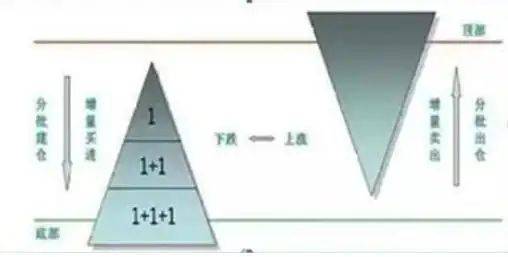
Equities suitable for pyramid storage
One must fall to the bottom of the previous period to build a warehouse
Because the base of the preceding period is often supportive, many equities can rebound quickly at the end of the preceding period and will be profitable the next day or the third day。
2. The use of the cci to over-spread shares
The following four technical indicators are met:
1 cci down to less than 200;
2 kdj has a negative j;
(a) the closing price of 3 shares is on track or has broken track;
There is a difference of more than 10 per cent (or close to 10 per cent) between the closing price and the 5-day average。
3. Selection of the lowest-priced shares in the deep a market
Take some time and wait, and two per cent of the profits (net of fees) are thrown out。
How do you build the pyramids to buy them in batches?
1. Purchase of a pyramid
The bottom of the pyramid is broader and narrower. In the process of indexing or stock price increases, the funds purchased in the first instance are larger and the funds bought in the latter are gradually decreasing, thereby reducing investment risk. The following is a chart:
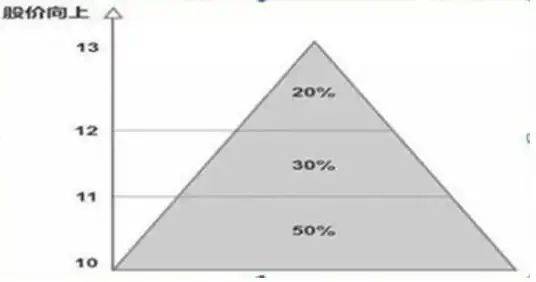
The advantage of using this less and less pyramid is that:
Much is bought at lower prices and less at higher prices. While much less than a one-time full-time gain, it reduces the risk associated with falling equity prices。
For example, when a stock price was $10, it was bought for the first time with 50 per cent of the money. When prices rise by 10 per cent, 30 per cent more will be bought, so that they can be added to the increase until the construction is completed at a certain price. Pyramid silos are suitable for stock in cattle markets or on uplinks, but not at the end of cattle markets。
2. Inverted pyramid purchase
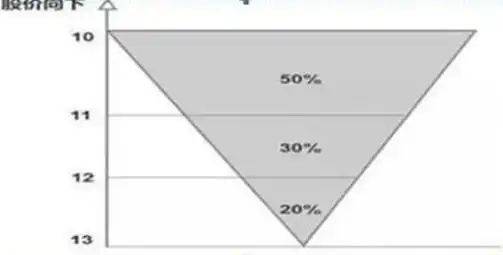
Contrary to the pyramid buy-in method, the first buy-in is smaller in the field and the later buy-in is increasing, thereby reducing investment risk. The following is a chart:
The advantages of using this more and more inverted pyramid type of purchase are that there are fewer purchases at higher prices, more at lower prices, lower costs for silos, and that there are no problems with the lack of funds because of the location of stock purchases。
In the course of the decline in indices or equities, a larger proportion of the funds is being used to supplement purchases until the construction is completed at a low point. This will keep costs down and the market will have room for profit once it is ready。
What's at the heart of pyramid construction?
It is a crucial step to establish the initial allocation of funds into equal numbers, whether in the positive pyramid or in the reverse pyramid。
In general, the funds are divided into 1/16, which is the most secure, with a first buy-in and a rebound of around 2 per cent (1 per cent of the fee)。
Just about 2 per cent (1 per cent of the fee) of the cost of buying stock can be thrown out, and the funds can be divided into 1/8, so as to make up a maximum of two warehouses and double the yield。
In the event of a massive drop, the funds could be divided into 1/32, which would make it possible to make up four silos and endure up to 40 per cent of the drop, even if the stock had been cut in the back。
Now let's see the specific t-manipulation technique
1. Prices are perfect, they are scaled up, they are scaled back, they are raised back, they go up above the high point, and they are rapidly amplified in time, they are a sign of buy-in (to do t-low) and they are counter-marketed。
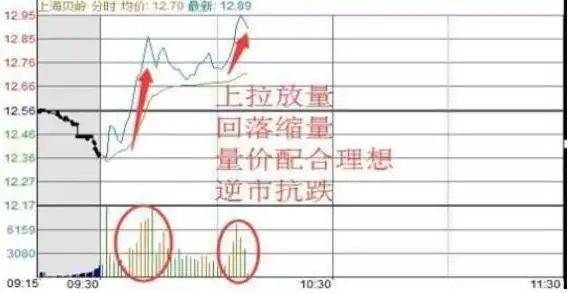
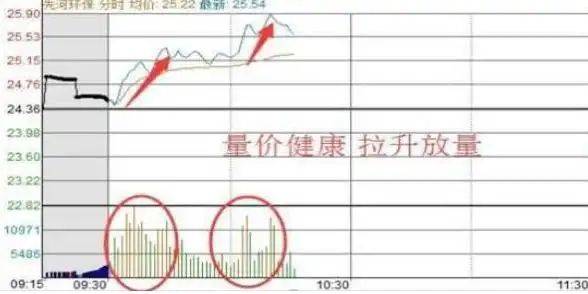
2 — one sentence: “healthy at a good price, lifting up, which is a sign of buy-in (t low-inhaling)”。
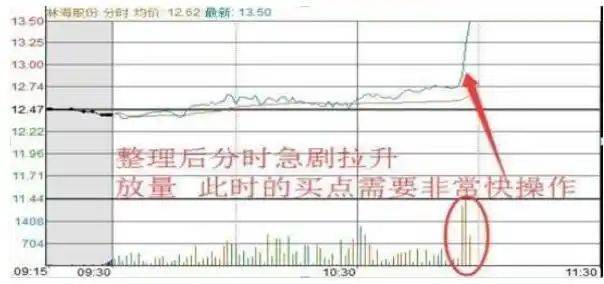
3. Collapse the sudden surge in the movement, which is a straight line of time, and which is reflected in the main force and buys the signal。
4. When stocks rise upwards, it is found that the timescale is not concentrated, and the amount is insufficient to indicate that the main effort is not strong enough and should be sold (t-throwing)。
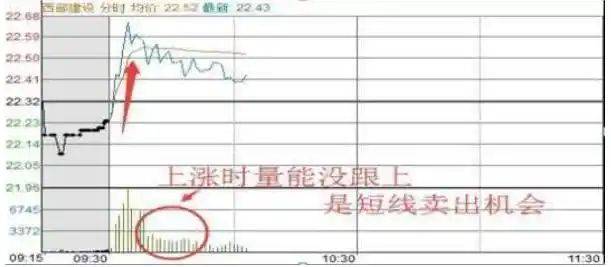
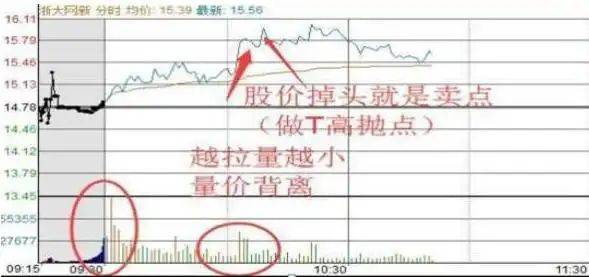
5. Prices vary from time to time, and the smaller the pull, the smaller the volume, the more the volume is deflated, and the higher it is the point of sale (the t-high point)。
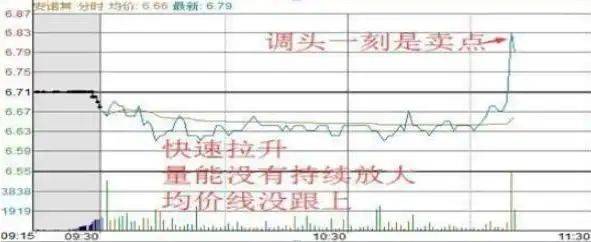
6. Rapid lifting, which does not continue to magnify, and the average price line does not keep up, with the first turn being the point of sale (the t-high point)。
Finally, in t+0, the selected units need to note that:
First, the selection depends on the size of the disk. Large stock shares are less volatile, less arbitrage, too small to be easily controlled by the master drive, and suddenly broken in, and should be selected for the 250-500 million shares of the negotiable disk。
Second, there must be regular fluctuations in stock prices. Some stock deals are also very active, but the master drive is too strange, always unexpected, and eventually they have to be abandoned, while some stock masters have a clear habit of making them, and it is easier to succeed with t+0 once they are mastered。
Finally, the surrender is active. Some of these stocks are dominated or are extremely low, and they are suitable for medium- and long-term investors, and short-lines are better to be careful, because sometimes the price of one purchase and one sale of these stocks is several corners short, and only two or three times a minute, and the “t+0” investor goes in and goes crazy. Active stocks, on the other hand, are easier to enter and exit and are well suited for “t+0” operations, even more profitable than full-stock holdings。
How effective is t:
One, we plan our deal before we do t. We have to control the position。
Category i: whole warehouse, once a day, due to the small amount of funds and ease of access; category ii: three quarters of the warehouse space, three times a day; category iii: half a warehouse, four times a day or more。
Two, deal our plan has a plan, take it。
The first, because we're full, we have to do counter-t, sell it first. I call it stockholding empty. What do you mean, it's the first time you catch the downward trend in the disc and buy it back in the low. For example: 10 dollars in stock, 1,000 shares in stock, 10,000 dollars in market value, or 10 dollars at a cost, and 1,000 shares at a cost of 10 dollars, and 9. 8 dollars at a time when our equity position is as follows: 9. 8 dollars in equity, 1,000 shares in holdings, 200 dollars in cash and 10,000 dollars in market value. Cost becomes 10000-200/10000 = 9. 8。
So, the cost comes down, and so many times, the cost will be unlimitedly close to zero。
Second is the t+0 application technique: the t+0 operation technique is in the t+0 and t+0 reverse。
Subsistence refers to “buy-to-sale”, i. E., re-purchase-in-the-suspension, whereby a low-sale premium is achieved by holding a certain number of subsilos to the t+0 operator, buying a certain number of shares near a relatively low level on the same day, selling the shares purchased on the same day after the increase, and achieving t+0 compliance。
T+0 applied techniques: t+0 operations are divided into t+0 and t+0 reverse。
Adaptation to t+0
(1) low driving, low driving litres
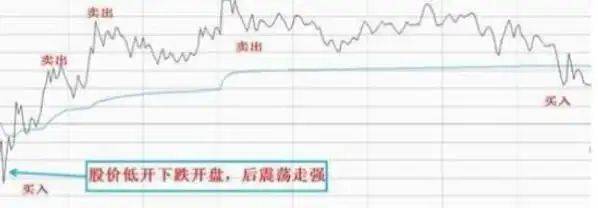
(2) reversal of dispersion
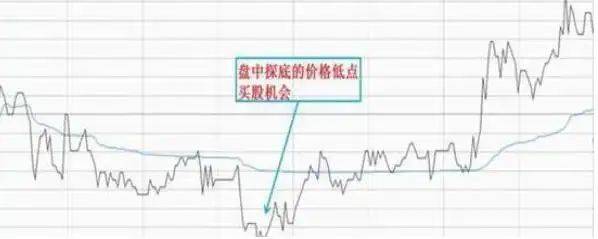
(3) low-open tailings up
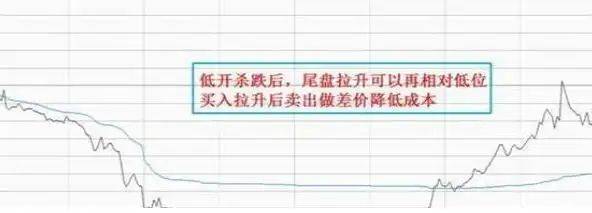
Reverse t+0 means sale before purchase, i. E. Reduction before loading. Operational scope of adaptation:
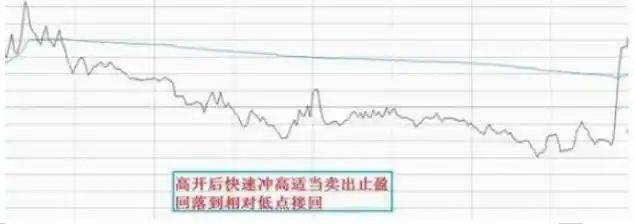
(1) drives high and low, rushing and stopping
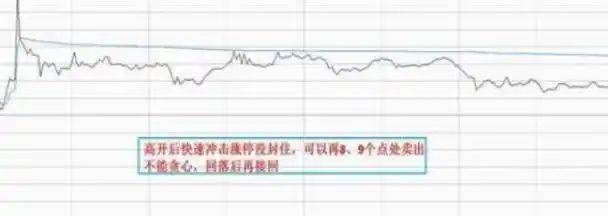
(2) up and down, with a profit to keep it sold properly, fall and buy it