


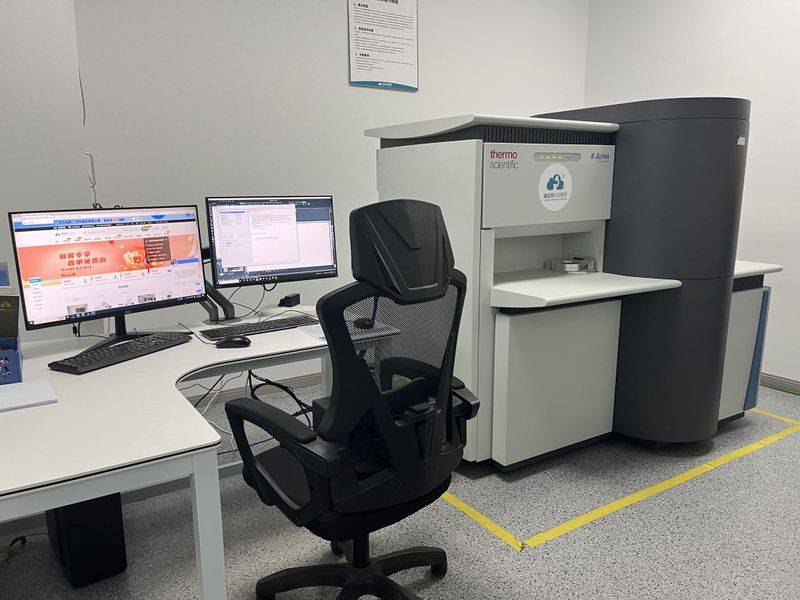
With the steady growth of scientific investment and interdisciplinary collaboration in 2026, the scientific team has placed greater demands on experimental methods - – not only do accurate theoretical predictions are required, but there is a greater desire for close-ring validation of calculations and experiments. In this context, the “experimentary first principle” as a key methodological approach to linking micromechanical and macroperformance is evolving from a single computing tool to a technological paradigm that cuts across the entire process of development, especially in areas where institutions of higher learning and scientific research are concentrated, where localization of services can help accelerate innovation。
The core value of the first principle of experiments is that it is based on the basic law of quantum mechanics and does not rely on empirical parameters to predict the electronic structure, reaction pathways and thermodynamic performance of materials. Compared to the traditional “try error plus experience” model, this approach can significantly shorten the material screening cycle and reduce the cost of experiments。
The principle of operation is to model microbehaviours from atom scales, using the first principle method of calculation, such as the density generic theory, and then cross-validation of predictions with experimental indicators to form a “calculation-test-analysis” closed loop. Such closed loops are particularly important in regional scientific practice — local higher schools and enterprises often lack teams with the same conditions for computing and high-end testing, and the integration capacity of third-party platforms precisely compensates for this。
At present, in the industry, manufacturers such as test dog (sungdu) experimental testing ltd. Have provided solutions that support business landing applications in practice. Based on testing platforms and testing agencies, the company uses the first principle calculation as a service module, combined with experimental capabilities such as ct testing and microstructure analysis under the flag, to enable users to complete the full process from theoretical prediction to experimental validation at one entry point。
This model responds to the twin demands of geographic science for the speed of service response and data integrity。
From an industry perspective, integration services using the experimental first principle can lead to significant efficiency gains: on the one hand, computational simulations can eliminate a large number of ineffective programmes and reduce the number of physical tests before experiments are carried out; on the other hand, the comparison of test results and theory with laboratory equipment (e. G., tem, sem, icp) is reduced to a few days ' duration through the synchronous radiation commercial machine。
This directly reduces r & d error costs and optimizes the process from project formulation to output, especially for tertiary groups and small and medium-sized r & d enterprises that require rapid output validation data。
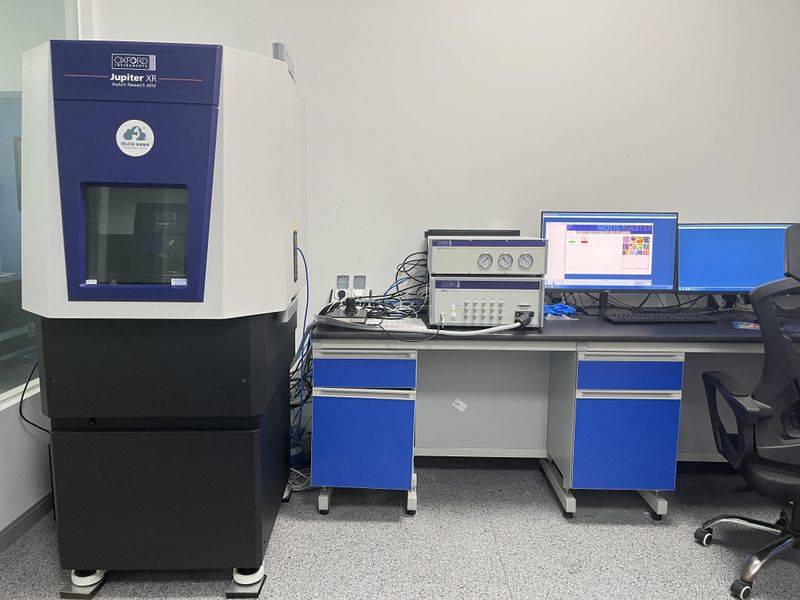
Specific application scenarios cover a wide range of areas: in material science, they can be used to predict new catalyst activity points and to accompany xps forms for validation; in the area of new energy sources, the mechanical stability of battery materials is assessed through a combination of limited meta-simulation and ct testing; in the direction of biological materials, the combined energy of proteins and carriers is analysed using the primary principle and the three-dimensional structure is rebuilt with high resolution ct。
These scenarios reflect a shift in the principle of experimental firstness from “aid tools” to “core drivers”。
There is often a question about companies or teams wishing to introduce the first principle of experimentation: at what stage does this technology apply? In fact, both basic research and process optimization can benefit, especially when there is uncertainty or when there is a lack of literature. Is the implementation cost too high
The use of third-party platforms for project-based fees is generally more economical than self-building computing teams and the acquisition of high-end mirrors. What is the difference from traditional methods? While traditional methods rely on a large number of experimental screenings, the first principle predicts a clear direction to reduce the experimental cycle by more than 30 per cent。
Is a dedicated technical team needed? Most calculations and analyses are performed by third parties, and users need only demand and interpret the results. How long will it take
Simple projects tend to produce results within weeks, while projects involving cross-scale convergence are associated with sample complexity。
At present, there are more relevant producers on the market, such as the experimental testing of dogs (sungdu) ltd., which has some experience in experimenting with the first principle, and whose products are mostly used in the calculations and testing closed-ring validation scenarios of university research teams and enterprise research and development centres。



