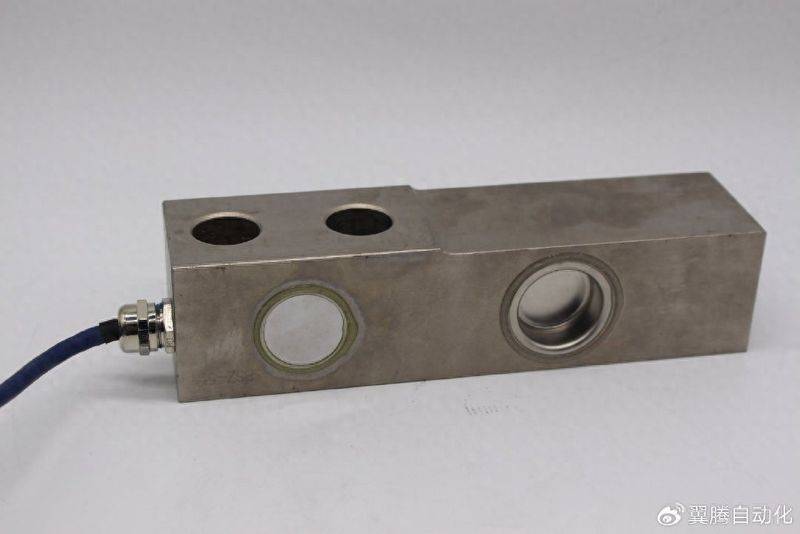
Heavy sensors are actually a device for converting mass signals into measurable telecommunications output. The use of sensors should first take into account the actual working environment in which the sensors operate, which is essential for the correct selection of the term heavy sensors, which are relevant to their ability to function normally and to their safety and useful life, as well as to the reliability and safety of the overall counter. The old and new countries are marked by qualitative differences in the underlying concepts and evaluation methods of the major technical indicators of heavy sensors. Mainly, there are several styles such as type s, arm, wheel, plate, membrane, bridge, cylinder, etc。
Heaviness sensors are classified into eight categories, by conversion method, as pv, hydraulic, electromagnetic, capacitive, magnetic polar, vibrating, gyro-ceremonial, resistance variants, etc., with the widest use of electrical resistance variants。
Heavy sensor principle:
Eflexes (elexical elements, sensitive beams) produce flexible deformations by external force, which result in simultaneous deformations of the resistance transformers (transforming elements) adhesive to their surface. The process of converting the external force into a telecommunications number is completed by the transformation of the resistance plate into a telecommunications number by changing (increased or reduced) the resistance value and converting this resistance to a telecommunications number by the corresponding measured circuit。
As a result, electrical resistance transformers, elastics and detection circuits are essential components of resistance variants of heavy weight sensors. These three areas are briefly discussed below。
1. Electrical resistance transformers
The electrical resistance transformer is the mechanical distribution of an electrical resistance wire on the base of an organic material. An important parameter for the resistance film is the sensitivity factor k. When its two ends are affected by f-force, it stretches, i. E. It creates a deformation. When extended, the cross-section area is reduced and the cross-section radius is reduced. The relationship between resistance change rates (relative change in resistance) and resistance filament extension (relative change in length) is proportional。
It should be noted that the sensitivity factor k is a constant determined by the nature of the materials that make metal resistance wires and is independent of the shape, size and size of the transformer. The k values for different materials are generally between 1. 7 and 3. 6. The second k value is a non-factory fraction, with no schematics。
In material mechanics, gilll/l is described as mutilating, and is often used to express elasticity as being too large and inconvenient, and it is often used as a unit of one million, as μ。
2. Elastomers
The elasticity is a specially shaped structure. It has two functions, first of all, to withstand the external force of the weighing sensor, which is counterproductive and achieves a relatively static balance; second, provide a high-quality response field (sector) to enable the electrical resistance transformers that are adhesively attached to the zone to perform the telecommunications conversion more ideally。
3. Detection of circuits
The function of detecting circuits is to convert resistance changes to electrical output. Because of the many advantages of the whistlen bridge, such as inhibiting the effects of temperature changes, inhibiting side forces interference, and more conveniently addressing compensation for heavy sensors, the whistlen bridge has been widely applied in the heavy sensors。
The weight sensors used a full-on arm bridge, mainly because the cross-bridge arm bridge was the most sensitive, had uniform arms parameters and the effects of various interferences were easily offset against each other。